A Cold-Water Interruption in Beethoven’s Working Day
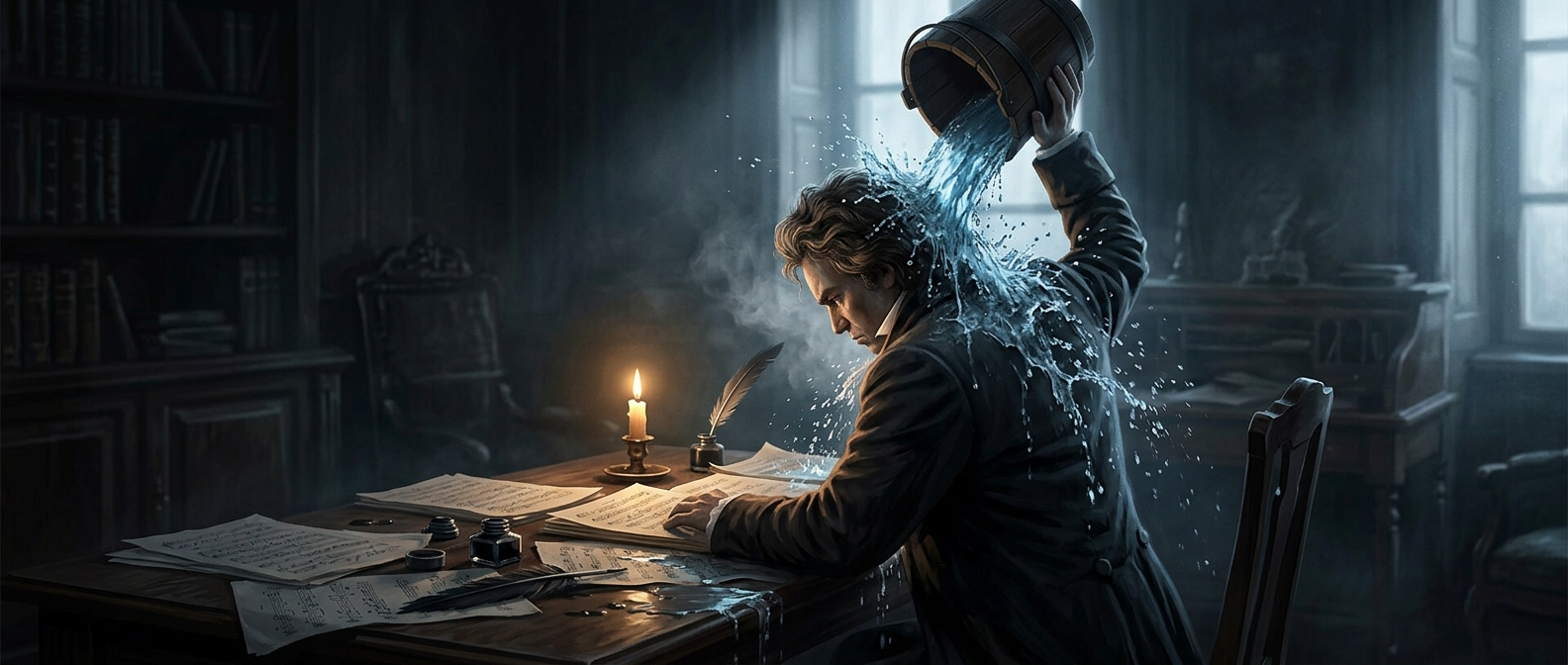
The image of Beethoven tipping cold water over his head is striking because it makes composing look less like a flash of inspiration and more like stubborn work. When an idea stopped moving, this was a blunt way to interrupt the moment: a sudden physical sensation could jolt him out of the same unproductive train of thought.
That does not mean cold water was a proven cure for creative blocks—or that it supplied the music. At most, it offered a reset: a change in bodily sensation and attention before he returned to the problem.
Composition Meant Returning to the Problem
Beethoven’s music was not simply captured in a single inspired sitting. He developed ideas through repeated work, making and revising sketches as compositions took shape. A stalled passage could therefore be a practical obstacle, not a sign that the work was finished or that inspiration had vanished for good.
The water anecdote is memorable precisely because it is so physical. Instead of waiting passively for a better idea, Beethoven tried to change his state and get back to composing. The lasting point is not that the tactic worked every time; it is that even a celebrated composer had to find ways to restart the work.