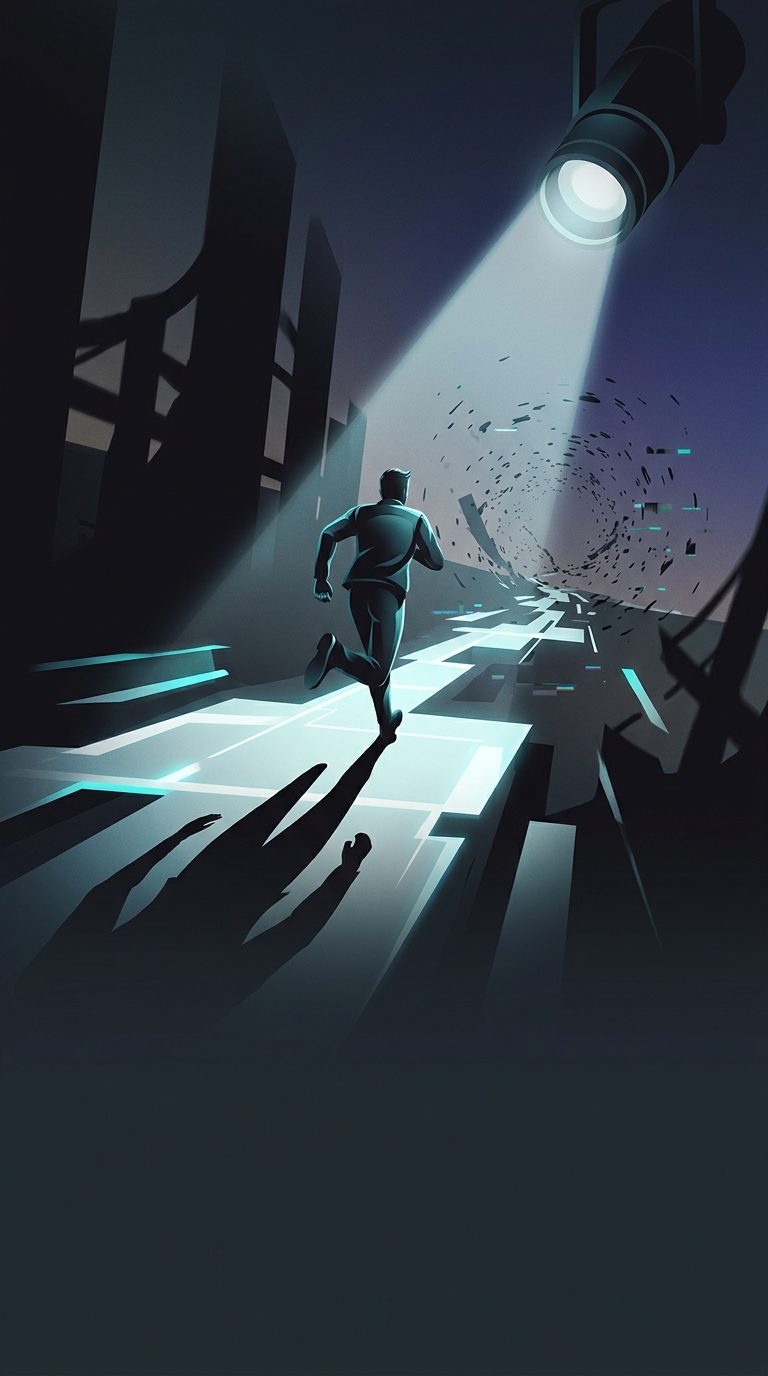
Why Tom Cruise’s Running Reads So Clearly on Screen
A sprint is one of action cinema’s quickest ways to make danger legible. The audience can see the goal, the obstacle and the cost of falling behind—all without pausing for explanation. When Tom Cruise runs full tilt, the simple action becomes a moving measure of urgency: the faster he drives forward, the more immediate the threat feels.
A Practical Action-Scene Tool
Running also gives filmmakers a sequence that can keep changing around the performer. A camera can track alongside him, pull back to reveal a location, or cut between his route and whatever is closing in. The same basic motion can connect several shots and carry the story through streets, buildings or open ground. It is action that remains easy to follow even when the setting and camera are moving quickly.
Cruise’s screen persona strengthens the effect. He is known for performing many of his own stunts, so a sustained sprint can register as more than a character’s effort: it can look like a physical feat happening in front of the camera. That impression makes the action feel immediate, while keeping the character’s body—not just rapid editing or visual effects—at the center of the scene.
Why the Repetition Works
The running has become a recognizable feature of his action roles because it is both expressive and efficient. It conveys determination without dialogue, gives the camera a clear subject to follow, and lets a scene build momentum through distance and exhaustion. The sprint is not merely a way to get from one stunt to the next; it is a compact visual shorthand for a character who refuses to stop.