Why a Tiny Crack Can Stop a Skateboard
Skateboard wheels are small partly because they keep the deck low and make the board compact and responsive. That design has a tradeoff: a crack or pebble that would barely trouble a larger wheel can be a major obstacle. The wheel has little room to roll over it, so it may slow sharply or stop, especially if it strikes the obstacle head-on.
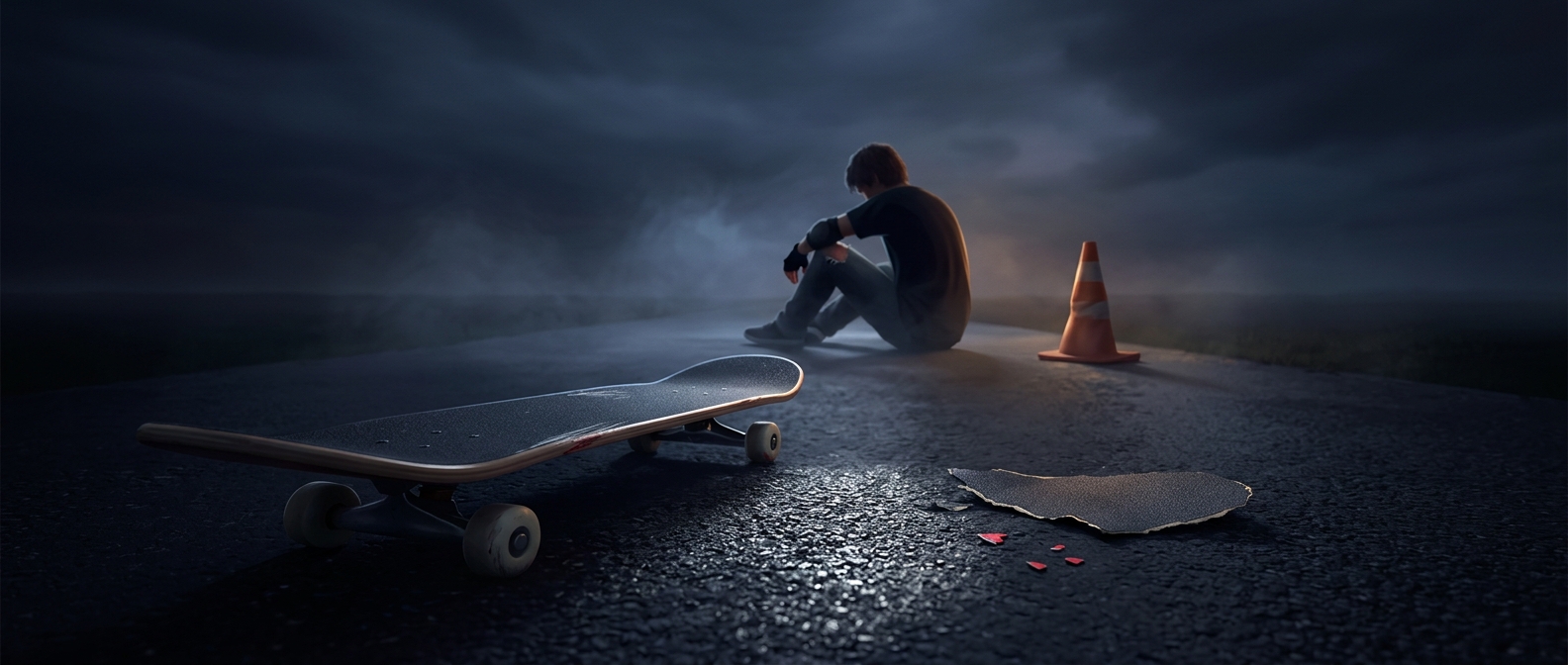
The board can lose speed in an instant; the rider cannot. The rider’s body continues forward because of inertia—the tendency of a moving object to keep moving—so balance can fail before there is time to step off. At low speed, that may mean a stumble. At higher speed, the rider can be pitched forward and land on hands, knees, or elbows.
What Knee Pads Change
A knee pad puts a hard outer shell between the pavement and the kneecap. The shell helps the knee slide across rough ground rather than catching and scraping, while padding underneath softens the blow. In effect, the pad gives the rider a surface designed to take contact that skin and clothing are poorly equipped to handle.
Pads do not prevent a fall or guarantee that the knee will avoid injury; a forceful impact can still hurt. But they can reduce direct abrasion and cushion contact. That matters because a sudden stop turns an ordinary pavement crack into a fast transition from riding to falling—and protective gear changes what meets the ground first.