Why a Water Balloon’s Knot Can Land First
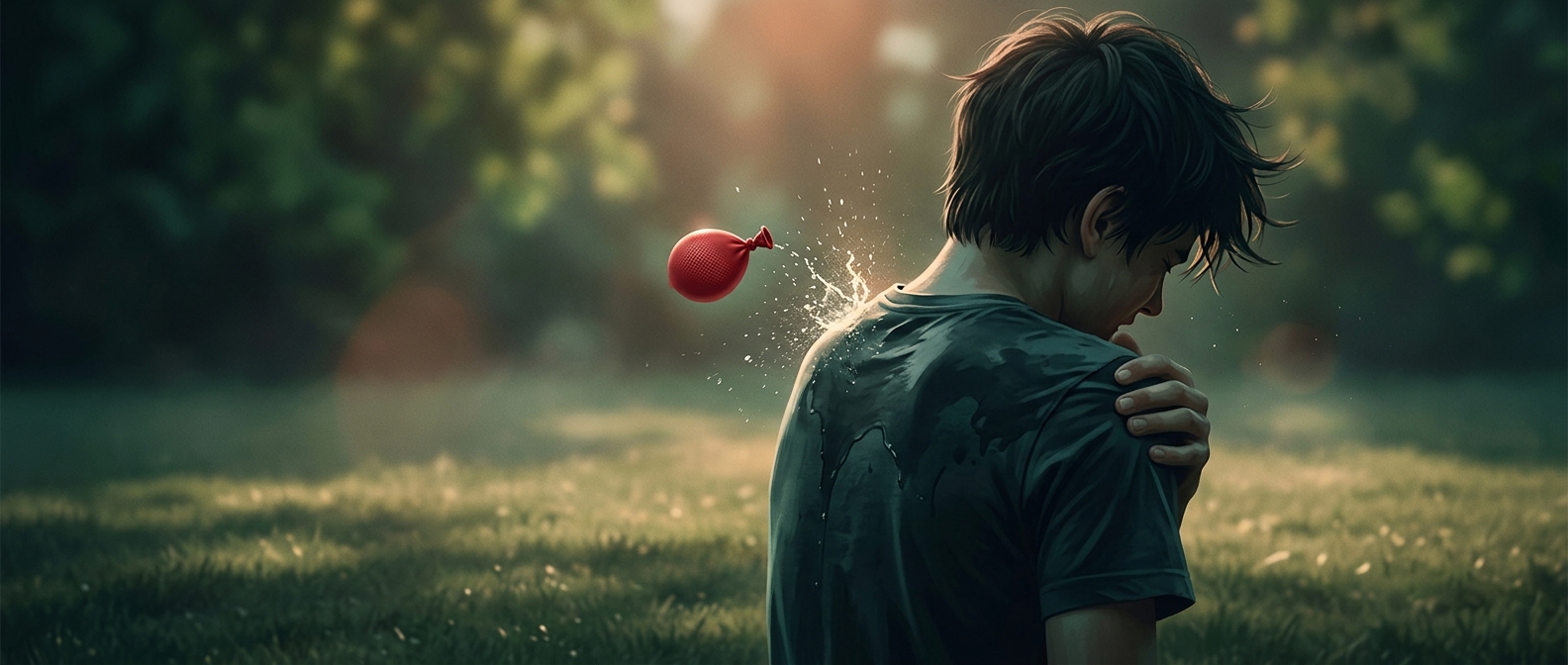
A thrown water balloon is a soft container carrying a heavy, moving liquid. When it strikes skin, the latex begins to flatten and stretch, but the water inside does not stop instantly. It keeps moving forward, pressing against the balloon wall and changing the shape of the impact.
That brief delay matters. The balloon can make contact before its latex tears, so the tied end may be the first part to reach you. The knot is a small, bunched-up patch of latex, and its shape can make the initial contact feel more like a sharp tap than a broad, soft splash. The water’s momentum then continues into the balloon wall; if the latex gives way, the water spreads across the surface afterward.
The Burst Depends on More Than the Throw
A balloon does not necessarily pop at the instant it touches something. The latex has to stretch far enough, or be stressed sharply enough, to tear. A glancing hit on a smooth surface may deform the balloon without breaking it right away, while a harder impact or a rough edge can make it rupture sooner. How full the balloon is also affects how much room the water has to shift as the latex bends.
So the familiar splash is not always the first event. In a quick impact, the order can be knot, then rupture, then water—a small reminder that the balloon and its contents do not behave like one solid object.