Why the Buster Sword’s size turns into weight
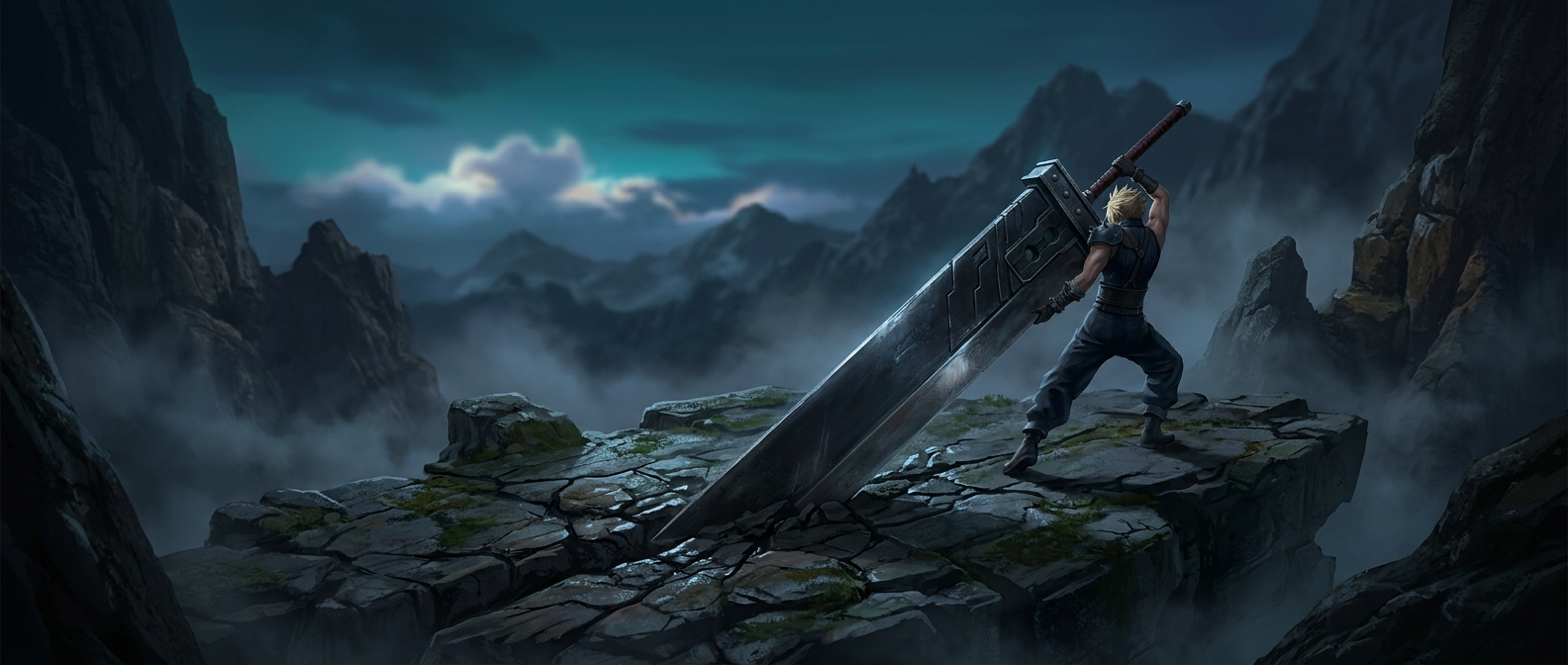
Steel is dense: even a broad, flat slab becomes heavy when it stretches across a blade as large as Cloud’s. The estimate follows a simple chain: the sword’s dimensions imply a volume of steel, and that volume implies a mass. A real replica would weigh less if it were hollow or made from lighter materials, but a solid-steel version would carry the full burden of its size.
The grip would not make it easy to swing
Weight is only part of the problem. Because the blade extends far from the hands, much of its mass would sit at a distance from the grip. That gives the sword strong rotational inertia—the resistance an object has to being turned. In practice, a long, heavy blade takes more effort to start moving, redirect, and stop than the same weight held close to the body.
That helps explain the gap between the weapon’s visual impact and real-world use. In a game, the oversized shape makes Cloud’s attacks unmistakable on screen; in reality, a steel version would be cumbersome to wield, not merely tiring to carry. Its scale is part of the fantasy, while its leverage is what makes that scale matter.