Why bagpipes can attract a closer look
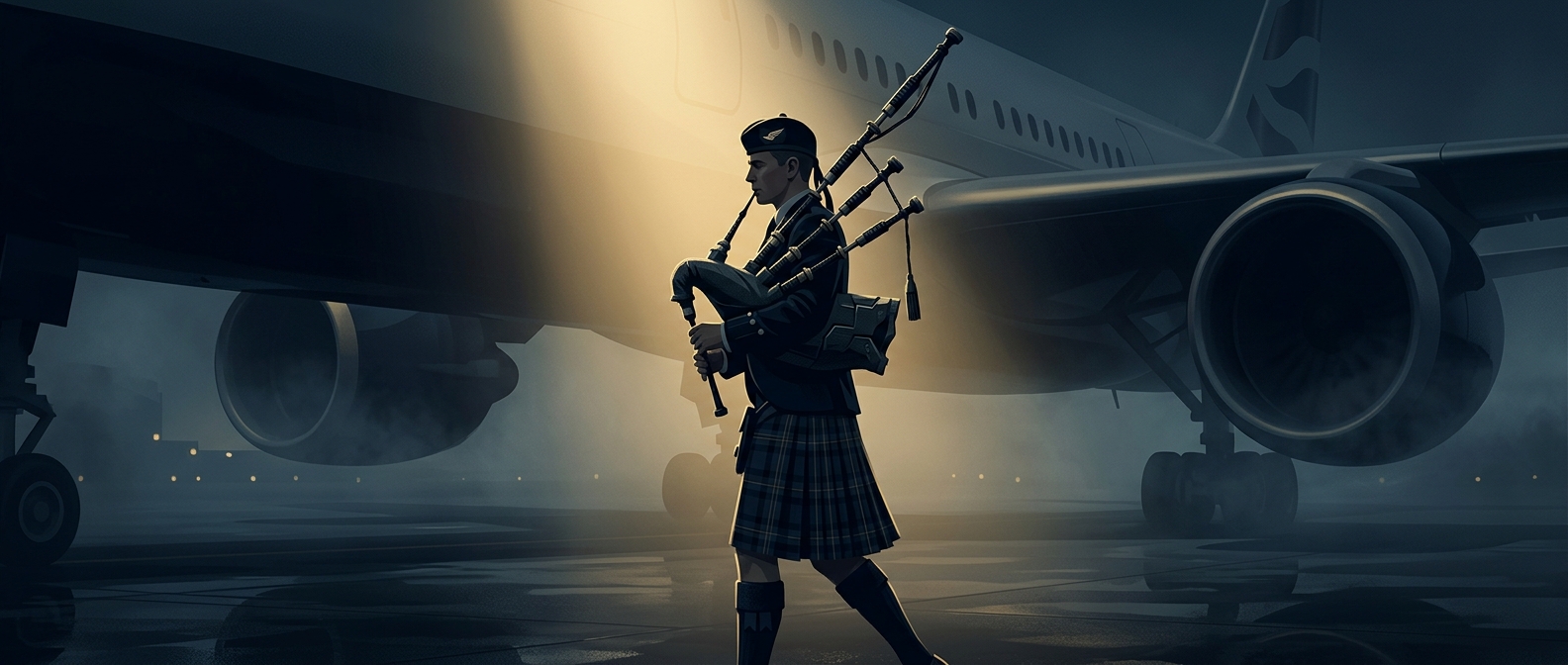
A bagpipe is an instrument, but its parts can make an unfamiliar shape on an X-ray. The bag connects to several pipes: a chanter, which produces the melody, and longer drones, which sound continuous notes. Packed together, those tubes and fittings can be hard to identify at a glance. A security officer may want to inspect the instrument or its case more closely before deciding what they are seeing.
That is where the instrument’s martial history adds an unusual twist. Scottish Highlanders carried bagpipes into battle, where their loud, sustained sound could rally troops and intimidate opponents. The pipes were part of the battlefield scene—not a weapon—but their long, rigid parts can still invite the kind of extra attention given to objects that look unfamiliar or potentially hazardous.
The challenge is identification, not the music
Airport screening is designed to spot objects and materials that need a closer examination, including when they are hidden inside luggage. A bagpipe’s unusual arrangement of tubes, bag and hardware may prompt questions or a physical inspection; the instrument’s name or history does not, by itself, make it a weapon. What matters in the moment is whether security staff can identify the contents and clear them for travel.
So a musician carrying pipes may face an awkward pause while officers work out what is in the case. The same instrument once built to carry across a battlefield can, in an airport, stand out for a much more ordinary reason: it is a complicated object that does not look like most travelers’ belongings.