Heat helps the cocoon release its filament
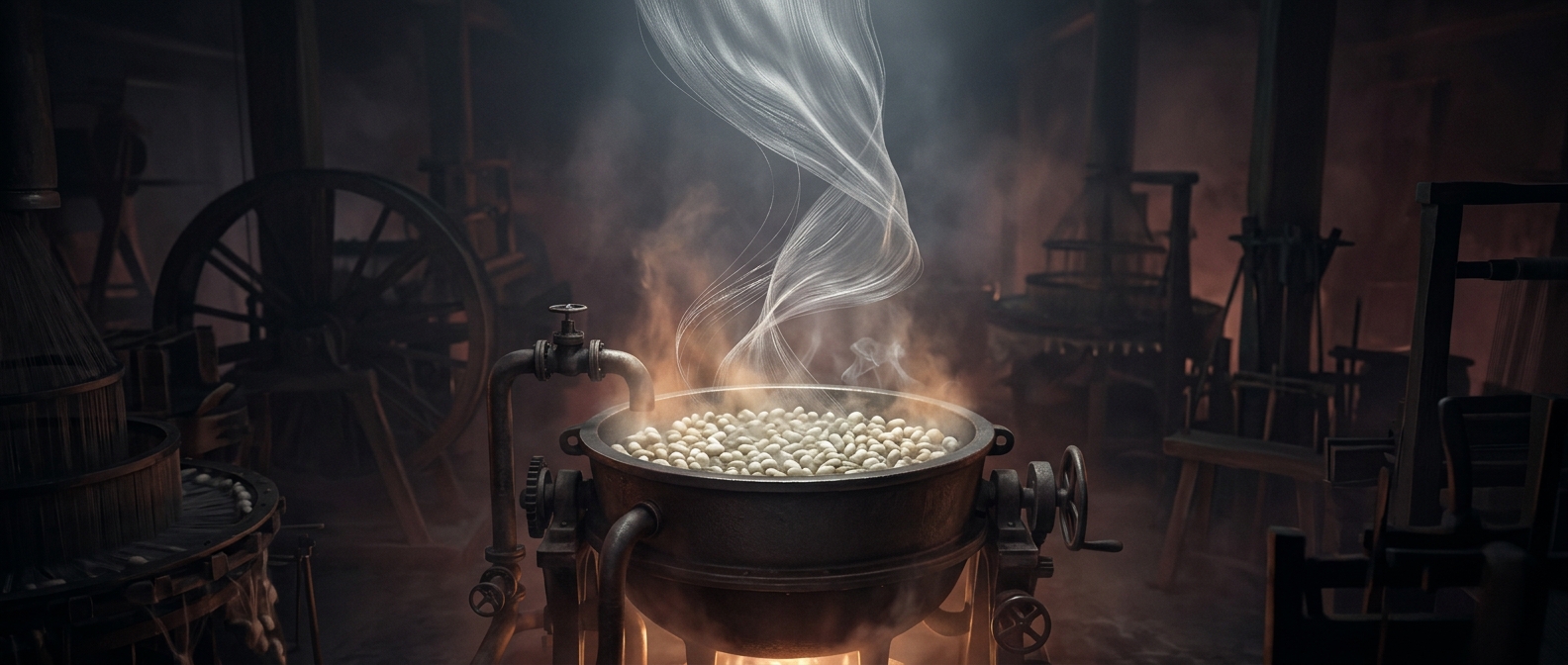
A silkworm builds its cocoon by wrapping one extremely long, fine filament around itself, binding the layers with sericin, a natural gummy protein. Hot water softens this coating. Once the filament’s end is found, a worker or machine can draw it off the cocoon with less risk of snapping it.
The water is not making silk from the cocoon; it is loosening the material that holds the wound layers together. Several filaments are commonly drawn off at once and combined, because one filament by itself is too fine for most practical threads.
Why an unbroken strand matters
If a moth emerges naturally, it cuts through the cocoon wall and damages the filament. The remaining fibers can still be used, but they must be separated and spun like short fibers rather than reeled as long strands. That extra processing changes the texture and consistency of the resulting yarn.
Reeling preserves the cocoon’s continuous filament, producing a smoother, more even thread. The difference begins with a small timing advantage: soften the cocoon before the moth can break through, and its wrapped thread can be drawn out in long lengths instead of rebuilt from fragments.