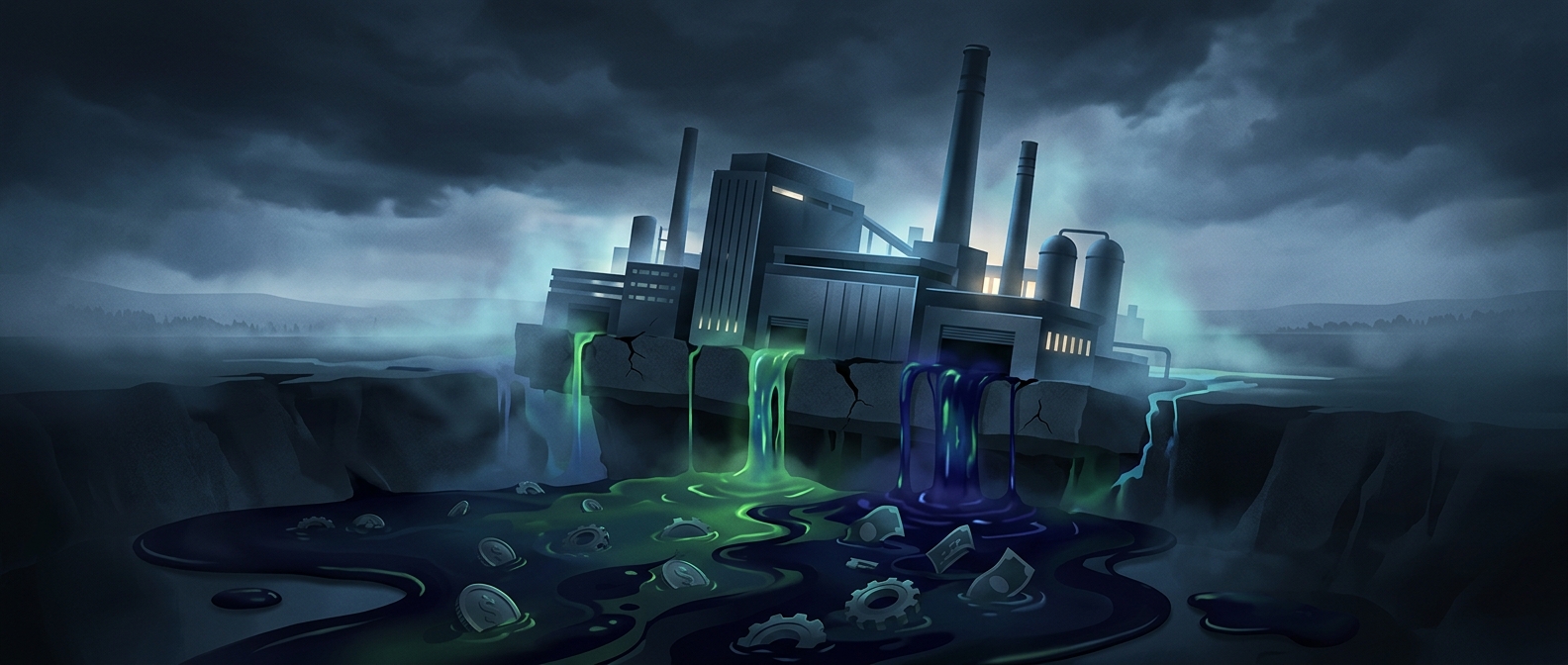
The useful property that became a liability
PFAS is a large family of chemicals, not one substance. Some members became valuable in nonstick coatings and other products because they resist heat, water, oil, and chemical breakdown. That durability helped products perform—but it also meant that certain PFAS could remain in soil and water long after releases from manufacturing or disposal had stopped.
The economic mismatch is stark: the product’s usefulness was immediate, while some of its environmental costs appeared later and far from the factory. Contamination can spread through groundwater, making it difficult to trace to a single source or contain at its point of origin.
Why cleanup costs can keep growing
Removing PFAS is not as simple as filtering out visible debris. Water systems may need specialized treatment to capture particular PFAS, and the resulting concentrated waste still has to be managed. Finding contamination, installing treatment, and maintaining it can all add to the bill. The work may fall to utilities and communities even when the pollution originated with industrial activity.
That gap between who benefited and who initially paid is a central economic issue. Lawsuits and settlements can shift some costs back to companies tied to older production, but they do not make cleanup itself simple. A durable chemical can create a liability that outlasts the product—and the business decisions that put it into use.