Why a stalled connection feels worse than a dead one
A complete outage gives you a clear answer: the task cannot continue, so you can stop trying, switch networks, or wait. Buffering offers no such certainty. The page may load in a moment—or it may freeze again. That uncertainty keeps you watching, clicking, and hoping, while each delay interrupts what you were trying to do.
The cost of waiting without knowing
Many online tasks depend on a steady flow of data. Video needs enough information arriving ahead of playback to stay smooth; a video call needs a continuous exchange to avoid awkward gaps. When the connection slows, data arrives unevenly. The app may pause to collect more, then resume, only to run short again.
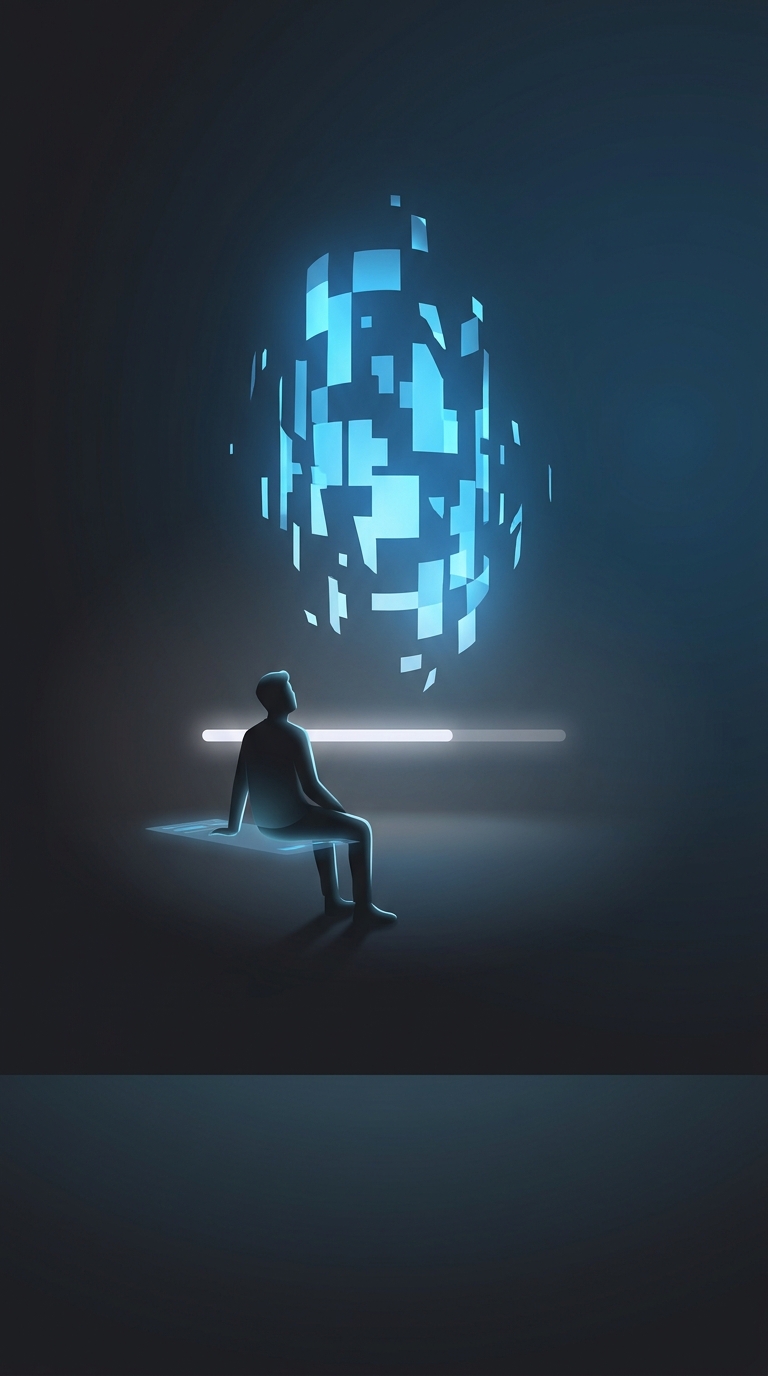
The user experiences this as a series of broken promises: a loading circle appears, progress seems possible, then the task stalls. Because the service is not entirely unavailable, it is hard to tell whether another click will help or make things worse. That uncertainty turns a technical delay into repeated decision-making.
Why the frustration escalates
A dead connection is a single obstacle. Buffering repeatedly interrupts attention and makes progress feel just within reach. The irritation grows especially when the task is time-sensitive or when the user cannot see whether the problem is the network, the device, or the service itself.
That is why a barely working connection can feel more maddening than none at all: it keeps asking for patience without telling you how much patience the task will require.