A fixed screen shaped the whole system
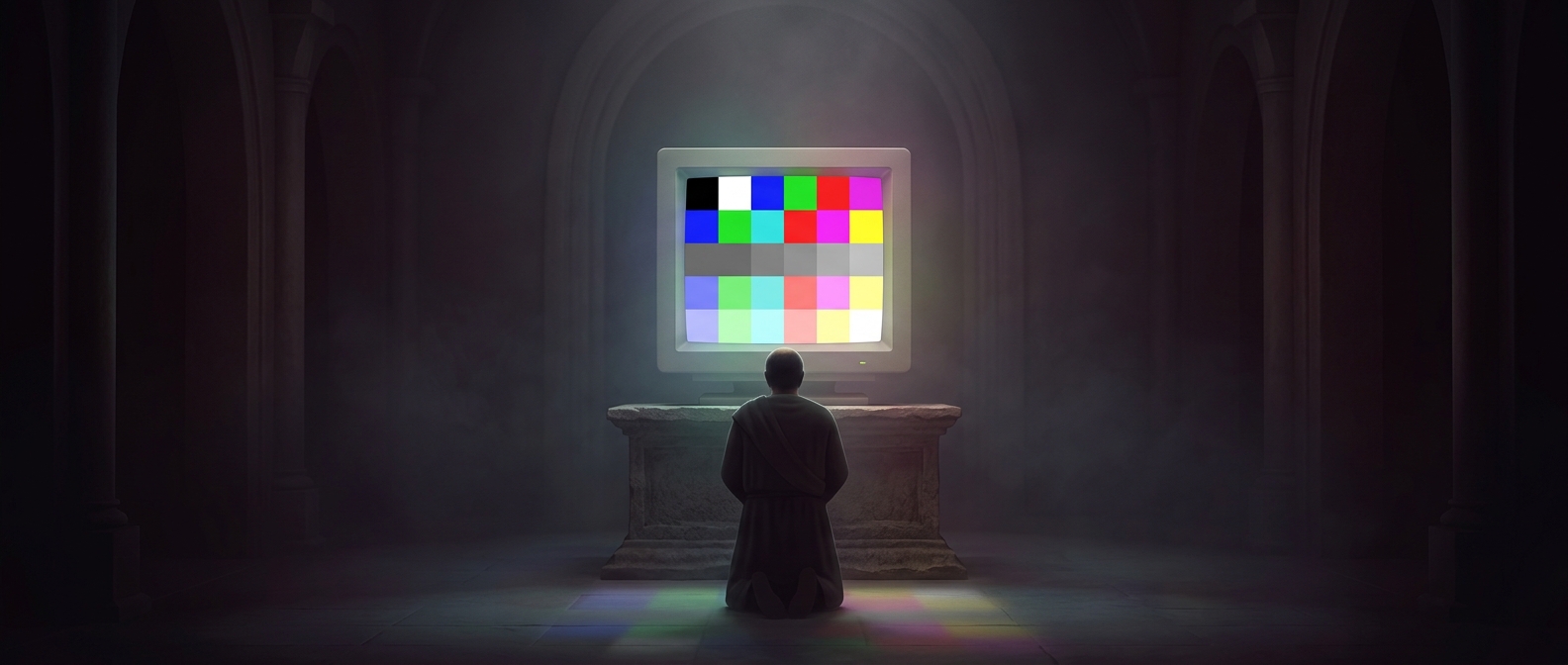
TempleOS’s 640-by-480 display was not just a default setting. It gave every program the same small, predictable canvas: graphics did not need to adapt to different screen sizes, and text and icons had to fit within tight limits. Its 16-color palette imposed a similar constraint. Instead of relying on subtle shades or elaborate visual effects, programs worked with a small set of distinct colors.
Its creator, Terry A. Davis, said God had instructed him to use those limits. The technical result was an operating system built around a specific, unchanging way to display information—not a platform intended to accommodate a wide range of modern monitors and applications.
Built as one connected environment
Davis also created HolyC, a programming language used throughout TempleOS. The system included tools for writing and running code, so programming was part of the operating environment rather than something reserved for a separate development setup. This close integration made TempleOS feel like a self-contained project shaped by one person’s priorities.
Those choices also mark its limits. A fixed resolution and tiny palette rule out many expectations of contemporary desktop computing, while the system’s unusual design makes it unlike a general-purpose operating system built for broad compatibility. TempleOS’s constraints were not merely technical inconveniences; they were part of the vision Davis said he was following. The result is a striking example of how a creator’s stated purpose can determine even the most basic features of a computer system.