The extra steps hydrogen has to survive
A hydrogen car does not burn hydrogen to turn its wheels. In a fuel-cell car, hydrogen reacts with oxygen inside a device that produces electricity; that electricity then powers an electric motor. The car still needs an electric drivetrain, but it carries hydrogen rather than a large battery as its energy store.
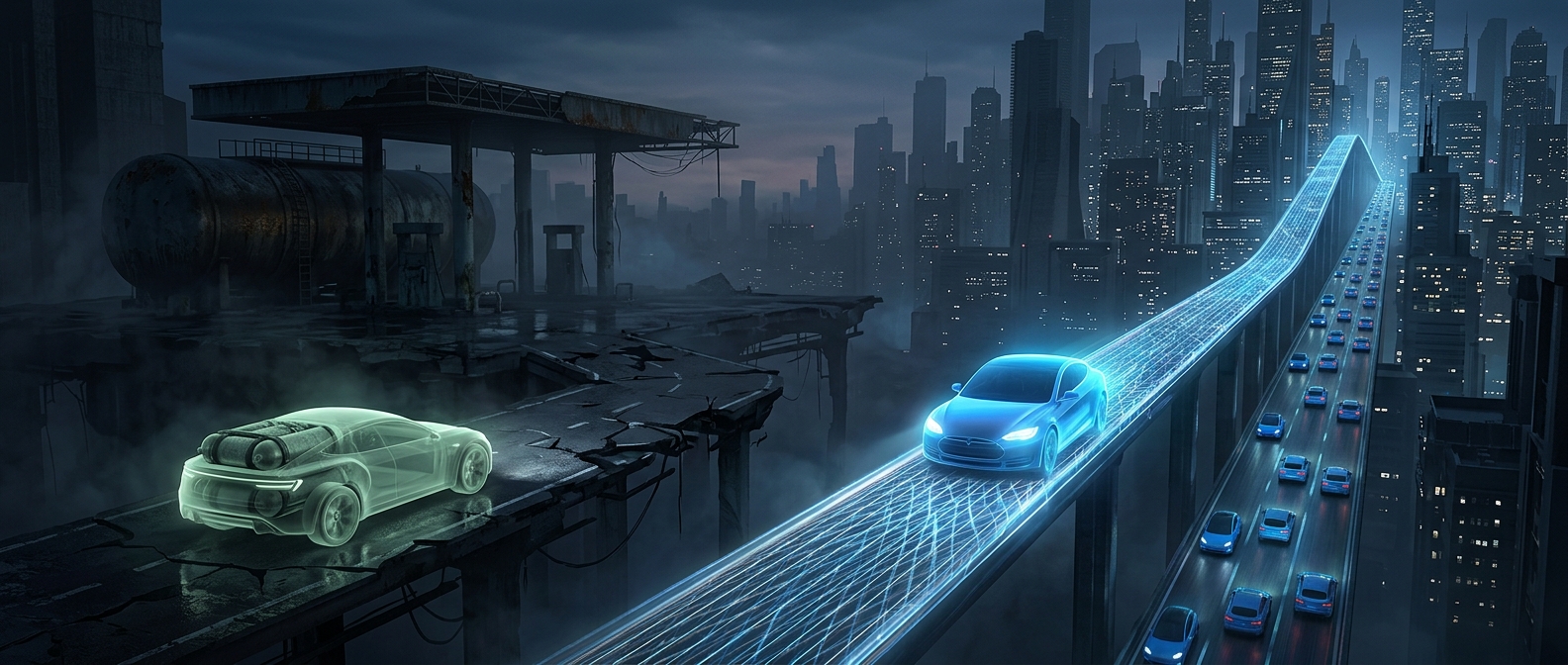
That route adds several energy-consuming stages before the car moves. Hydrogen must be produced, then compressed so enough can fit in the vehicle’s tanks, transported, and dispensed at a specialized station. At the car, the fuel cell converts it back into electricity. Losses at each stage leave less of the original energy available for driving.
A battery follows a shorter route
A battery car also loses some energy, including when electricity travels through the grid and when the battery charges and discharges. But it can use electricity directly: power flows from the grid into the battery, and the battery supplies the motor. It avoids making a separate fuel, moving it to a station, and converting it back into electricity onboard.
That shorter chain matters beyond energy use. A driver can charge at home or at many places with electrical service, while hydrogen refueling requires stations equipped to store and handle compressed gas. Building such a network means coordinating fuel production, delivery, and station investment—not just installing a charger.
Infrastructure reinforced the choice
The two technologies therefore faced different practical hurdles. Battery charging could often build on the existing electricity system, even if local equipment needed upgrades. Hydrogen required a new supply-and-refueling chain, while its extra conversion steps made the overall energy route less efficient. As battery cars and charging expanded, that gave manufacturers and drivers a more straightforward path to adoption.
The difference is visible in the everyday routine: a battery car can take in electricity where it is parked, while a hydrogen car depends on a dedicated station being supplied with fuel. For passenger cars, skipping that elaborate road trip for the energy helped batteries pull ahead.