Why a Funny Page Could Sell a Newspaper
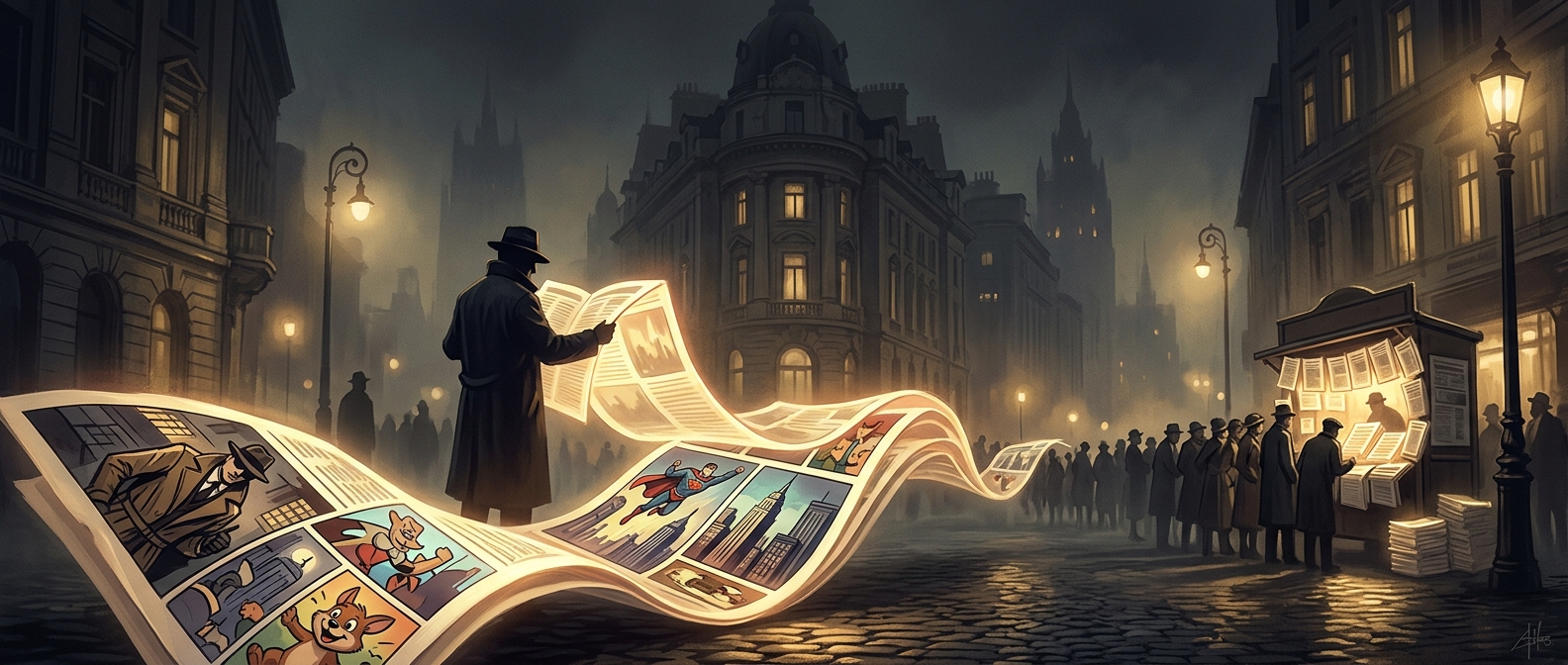
A comic strip gave a newspaper something a headline alone could not: a familiar cast of characters readers could return to. In a crowded market, that familiarity offered a small, reliable reward for buying one paper instead of another. A reader might come for the news, but a favorite strip could help make the choice habitual.
The Sunday Section as a Special Attraction
Sunday editions made that bargain especially visible. Newspapers could gather comics into a substantial, often colorful section, turning them into a feature that readers could browse or share at home. The page was not merely space filled between news stories; it was part of the paper’s appeal, and its placement helped make the Sunday edition feel like an event rather than just a larger stack of news.
Recurring characters also encouraged readers to follow a story over time. A strip could deliver a quick joke in one installment while leaving a situation to continue in the next. That combination made comics easy to sample and rewarding to revisit—useful qualities for a product that had to persuade people to buy it again tomorrow, or next Sunday.
Entertainment Became Part of the Product
This strategy tied popular entertainment to newspaper circulation. Comics brought in readers who might not approach the paper only as a source of serious reporting, while their regular appearance gave existing readers another reason to keep buying it. The result was a newspaper whose appeal extended beyond the news: the funny pages helped turn a daily or weekly purchase into a repeated reading routine.