A fairy-tale hero, not a medieval soldier
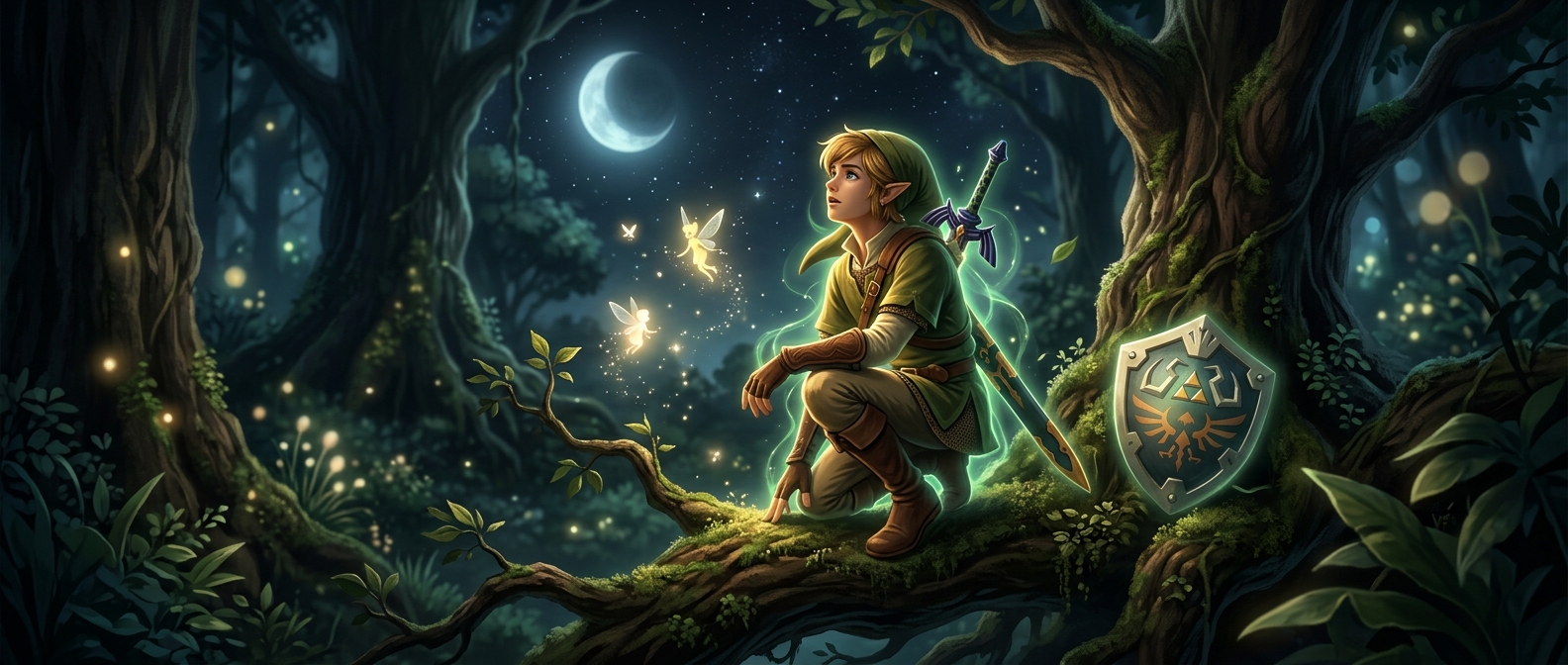
Peter Pan’s influence gave Link a different visual identity from the armored knights common in fantasy stories. His youthful proportions and storybook clothing suggest a character who belongs in a world of forests, strange creatures, and impossible journeys—not a battlefield governed by rank or military duty.
That distinction matters in The Legend of Zelda. Link is usually a quiet protagonist, so players learn who he is largely through what they see him do. His recognizable outline helps make him legible as the same hero across changing settings and adventures, even when a particular game gives him a different outfit or role. The design can feel familiar without making each version look identical.
A visual idea that can travel between games
The Peter Pan connection also fits a series built around adventure rather than a single fixed biography. Link is repeatedly placed in new situations, and his youthful, fairy-tale look makes that flexibility feel natural: he can be a village boy, a traveler, or a chosen hero without needing the visual weight of a seasoned warrior.
The result is more than a costume reference. It gives the series a compact visual promise: this is a young character stepping out of ordinary life and into a world where wonder and danger sit side by side. That promise remains readable even before a player knows the story.