From a creeping fog to a scientific disaster
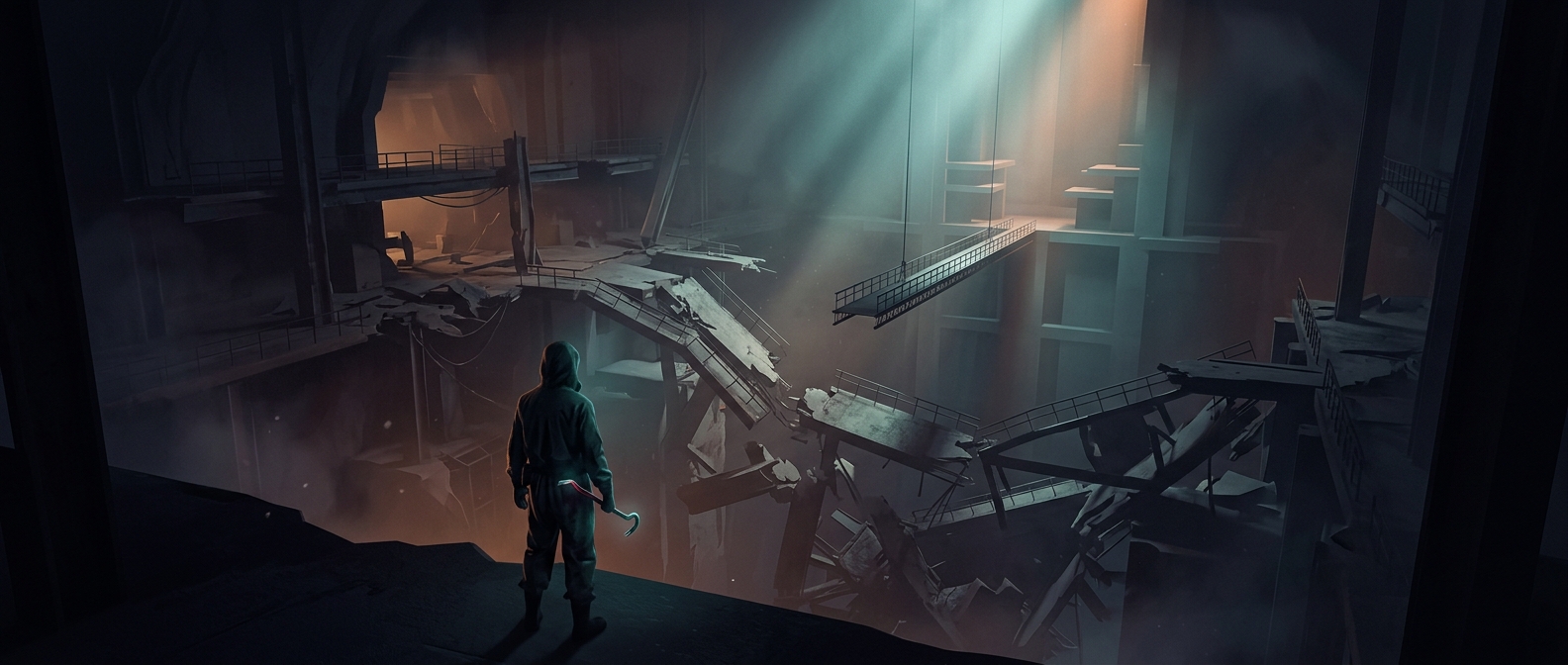
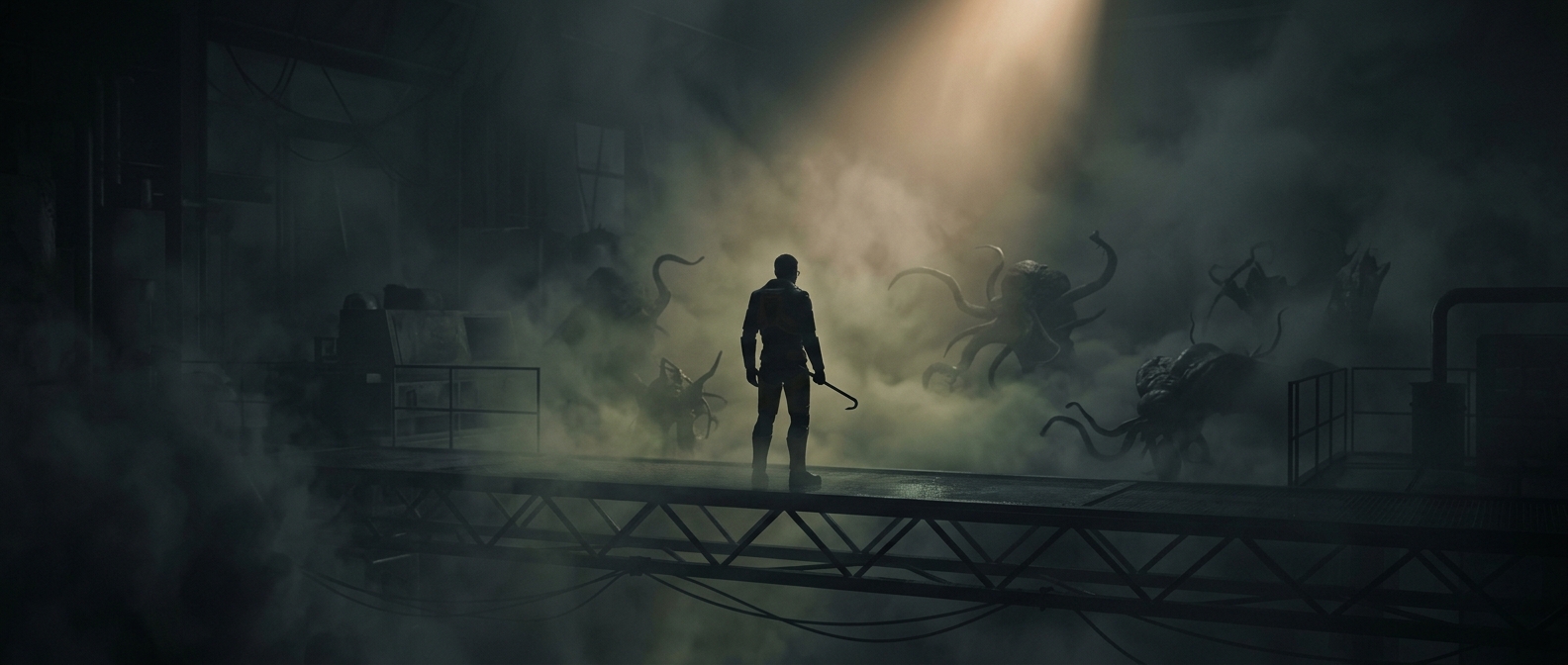
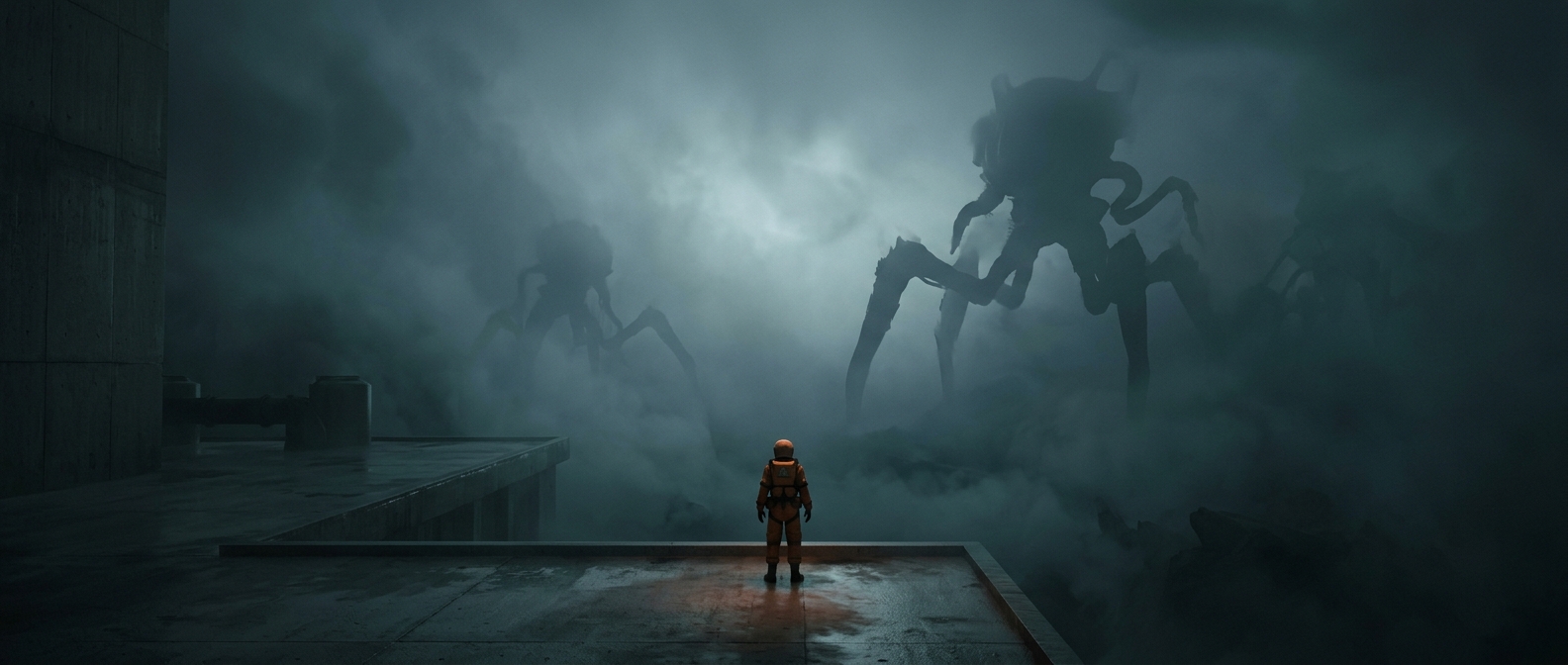
Stephen King’s novella The Mist traps ordinary people in a world invaded by creatures from another dimension. The fog is more than atmosphere: it hides what is coming, so characters encounter the invasion in fragments—strange sounds, glimpses, sudden attacks. Half-Life carries that unsettling structure into a science-fiction setting. At Black Mesa, a failed experiment opens a way for alien life to enter, turning a research facility into a place where danger can emerge around the next corner.
That resemblance is a starting point, not a scene-by-scene adaptation. The game makes the disaster something the player must move through, rather than a crisis watched from the sidelines. Its protagonist, Gordon Freeman, is a scientist caught in the catastrophe, not a trained action hero.
Why the crowbar matters
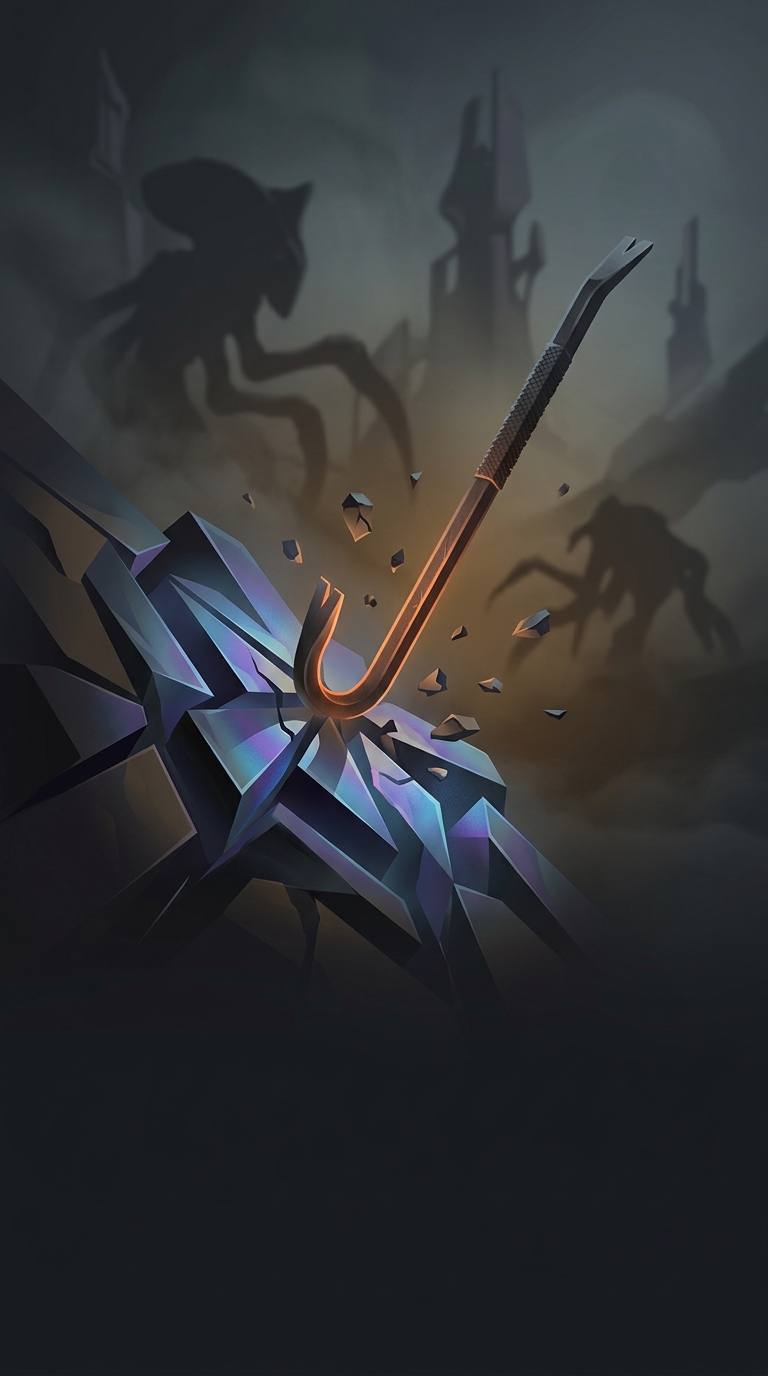
The crowbar gives that vulnerability a physical answer. It is a familiar tool that can also serve as a weapon, making Freeman’s first means of defense feel like something he might find in a workplace—not equipment issued for a planned battle. As players use it to break through obstacles and fight nearby threats, the ordinary object becomes part of the story’s image of survival: the person trying to escape is forced to improvise with whatever is at hand.
Together, the hidden invasion and the improvised weapon connect The Mist’s eerie premise to Half-Life’s interactive design. The threat stays strange and unpredictable, while the player’s response stays immediate and physical: look into the dark, then decide whether to run or swing.