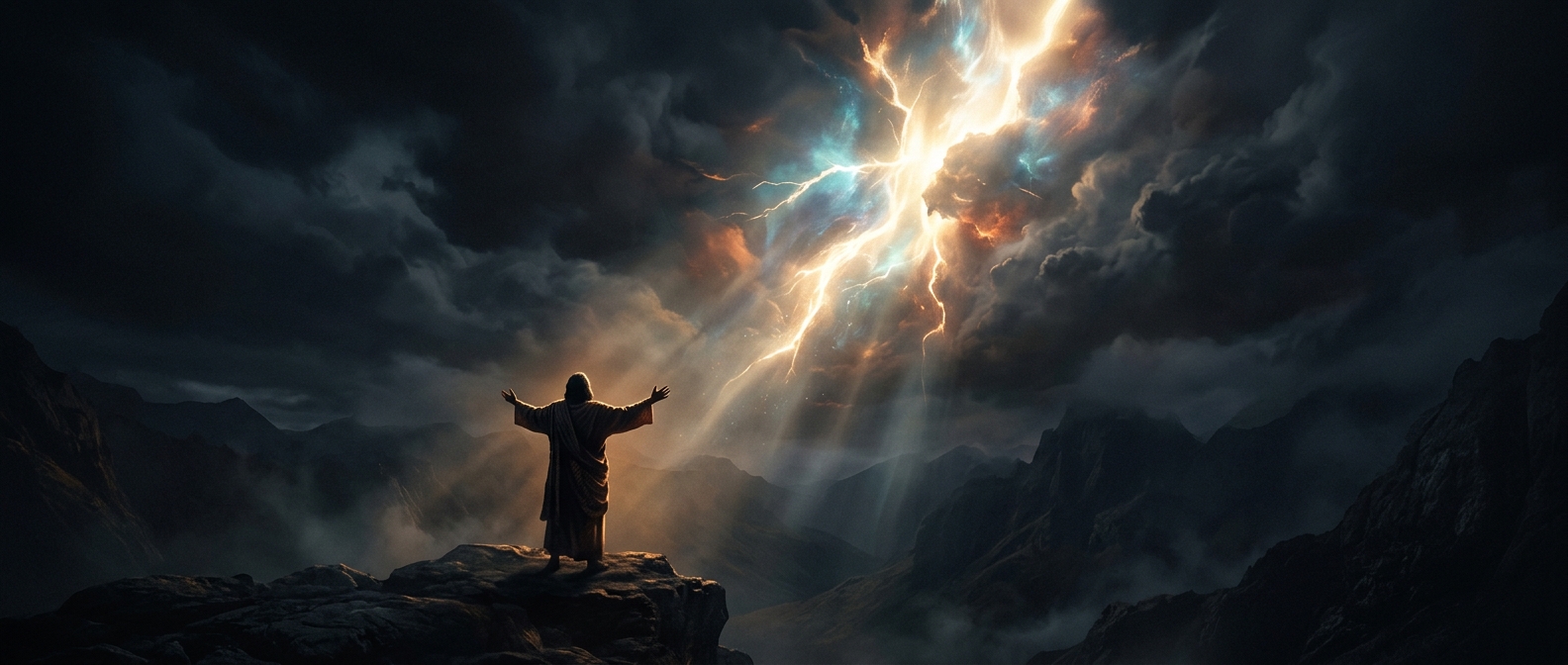
When a Sign Becomes a Commission
In the Book of Exodus, the burning bush is more than a strange sight. Moses notices a bush burning without being consumed; then a voice calls him by name and gives him a task: return to Egypt and lead the Israelites out of slavery. The encounter joins a visible sign to spoken instruction, turning spectacle into a claim about who is present and what must happen next.
A theophany is a manifestation of a deity in a form people can perceive. In biblical stories, that need not mean the deity appears as a human figure. Fire, cloud, light, or a voice can serve as the means through which divine presence is disclosed. The sign makes the encounter concrete within the story, while the words give it meaning.
Why the Bush Matters
The fire suggests power and danger, but the unconsumed bush also makes the scene arresting: something is happening that ordinary fire should not allow. The image holds attention long enough for Moses to approach and listen. The narrative then moves from wonder to responsibility; Moses is not simply shown a marvel but sent into a political crisis.
That pattern helps explain why theophanies are often portrayed as overwhelming. Their force comes not only from unusual sights, but from the sudden change in what a person is expected to understand or do. In the burning-bush story, the encounter’s lasting consequence is not the spectacle itself: it is Moses’ departure from the wilderness with a mission.