How a Victorian Stage Made a Ghost Appear
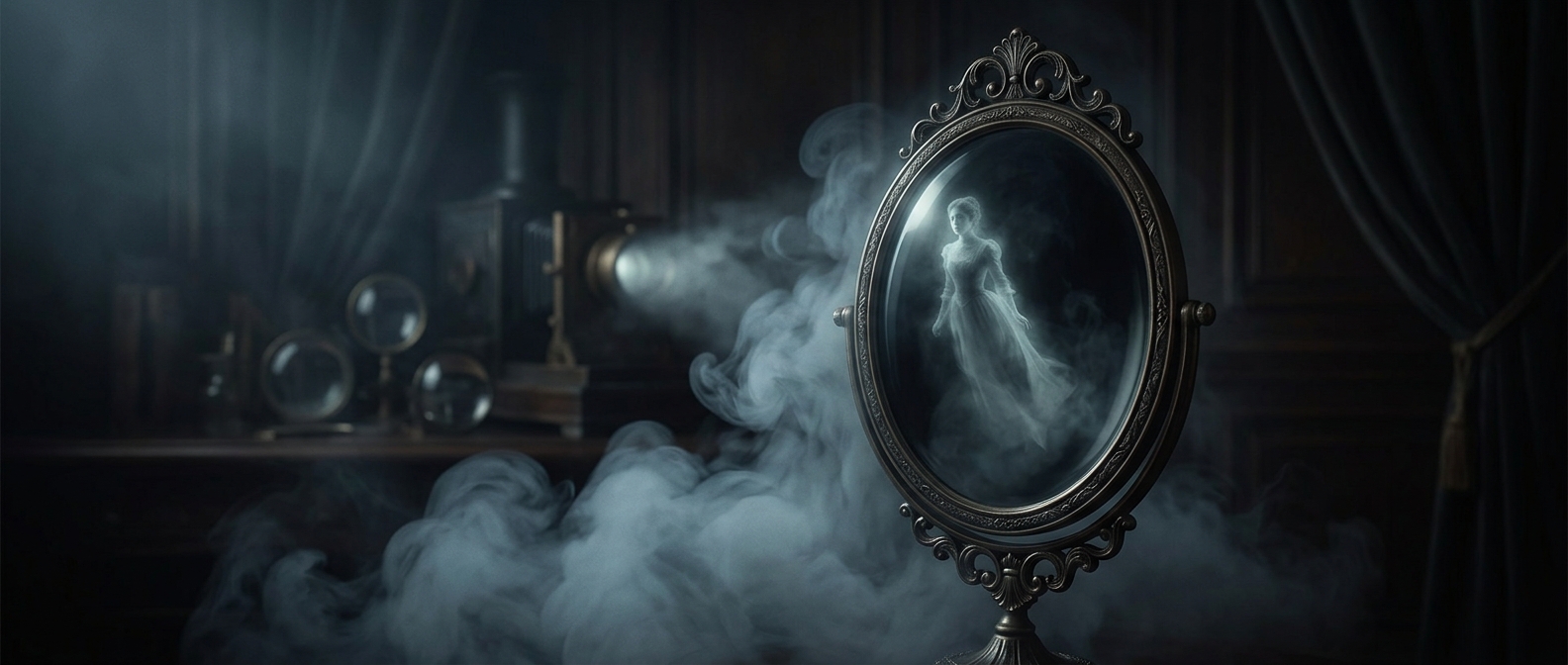
The “smoke and mirrors” effect was a practical theater illusion, not a supernatural event. Its best-known form used a pane of glass set at an angle between the audience and the stage. The glass was nearly invisible in the dark, but it could reflect an image from a concealed area of the theater onto the scene.
The Hidden Image in the Glass
A performer or object stood out of sight, often below or beside the stage, where a light could illuminate it. The angled pane caught that image and reflected it toward the audience. Because the reflection seemed to occupy the same space as the actors and scenery, it looked like a ghost sharing the stage with them.
The lighting did the crucial work: the hidden figure had to be bright enough to appear in the glass, while the visible stage remained dim enough that the audience would not notice the pane. To make the apparition seem to materialize or vanish, stagehands could control the light on the hidden image. The ghost itself did not need to move into view; its reflection could fade in or out.
Why Smoke Helped
Smoke was more than spooky atmosphere. It softened the scene and made it harder to pick out the glass, its edges, or the machinery and performers concealed around it. The illusion depended on carefully controlling what the audience could see: illuminate the reflected image, darken its source, and disguise the surface carrying it.
That combination turned a simple optical reflection into a theatrical apparition. The audience saw a ghost, but the effect came from where the glass was placed, what was lit, and what remained hidden.