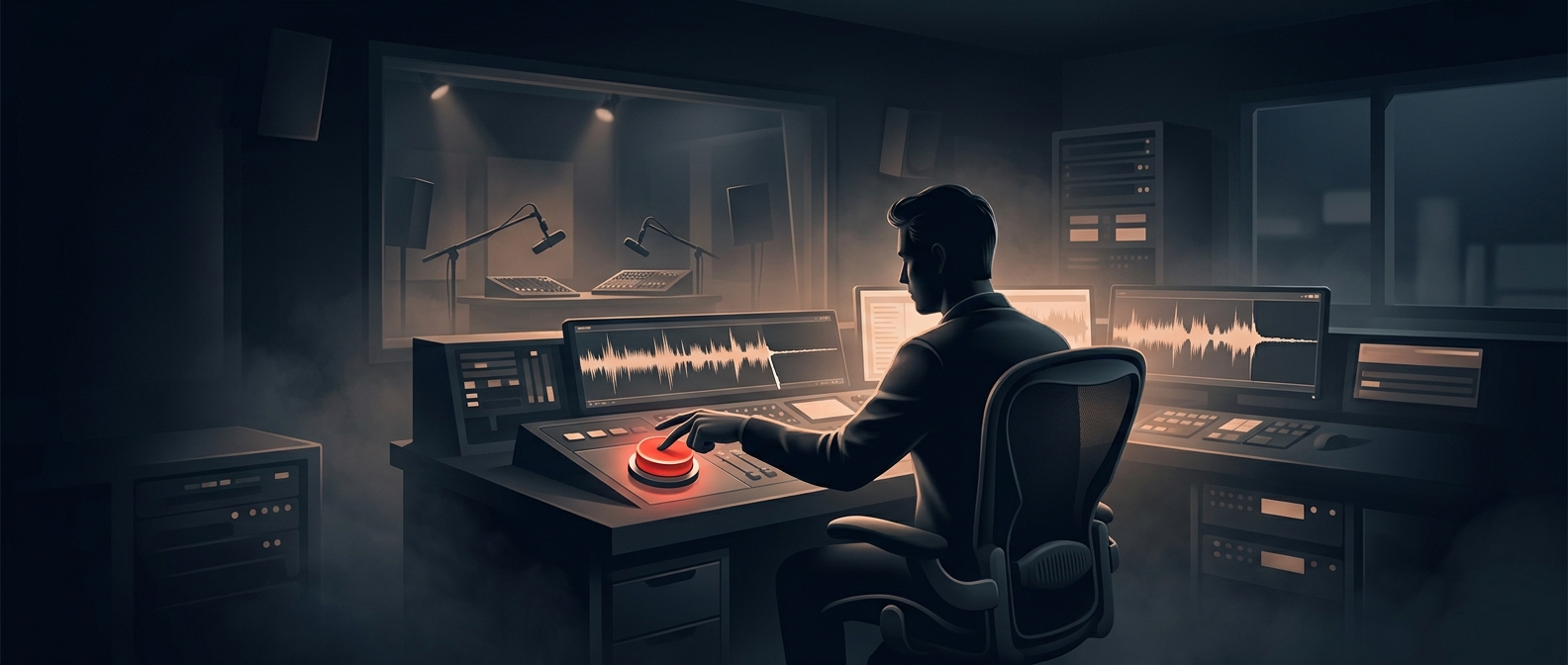
The broadcast is live—but a few seconds behind
A radio “dump” button works because the station is not sending the microphone straight to the transmitter. A device called a delay buffer briefly holds the incoming audio, then plays it out after a short pause. The audience hears the program nearly live, while an operator has a moment to react to what was said.
The buffer is a rolling store of sound: as new audio goes in, older audio comes out. Pressing dump tells the system to skip over the most recent portion still waiting in that store. The offending words are discarded before they reach listeners; the broadcast then continues with whatever audio comes after them.
What listeners may hear afterward
Removing audio creates a hole in the program. Depending on the equipment and its settings, listeners may hear a brief silence, a jump in the conversation, or a noticeable change in timing. Some systems can help restore the usual delay after a dump, but the exact behavior varies. The button is therefore not a way to repair the recording or erase words already broadcast—it only affects sound that has not yet gone out over the air.
That small buffer changes the operator’s job. There is no time to debate once a caller starts speaking: the operator must recognize the problem and press the control before the delayed audio reaches transmission. A few seconds of stored sound turn a live broadcast into a narrow window for intervention.