A life-form built around growth
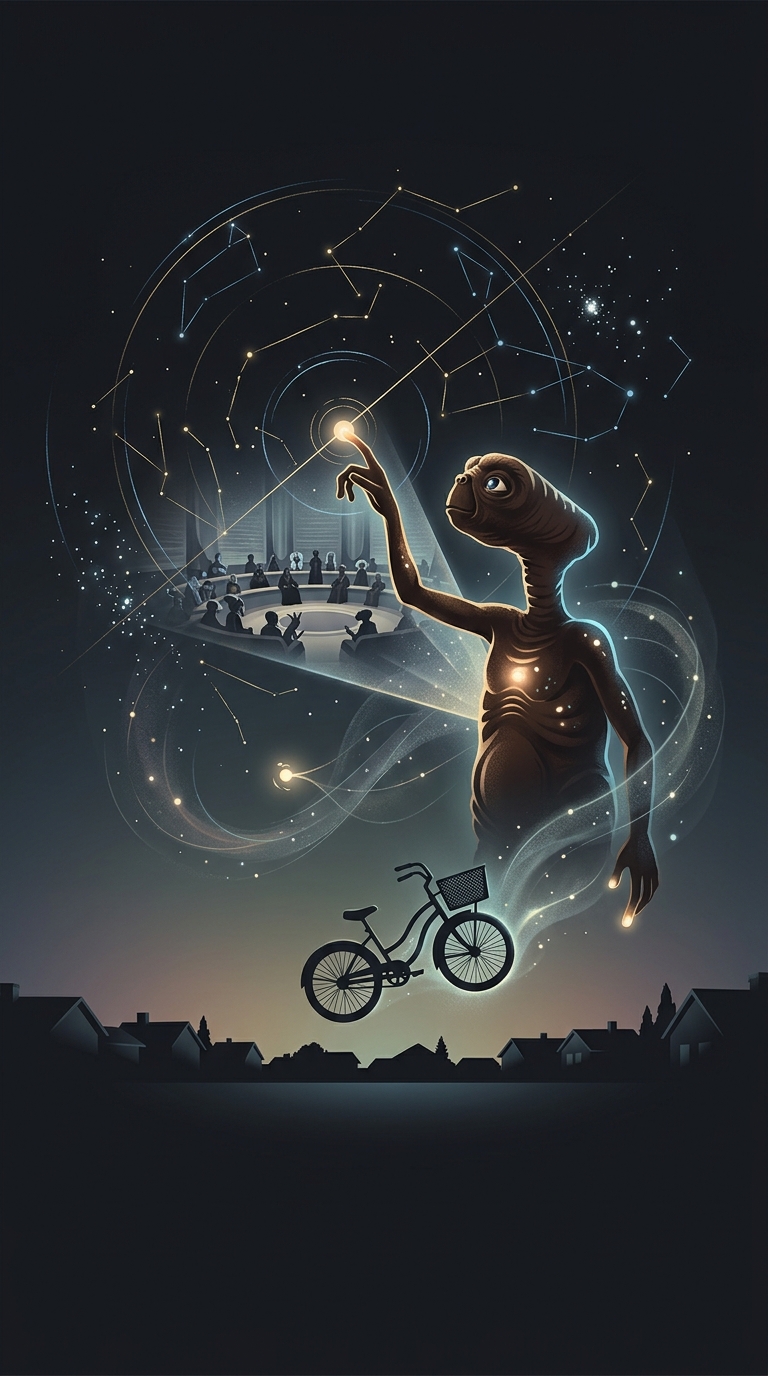
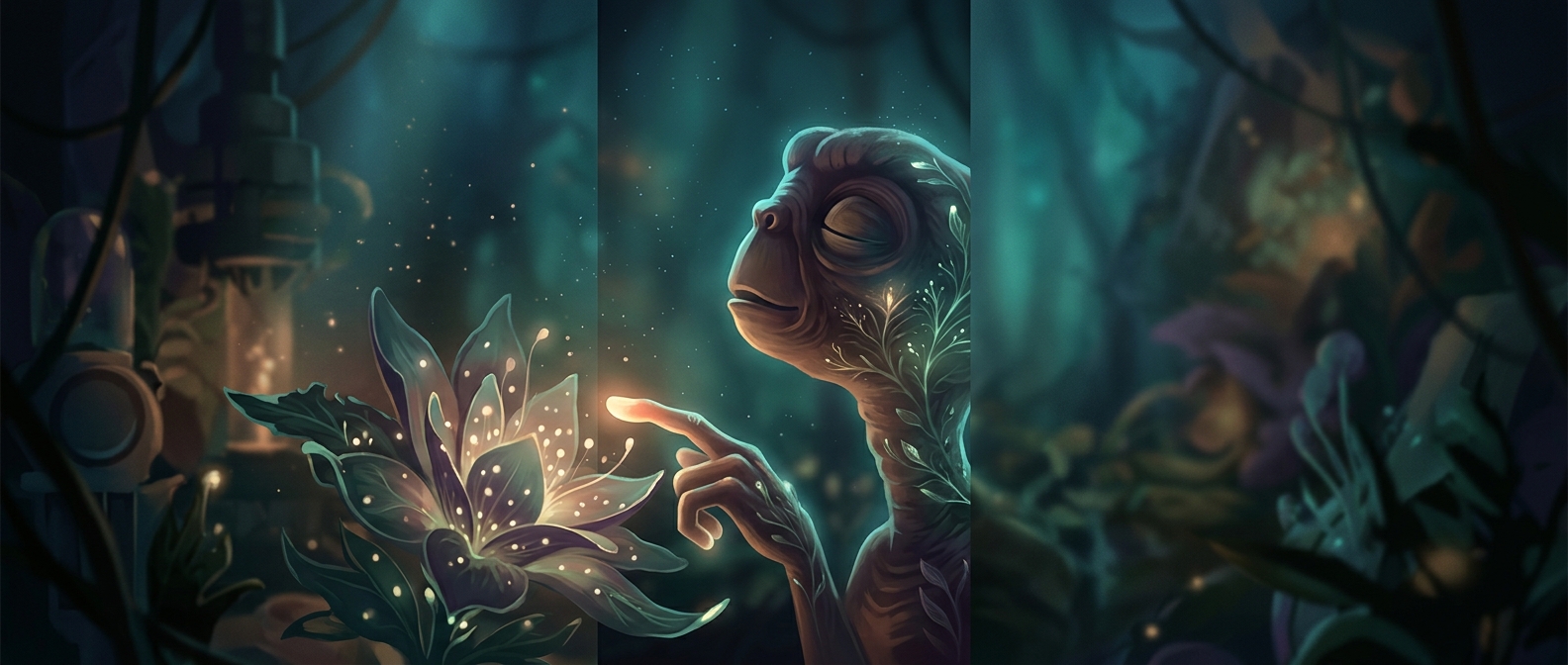
Treating E.T. as a highly evolved plant gave the filmmakers a different starting point from the familiar image of an alien as a creature with claws, armor, or predatory instincts. His design could suggest a being connected to living things without making him look like a conventional animal. The result supports the character’s gentleness: he seems vulnerable and curious, not built for attack.
The idea also shapes how the film makes his condition visible. A plant’s health can be shown through a simple change—wilting or blooming—so viewers can read the flower as more than decoration. As E.T. weakens, the flower’s decline gives his danger a clear, physical sign; its return to life makes his recovery visible too.
The flower makes an invisible bond legible
A connection between an alien and a potted flower is otherwise abstract. The film turns it into something viewers can watch: a living plant responds as E.T.’s own vitality changes. That image links his unusual nature to the world around him and gives the story a visual shorthand for loss and renewal.
The payoff is not just that E.T. can affect a flower. The flower lets the audience see the cost of his fading life—and its return—without needing to explain the bond in technical terms.