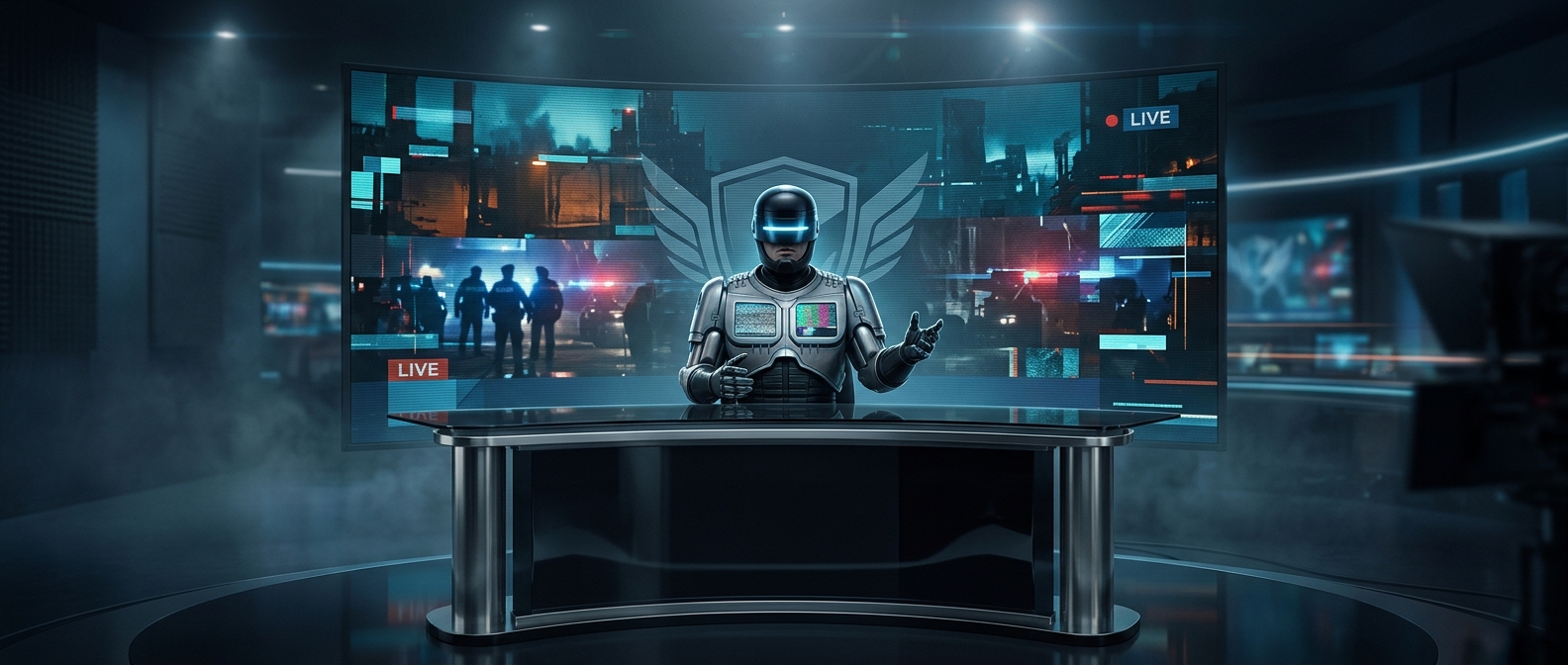
The news desk makes catastrophe sound routine
In RoboCop, fictional news breaks interrupt the action with reports delivered in the bright, composed style of television journalism. Their subjects can be grotesque or absurdly dangerous—including a nuclear satellite laser—yet the anchors keep the same upbeat cadence. The joke is not simply that the reports are outrageous. It is that the tone gives them the air of ordinary programming.
A pause that keeps the satire moving
These interludes let the film step away from its cyborg hero without leaving its world. A report can sketch a larger crisis or an unsettling piece of technology in a few seconds, while the cheerful presentation makes the information feel less like an urgent warning than another item between segments. Viewers get a brief pause from the action, but not relief from the film’s uneasy view of the society around it.
That contrast is the mechanism of the satire: the more calmly the anchors package disaster, the more disturbing that calm becomes. The news format turns extreme events into consumable entertainment, suggesting a culture practiced at absorbing bad news without stopping to reckon with it.
The joke reaches beyond the anchor
Because the reports resemble familiar broadcast conventions, the comedy lands through delivery as much as content. The anchors do not need to announce that the world is grotesque; their polished composure does the work. Each break briefly resets the mood, then sends viewers back into the story with a sharper sense of how normalized its surrounding chaos has become. The result is a news interruption that functions as both world-building and a punchline.