How a Puppet Booth Turned Authority Into a Joke
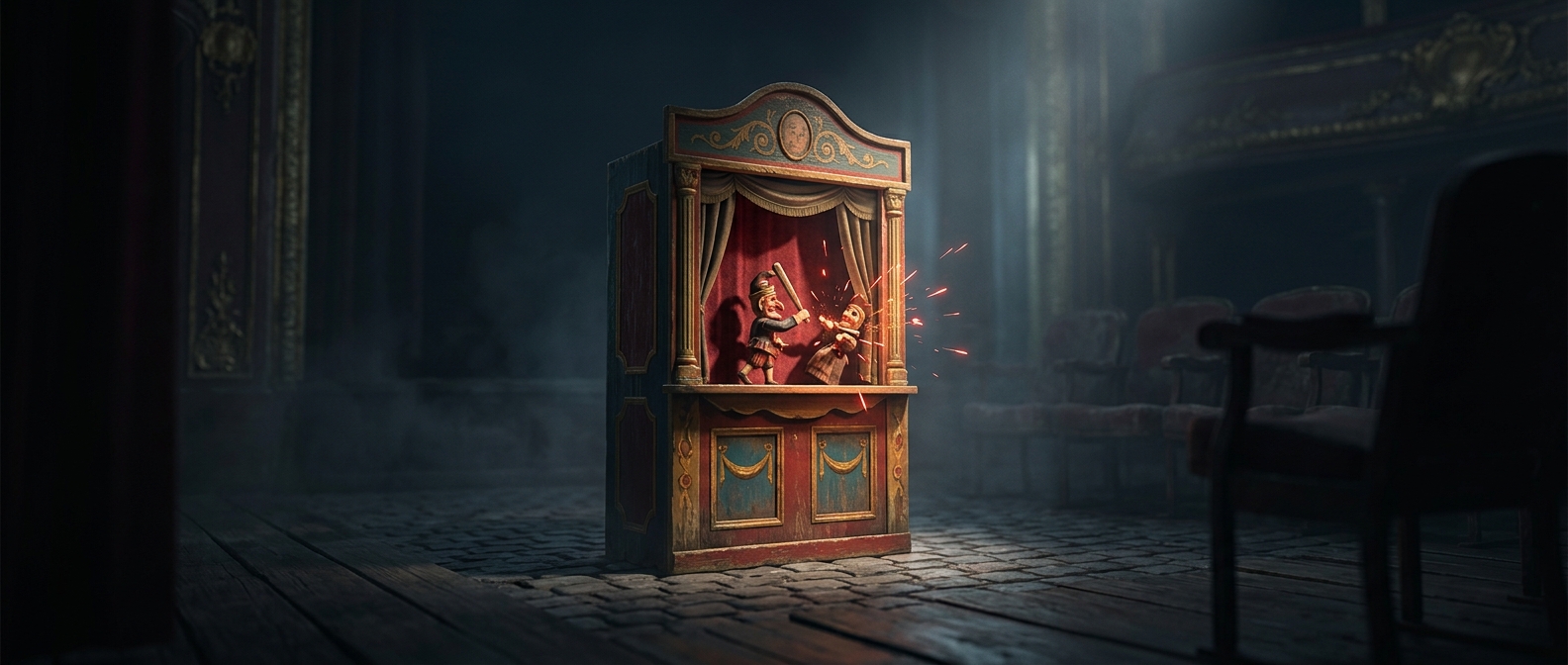
In the traditional Punch-and-Judy show, a small booth created a sharp divide: the puppets could cause chaos in public, while the performers remained tucked out of sight. Mr. Punch’s exaggerated voice and outrageous behavior made the action feel larger than the wooden figures themselves. The joke depended on a familiar reversal: a character who would normally be expected to obey rules instead mocks or outwits the people enforcing them.
Slapstick Made the Reversal Safe to Watch
The violence was deliberately theatrical. A blow landed with a comic sound, a character bounced back, and the scene moved on. Because the figures were visibly puppets, the audience could enjoy disorder without mistaking it for a realistic attack. That distance also softened the risk of the joke: authority could be ridiculed through a fictional troublemaker rather than challenged directly by a spectator.
The show’s targets could include recognizable figures such as policemen or judges. Their status made them easy to identify, while their defeat gave the audience a brief, comic reversal of everyday power. The puppet was not simply a miniature person; it was a mask that let performers stage defiance at a safe remove.
A Small Stage, a Public Audience
A booth could be set up where passersby gathered, bringing the performance close to ordinary public life rather than placing it behind the formality of a theater. Its rough, fast-moving comedy worked even for people who caught only part of the show. The result was a compact kind of social satire: a wooden figure could do what an onlooker might hesitate to do—make authority look ridiculous, then escape into the next joke.