Why Punch’s stick is the punchline
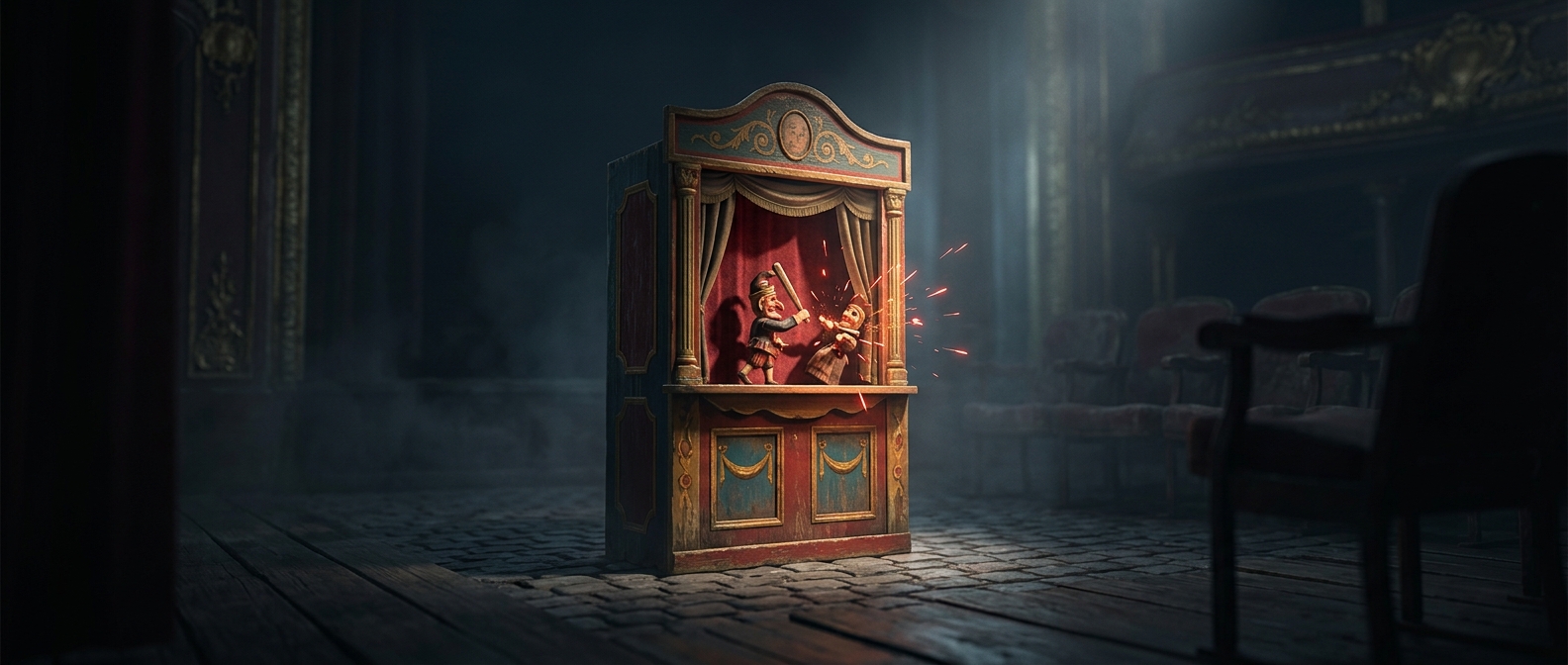
In a Punch and Judy show, the wooden slapstick is more than a prop: it is the engine that keeps the comedy moving. A quarrel or threat quickly becomes a chase, a blow, and an exaggerated reaction. The repeated rhythm makes the violence legible as stage business rather than realistic harm. The audience is invited to anticipate the next hit, not to wonder how anyone could survive it.
That simplicity suits a puppet booth. The figures are small, the action must read from a distance, and a broad physical gag works even when a passerby catches only a minute of the performance. A stick, a sudden movement, and a loud comic effect can communicate conflict without a complicated plot.
Authority becomes part of the joke
The encounters with a police officer, a ghost, or the devil widen the gag beyond ordinary brawling. Each arrival seems likely to put Punch in his place; instead, the same comic response defeats the new threat. The joke depends on the mismatch between the seriousness of the opponent and the crude sameness of Punch’s solution.
That reversal gives the show its unruly feel. In everyday life, police and supernatural figures can represent forces people cannot control. In the puppet booth, they are reduced to characters who can be interrupted by a stick. The audience gets a brief, deliberately impossible world in which no one—not even an authority or a monster—can make the rules hold for long.