A whistle could move scenery overhead
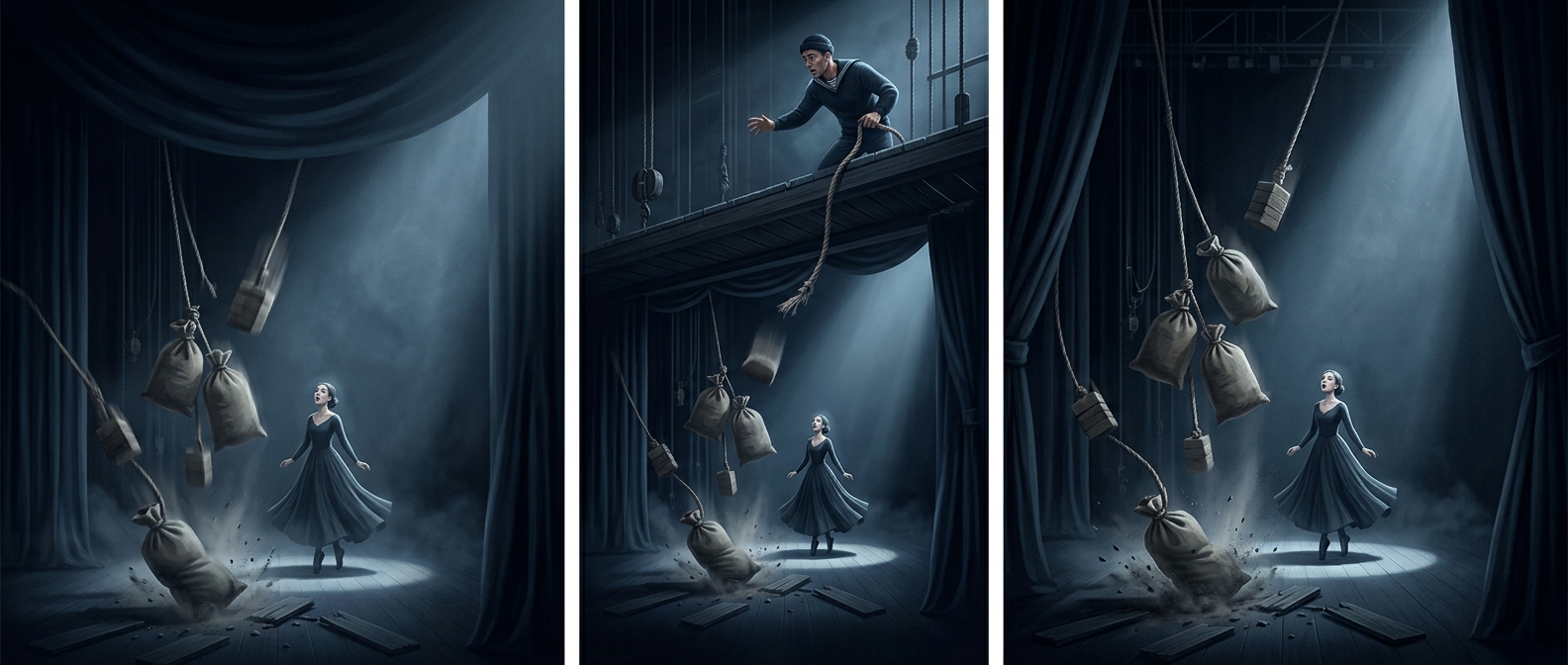
In early theaters, changing a scene could mean hauling large painted flats up out of sight or lowering them into place. Ropes and pulleys did the lifting, while heavy sandbags helped control the loads. Because a dropped piece of scenery could injure someone below, the crew needed clear cues for when to release or move it.
Many stagehands had learned rope work at sea. Sailors were accustomed to using whistles as practical signals: a sharp sound could carry over noise and tell a crew when to act. Backstage, the same principle made a whistle an efficient cue for handling scenery.
The danger was a mistaken signal
A cue only works if the crew can tell it apart from ordinary noise. If an actor whistled onstage, a stagehand might mistake it for the signal to release a load. The result could be scenery moving at the wrong moment, while performers or workers were in its path.
That risk helps explain why whistling backstage became taboo in some theatrical traditions. It was not simply a superstition about bad luck: a sound meant to coordinate heavy equipment could be dangerously easy to imitate by accident. A casual whistle might be heard not as a tune, but as an instruction to move something overhead.