From Roman ceremony to audience applause
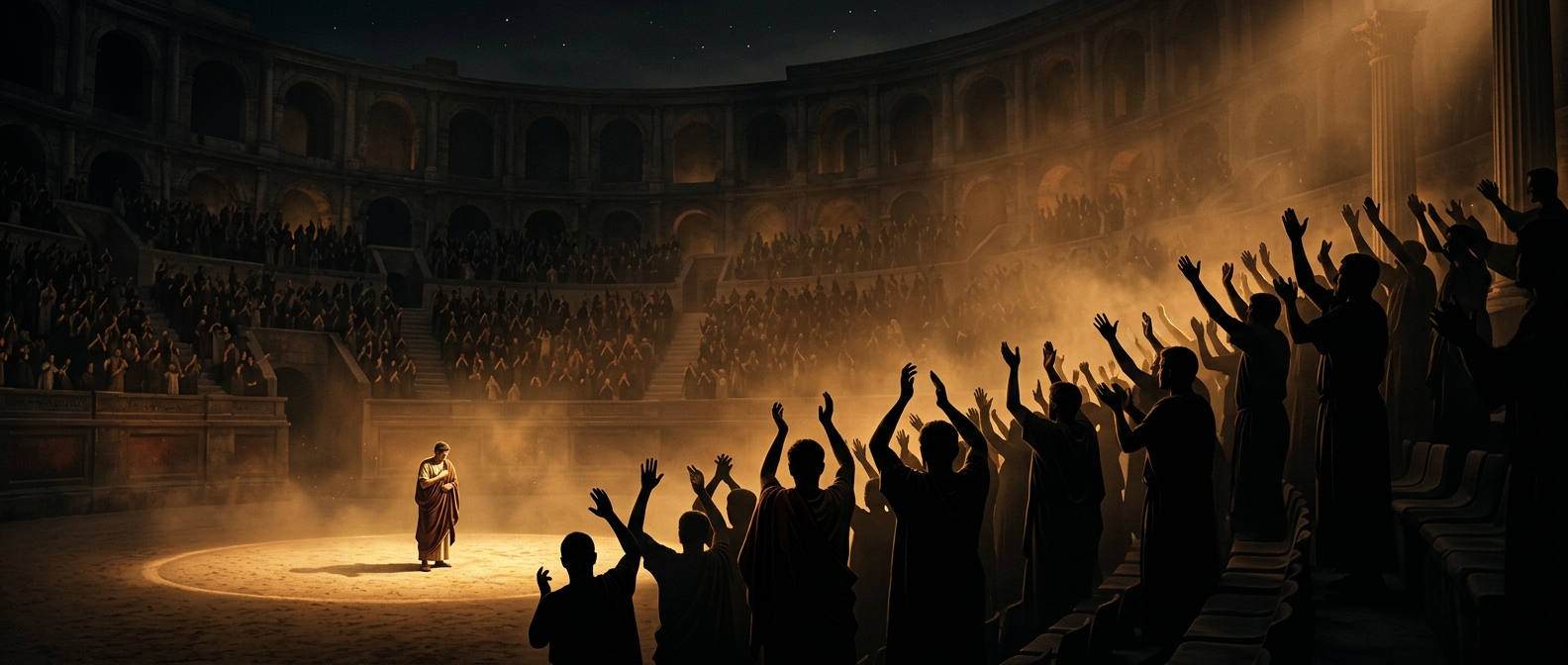
The word ovation comes from Latin ovatio, the name for a Roman honor granted to a victorious general. It was a less elaborate distinction than a triumph, the grand public procession awarded for especially significant military victories. The general honored with an ovation entered Rome on foot rather than riding in a triumphal chariot.
That difference mattered: an ovation was still a public celebration, but it marked a lower level of victory. The word carried the idea of acclaim forward even as its setting changed from Roman civic ceremony to modern performance halls and arenas.
Why standing became part of the gesture
A standing ovation is not a reenactment of a Roman ritual. The ancient term names the honor; the modern phrase describes what an audience does to express it. When people rise together, their approval becomes visible across the room—not just a sound, but a collective gesture.
So the connection is one of meaning rather than identical choreography: a Roman reward for a general’s success became a word for enthusiastic praise, and standing gave that praise a striking modern form. A crowd on its feet is using an ancient label for acclaim, even though the ceremony itself has long since changed.