How the Screen Changed the Variety Theater
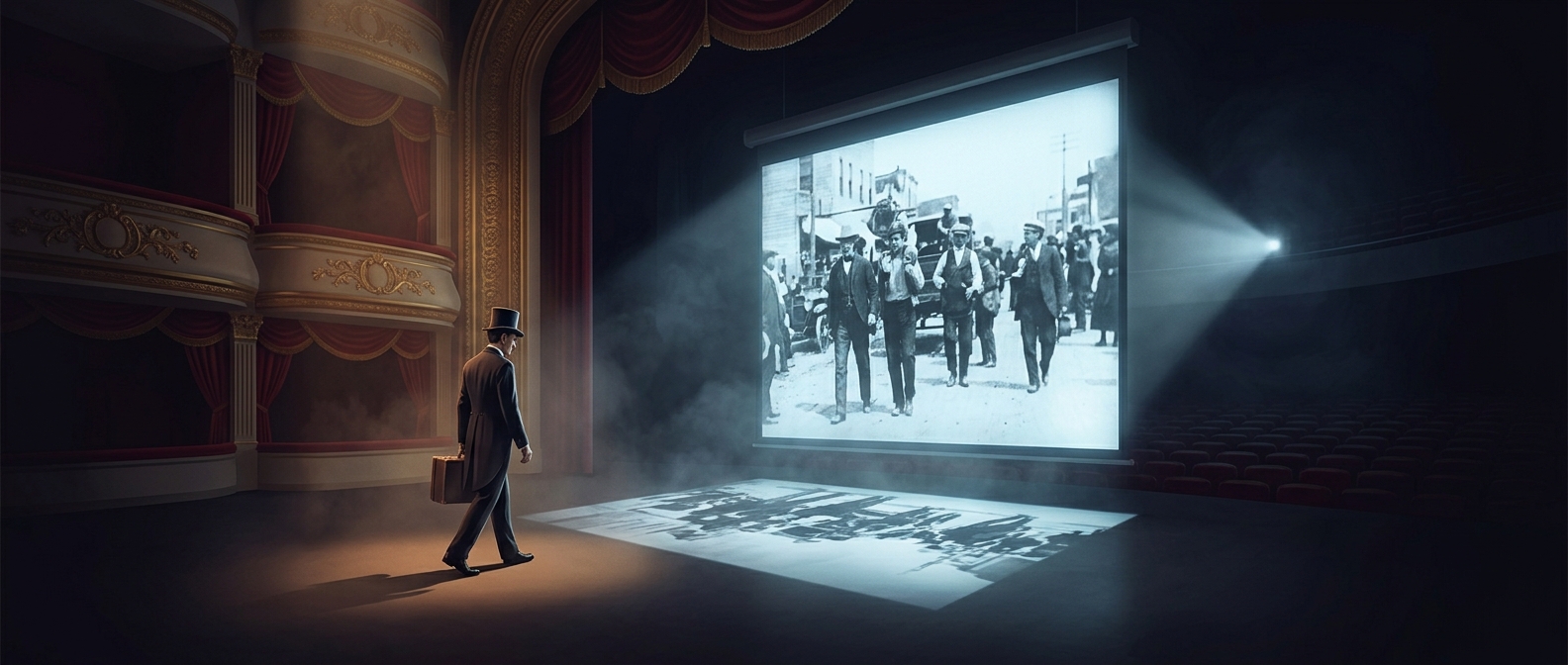
Vaudeville depended on a live bill: a succession of short acts—comedians, singers, dancers, acrobats—performed in theaters that booked and paid for entertainers. A movie offered a different kind of attraction. Once a theater had a projector and a film to show, it could present the same moving images to a full room without coordinating a new lineup of traveling performers for every show.
That changed the economics and rhythm of entertainment. Films could be screened repeatedly, and successful pictures could draw audiences across many towns. For theater owners, replacing some or all of a live program with movies could mean fewer performers to book and a more consistent attraction. As filmgoing grew, vaudeville lost venues, audiences, and its place as the standard popular variety show.
The Acts Did Not Simply Disappear
The shift was not an overnight switch from live theater to cinema. Early film programs could include live performers, and vaudeville theaters themselves became important places to show movies. Some performers moved into film, radio, or other work; others continued onstage. The forms also borrowed from each other: silent movies used physical comedy and visual gags that audiences already knew from stage acts.
So cinema did not erase every vaudeville performer or the appetite for variety. It displaced vaudeville as a dominant business model: instead of assembling a changing roster of acts, theaters increasingly relied on a reproducible program projected onto a screen. The consequence was visible in the venue itself—where audiences once watched a succession of people take the stage, they increasingly sat facing one illuminated rectangle.