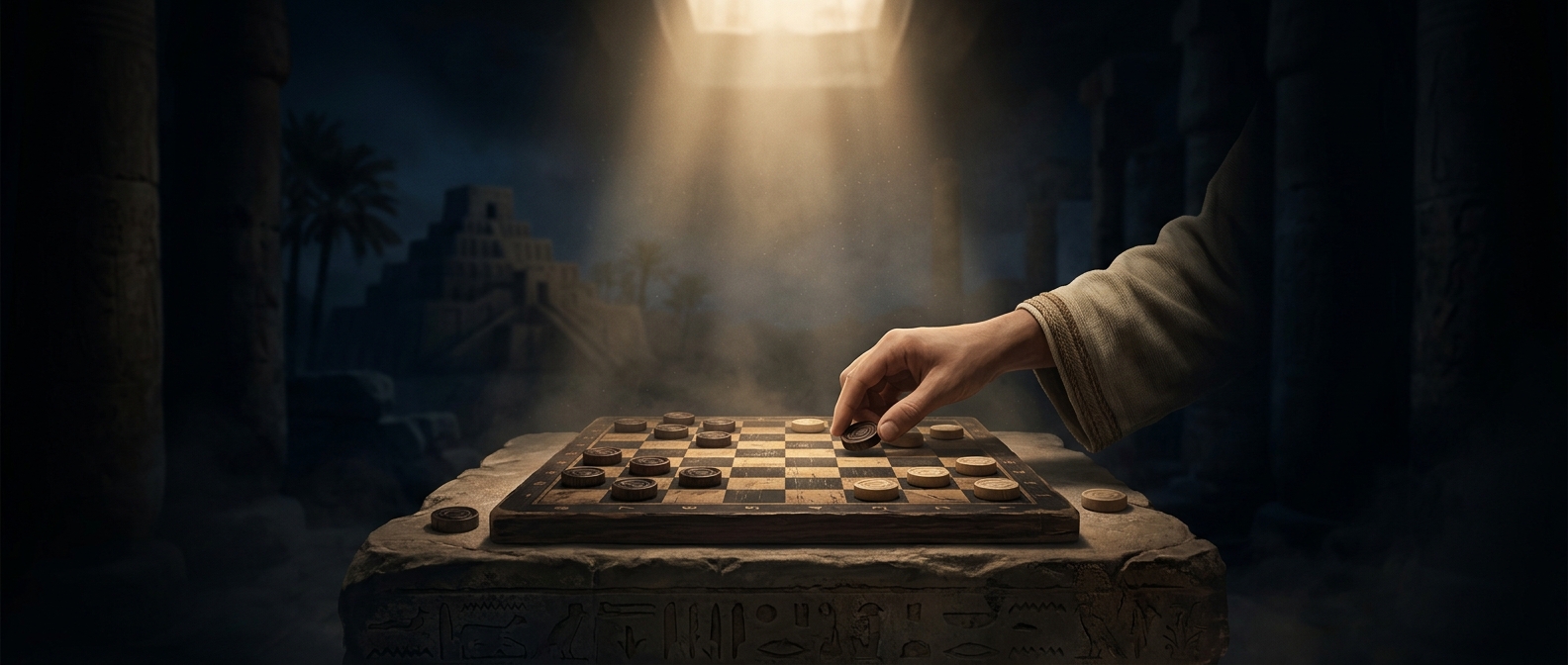
A board from Ur is not proof of ancient checkers
A game board can survive when its rules do not. Archaeologists have found board-shaped objects in the ancient city of Ur, but a grid or set of marked spaces cannot by itself show how people used it—or whether they played anything like modern checkers.
The distinction matters because the familiar checkers pattern is only one possible way to use a board. Checkers depends on specific rules: pieces move diagonally, capture by jumping, and may be promoted. Unless evidence preserves those rules, the resemblance is visual, not a record of the same game.
What the surviving evidence can—and cannot—tell us
The objects associated with Ur’s Royal Game of Ur point to a different kind of play: pieces moved along a route, with chance helping determine their movement. That makes the board evidence for ancient gaming, but not evidence that checkers’ distinctive capture system already existed.
Boards and pieces are durable; spoken rules are not. A marked surface may have served a game whose instructions were passed on orally, or even a purpose scholars cannot identify with confidence. So an ancient board can show that people gathered around structured play, while leaving the crucial question—what, exactly, were they playing?—open.
That gap is why a five-thousand-year-old board can invite a comparison with checkers without proving that checkers itself is five thousand years old. The enduring link is the human impulse to turn a few marked spaces and movable pieces into a contest; the rules may have changed completely.