Why cartoon hands needed a brighter outline
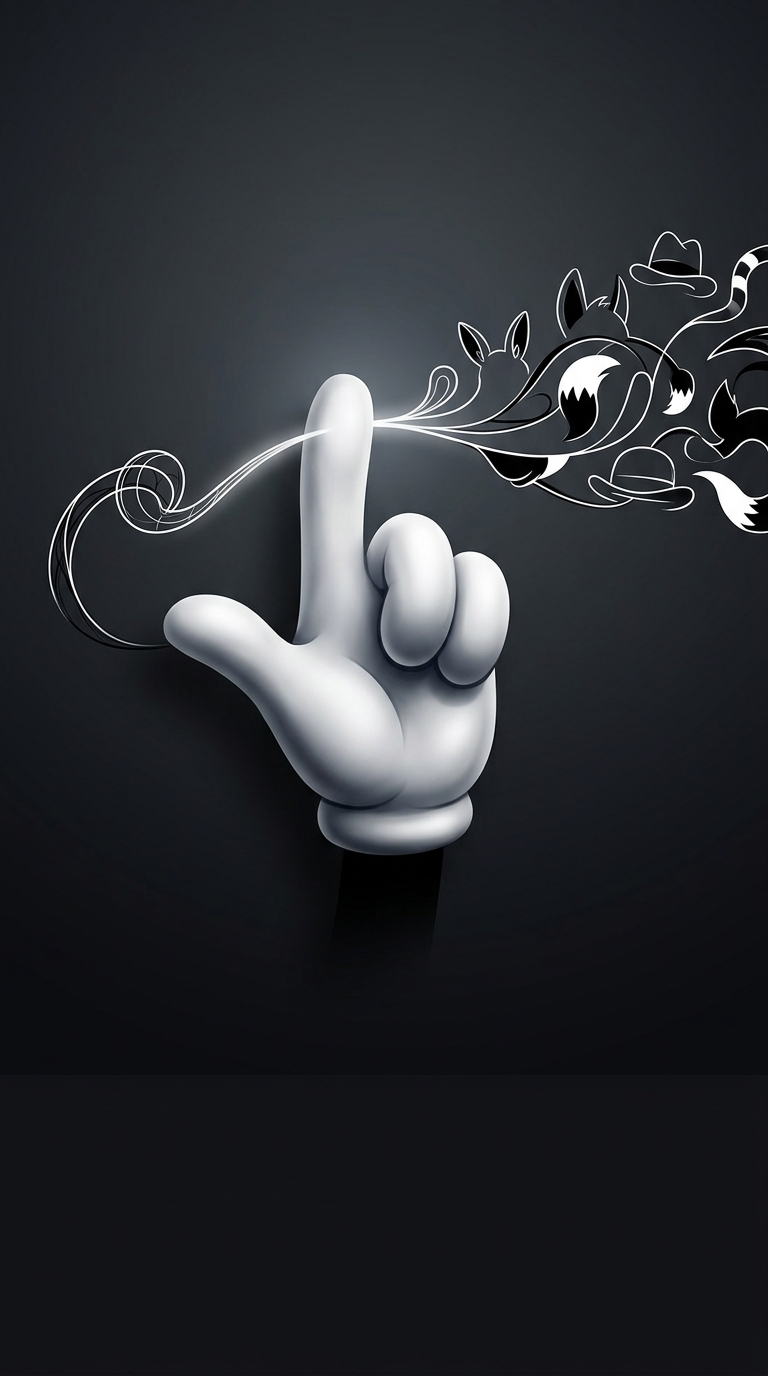
In black-and-white animation, a dark hand against a dark body could disappear into one continuous shape. That made a simple action—waving, pointing, or reaching—hard to read, especially in a small, rapidly changing drawing. Giving a character white gloves created instant contrast: the hand stood apart from the body, and its movement was easier to follow.
The gloves also made gestures legible with fewer visual details. A bright shape at the end of an arm could communicate a point or a wave without requiring fingers to be carefully distinguished in every drawing. That mattered in animation, where movement is built from a sequence of separate images and clarity depends on each pose reading quickly.
A practical fix becomes a cartoon convention
The choice was practical, but it also helped define how audiences read animated characters. Gloves made humanlike gestures visible on animals and other nonhuman figures, while giving their hands a consistent, recognizable shape. As studios adopted similar visual shortcuts, white gloves became part of the shared cartoon vocabulary—even after color animation made the original contrast problem less pressing.
The lasting effect is easy to spot: a glove can make a character’s gesture readable before the viewer has even taken in the rest of the pose.