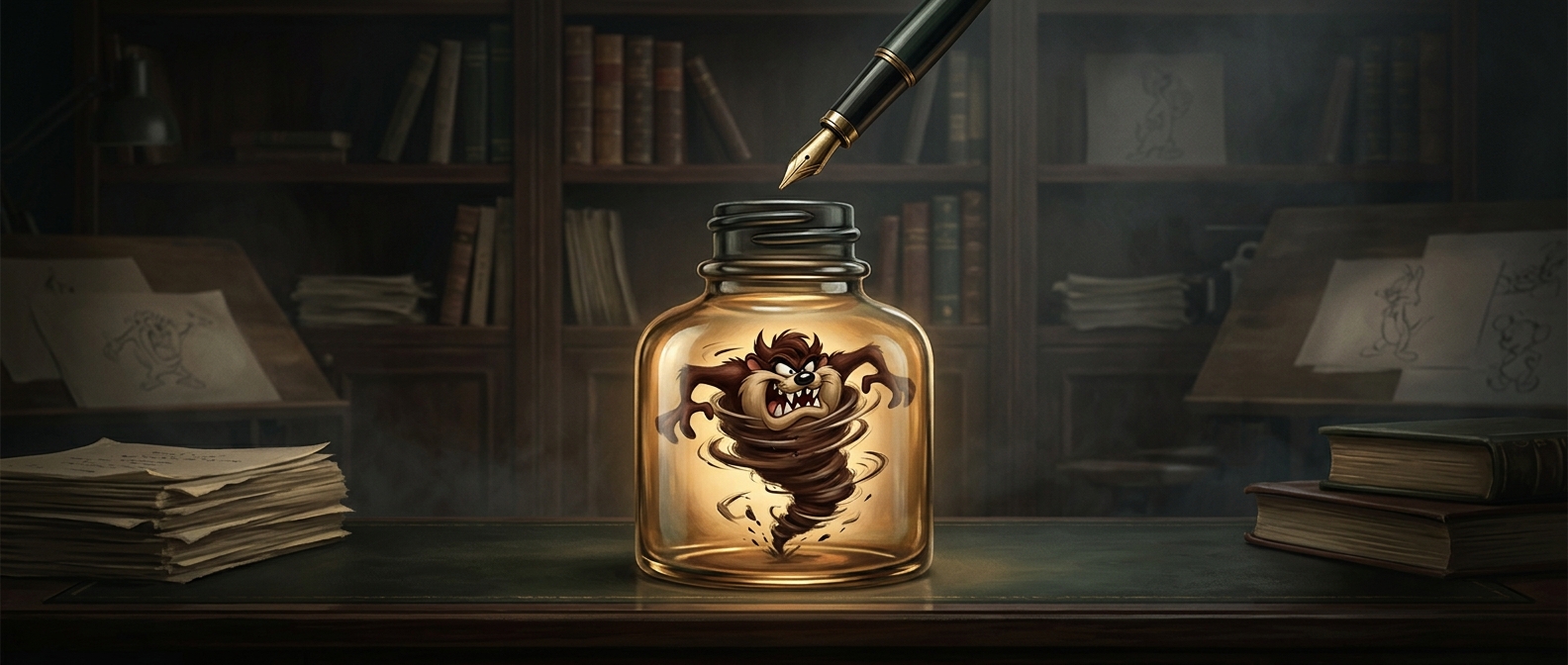
A character built around motion, not dialogue
Taz arrived in the 1954 cartoon Devil May Hare as a force of disruption: he charges, spins and devours whatever is in reach. Unlike Bugs Bunny, whose jokes depend on conversation and a cool sense of control, the Tasmanian Devil communicates mostly through growls and frantic movement. That made him a vivid opponent—but also a character whose appeal was less obvious on paper than in action.
The reported near-shelving reflects a basic challenge of cartoon comedy: a character can seem merely loud or unpleasant until an audience sees what that behavior does to a scene. Taz’s appetite and whirlwind movement gave Bugs a physical problem to solve. Bugs could stay composed while the world around him became chaotic, turning Taz’s aggression into the setup for the joke.
The audience changed the calculation
According to the story, test audiences responded strongly enough that Warner Bros. reversed course. Their reaction mattered because a cartoon character was not just a drawing; keeping Taz meant committing to a comic presence that could work beyond one brief appearance. His unusual design and near-wordless performance made him instantly recognizable, while his destructive energy supplied a repeatable source of conflict.
Taz went on to become one of the studio’s familiar characters. The near-deletion story captures a useful lesson about animation: a character’s potential may be difficult to judge from a description or still image. Sometimes the decisive test is watching the motion—and seeing whether an audience wants the chaos to come back.