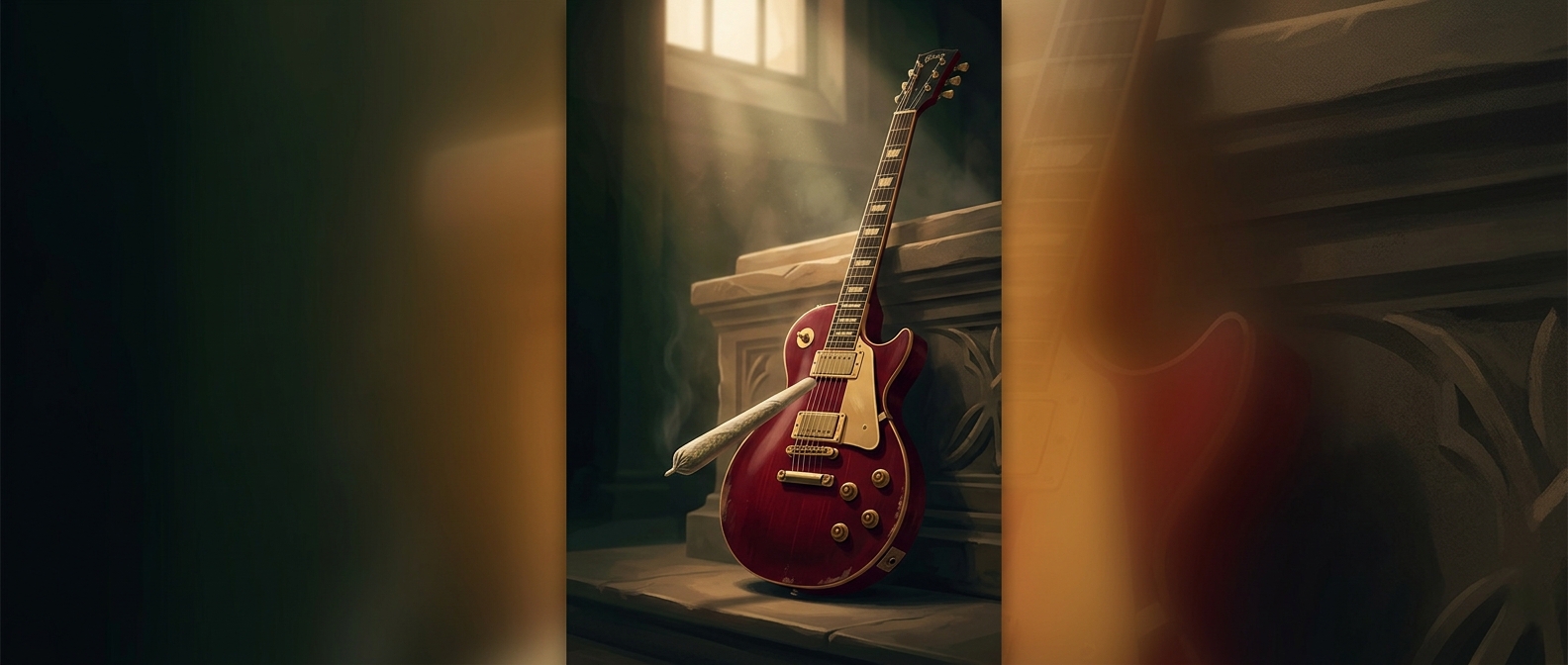
Three objects, three parts of Marley’s public identity
The items associated with Bob Marley’s burial point to the parts of his life that audiences often encountered together: music, religious faith, and Rastafari practice. Their presence makes the burial story feel less like a display of celebrity possessions and more like a compact portrait of the world he represented.
A song-making instrument and a passage of comfort
The red Les Paul connected Marley to the work through which he reached listeners. A guitar is not just a musician’s keepsake: it is the tool that turns musical ideas into something other people can hear. Its place in the account gives his art a tangible presence at his burial.
The Bible open to Psalm 23 carries a different kind of meaning. The psalm’s image of a shepherd guiding someone through danger has made it a familiar passage of reassurance in Christian life and at funerals. Placed alongside the guitar, it links Marley’s public career with a language of faith and mortality.
The joint’s Rastafari context
Cannabis, often called ganja in Jamaica, has a sacramental role in some Rastafari traditions. In that setting, its use can be part of spiritual reflection and communal practice—not merely a recreational habit. Marley’s association with Rastafari gives the joint a cultural meaning that a casual reading might miss.
Together, the objects make the burial story memorable because each points to a different source of meaning in Marley’s life. The guitar stands for the music; Psalm 23 for faith and comfort; and the joint for a religious tradition that shaped how he understood himself and the world.