A familiar melody could do a scene’s work
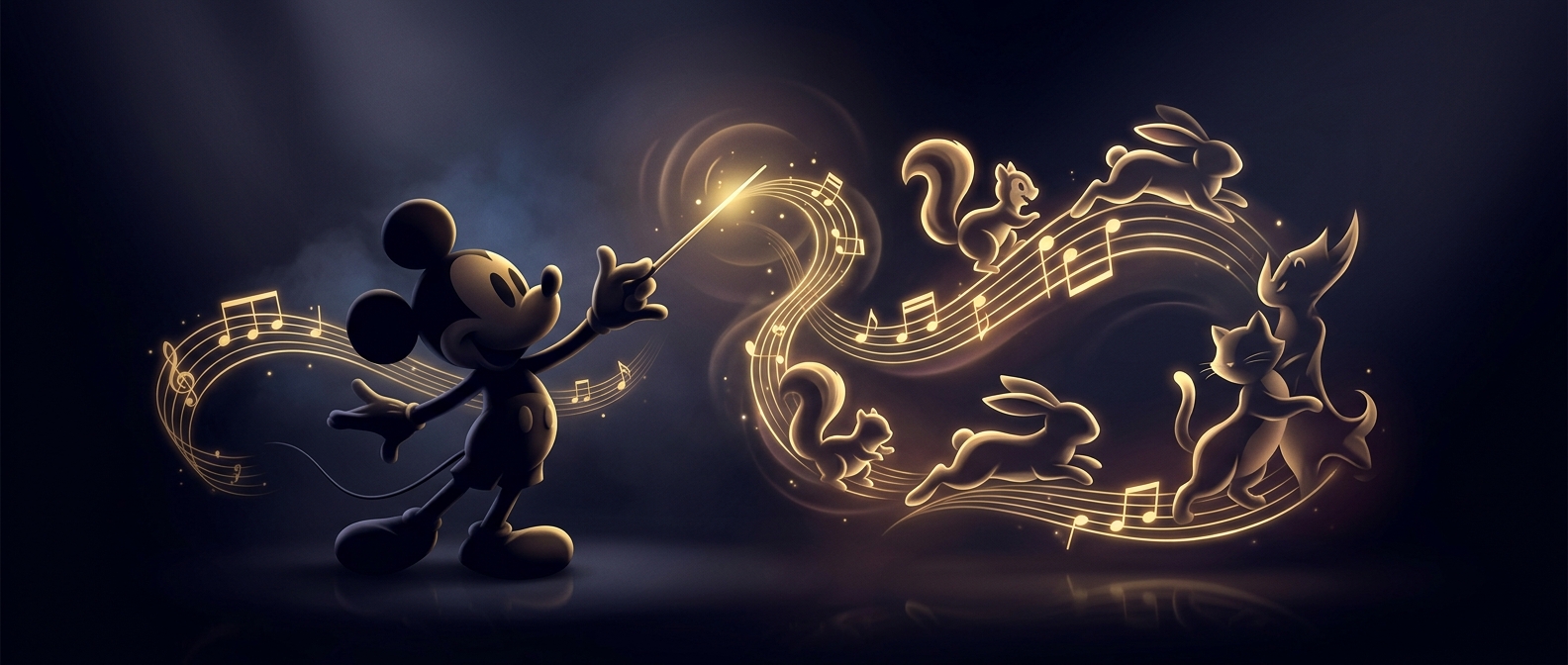
In a silent cartoon, a character’s stumble or crash needed no spoken explanation. Once synchronized sound arrived, music could sharpen the timing: a rising phrase built anticipation, a sudden accent landed with a pratfall, and a pause made the next mishap feel bigger. Composers sometimes call this close matching of musical gestures to on-screen action “Mickey Mousing.”
A well-known classical piece offered more than background sound. Its tempo, phrasing, and dramatic shifts gave animators and editors a ready-made structure for a sequence. They could shape a chase around a musical build or make a character’s movement seem to answer a melody, turning the score into part of the gag.
The savings were in the composition, not the whole production
When a composition was in the public domain, a studio generally did not have to pay to license the underlying music. That could make it cheaper to use than commissioning a new score or licensing a protected song. Familiar music also spared viewers the effort of learning a new tune before the joke landed.
But “public domain” did not mean that every version was free. A particular recording could still be protected, and studios still had to arrange, perform, record, and synchronize the music. The advantage was that they could make their own version without paying for the composition itself.
Music became part of the production plan
With a chosen piece in place, a sequence could be timed to its existing beats and changes in intensity. That gave filmmakers a practical way to coordinate movement, editing, and sound—and let the music supply some of the drama that a custom score might otherwise have had to create from scratch.
The result was a distinctive economy of means: a carefully timed fall could feel like a grand catastrophe because the orchestra treated it as one.