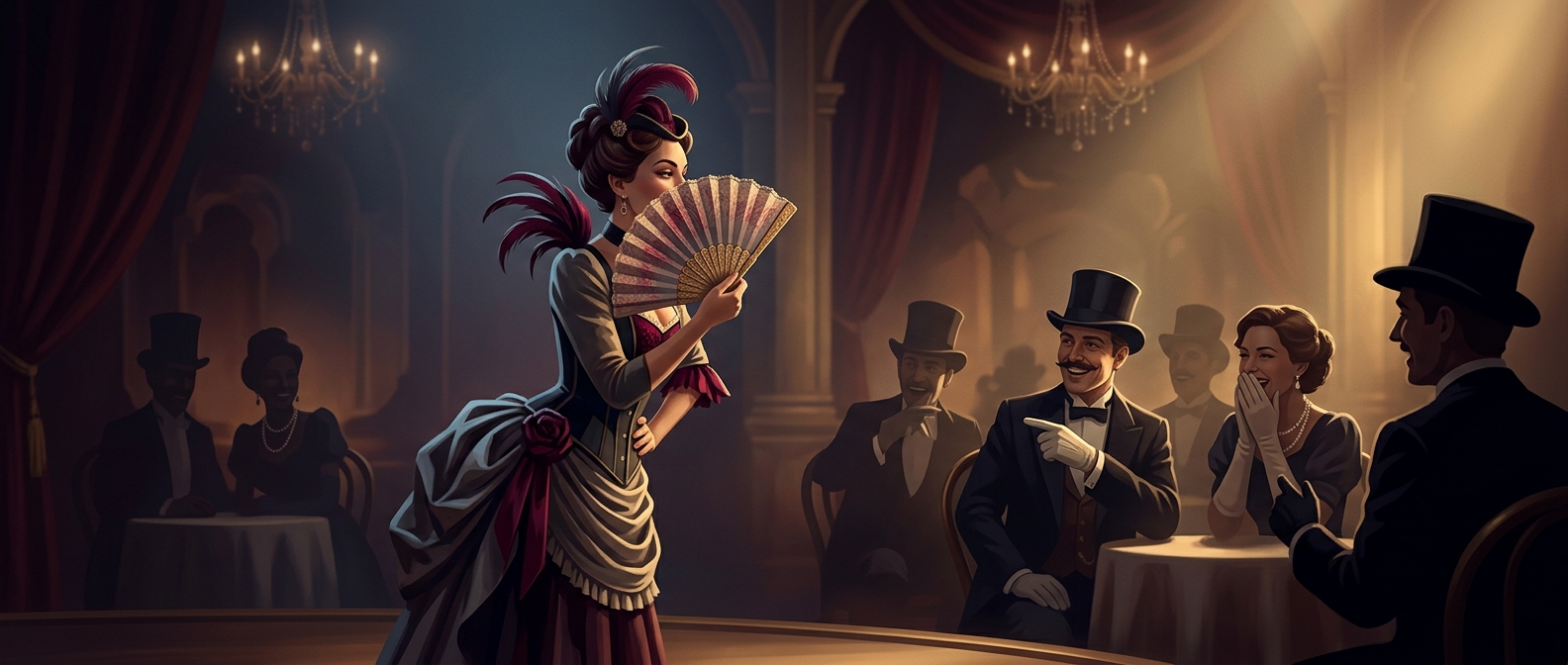
How burlesque made high culture look ridiculous
Early burlesque took subjects that wealthy audiences treated as refined—opera, classical drama, and grand literary stories—and made them comic by changing their scale or style. A solemn scene might be delivered with exaggerated gestures, an absurd plot twist, or deliberately mismatched music and behavior. The joke depended on recognition: audiences had to know the conventions being imitated to enjoy seeing them bent.
That reversal also carried a social edge. Opera signaled education, money, and taste. By turning its lofty heroes and elaborate conventions into material for broad comedy, burlesque invited audiences to laugh at the performance of refinement itself—not just at a particular story.
From parody to variety entertainment
The word burlesque describes a comic way of treating a subject, not one fixed kind of show. In American theaters, burlesque came to encompass mixed programs of comedy, music, and dance rather than only parodies of operas or classical works. As the form changed, dancing—and, in some versions, striptease—became increasingly prominent in its public image.
That shift helps explain why the modern association can seem far removed from the genre’s earlier target. The connection is not that every burlesque show simply traded opera parody for striptease; the name covered changing stage practices over time. The lasting thread is performance built around exaggeration and spectacle. A genre that once sent up the grand gestures of elite theater eventually became known for another kind of theatrical display.