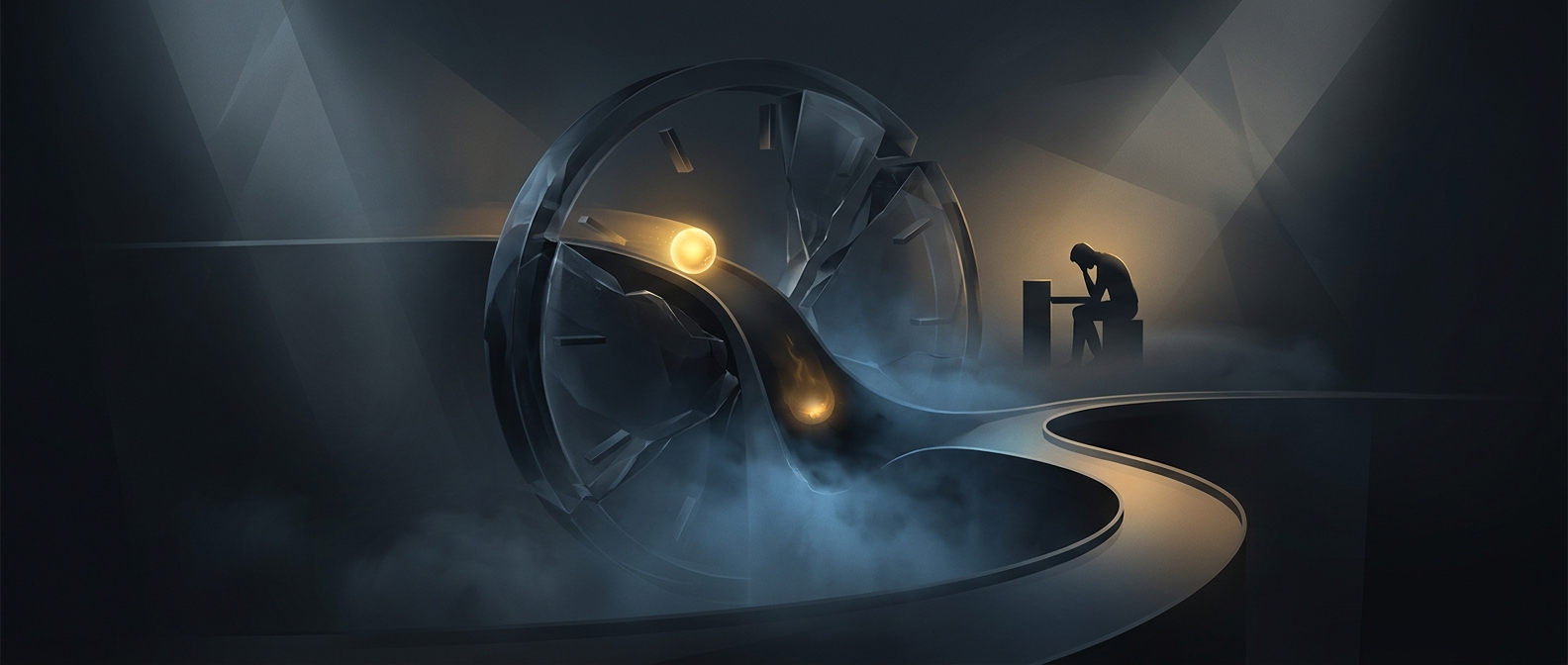
Why concentration can fade after a long stretch
Focused work asks the brain to keep selecting relevant information, suppressing distractions, and holding a goal in mind. Those demands do not disappear just because a task looks simple. As effort continues, attention may become less steady: small distractions catch on, familiar steps take longer, or you reread a sentence without absorbing it.
A dip can be a cue that your current approach needs a change—not proof that you have become lazy. A short pause, a stretch, or a shift to a different kind of task can give sustained attention a chance to recover.
The 90-minute idea is a rough rhythm, not a timer
People sometimes describe these rises and dips in roughly 90-minute cycles. That number is best treated as a useful pattern, not a schedule built into every person’s brain. The length and strength of a slump can vary with the task, the time of day, sleep, and individual differences; attention may also fade sooner when work is especially demanding or repetitive.
The practical point is to notice your own signals rather than wait for a precise interval. If you keep making avoidable mistakes or find yourself repeatedly pulled off task, a brief reset may help more than trying to force the same level of concentration indefinitely. A dip is often information about your current capacity—and a chance to change gears before effort turns into unproductive strain.