Who bears the risk when a timed challenge goes wrong?
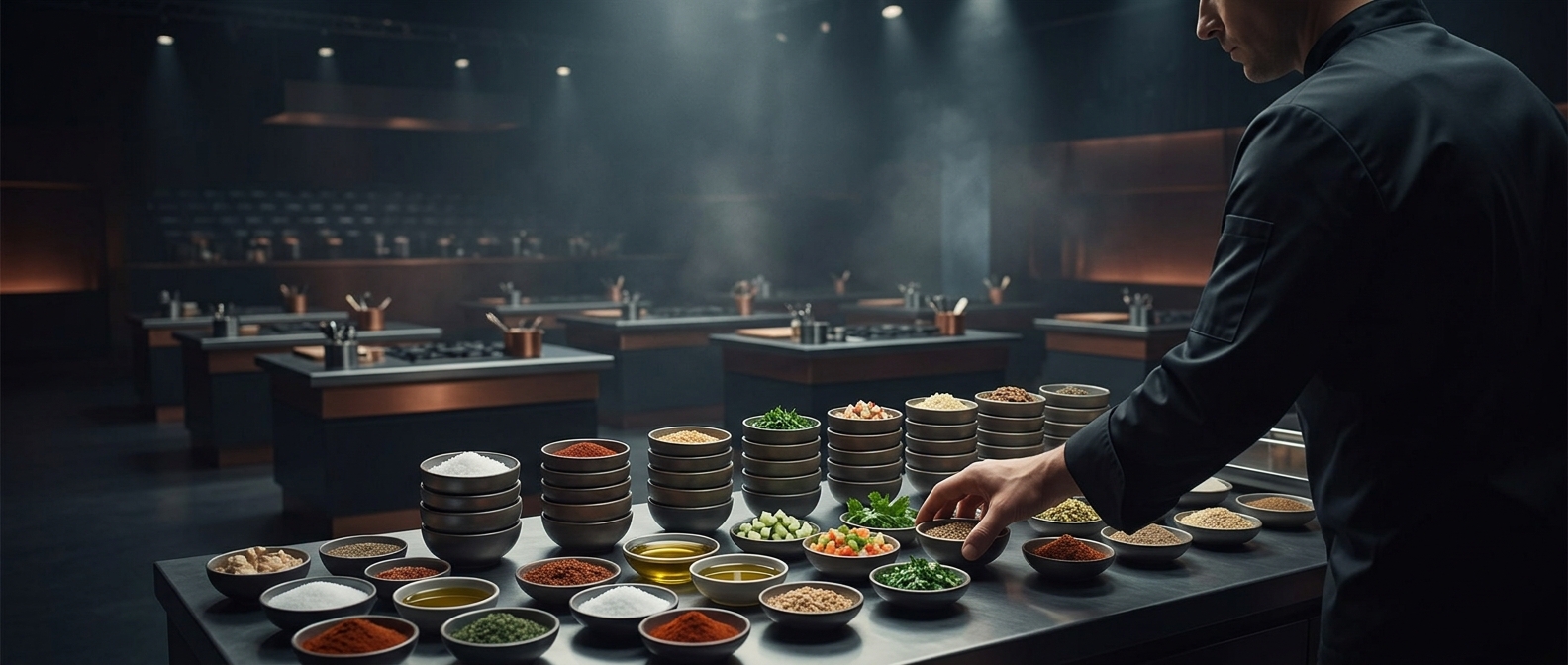
A cooking-show challenge can turn ordinary kitchen hazards into a production problem: contestants may be handling sharp knives or hot sugar while working against a clock and performing for cameras. Before filming, some contestants agree to terms saying the network is not responsible if they are injured. Such language is a way of assigning risk in advance—not proof that an injury is harmless or that every possible claim is automatically barred.
The practical effect depends on the agreement and the circumstances. A release may make it harder for a contestant to seek compensation for certain injuries, but its wording does not by itself establish what a court would enforce or settle every question about responsibility.
The pressure is part of the hazard
In a home kitchen, a cook can pause, move a pot, or start over. A timed television challenge adds a deadline, cameras, and the possibility that stopping means falling behind. That pressure can make a contestant more likely to rush a cut, reach near a hot pan, or handle a dangerous ingredient without the usual pause to reassess.
The production therefore has two interests to manage: creating suspense and keeping the work controlled enough to film. Contestants, meanwhile, may accept the stated risks as part of taking part. The tension behind these clauses is that an on-screen mistake can look like a personal mishap, while the conditions shaping it—time limits, equipment, and challenge design—are part of a production arranged by others.
A signature can allocate some financial risk, but it cannot make a blade or a pot of boiling sugar less dangerous. In a challenge built around speed, even a brief pause to work safely can become a competitive disadvantage.