Why Cooking Shows Start With Everything in Place
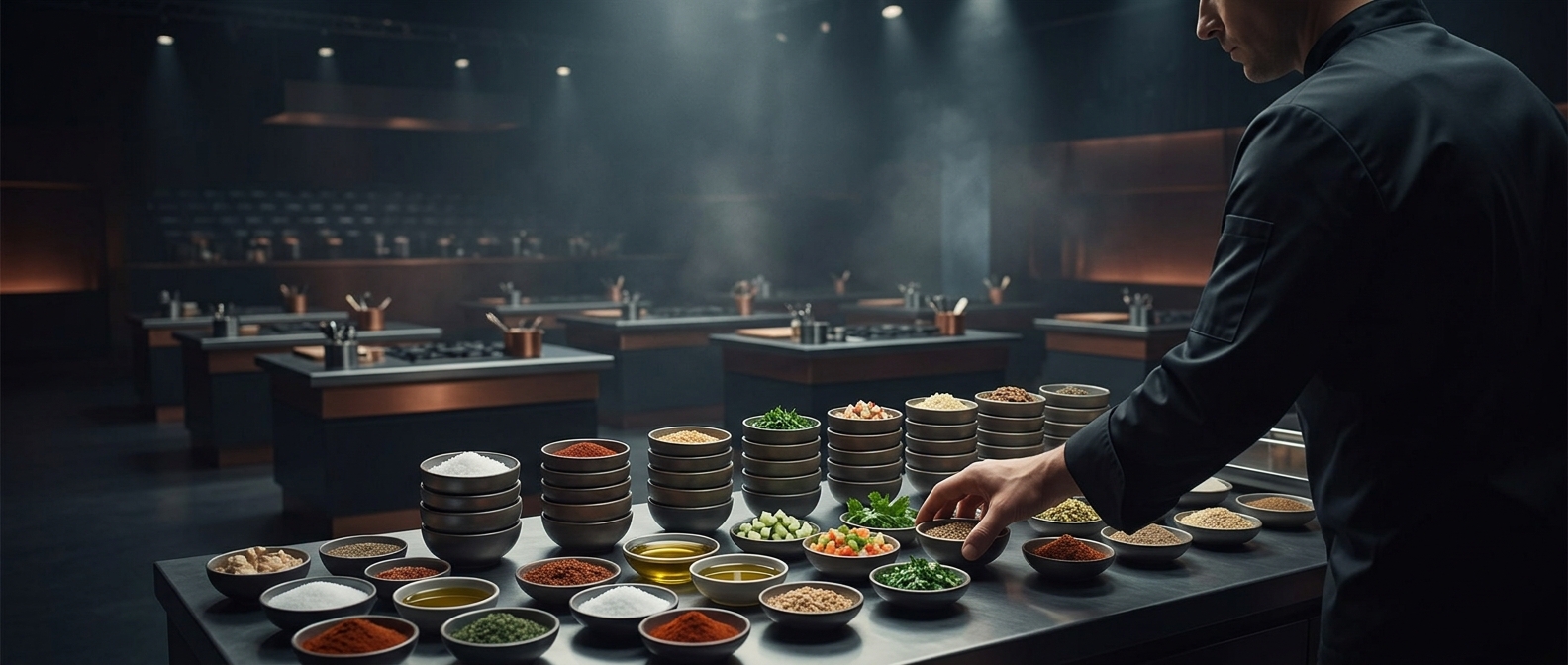
The small bowls on a cooking-show counter are a version of mise en place—a kitchen practice of preparing and arranging ingredients before cooking begins. Peeling, measuring, and portioning in advance lets a cook concentrate on the steps that actually need attention at the stove: judging heat, watching texture, and deciding when something is ready.
That preparation also makes a filmed demonstration easier to follow. A camera can show a measured ingredient clearly, and an editor can cut between the cook, the pan, and a close-up without asking viewers to watch every minute of routine chopping. The result feels brisk, even when the real work took longer.
The Rush Is Real—But Compressed
A show may still have contestants chop or perform other tasks on camera, especially when speed and technique are part of the challenge. But the bowls change what the audience sees: much of the repetitive setup has already happened, so the remaining work fits the pace of a scene. Producers can also arrange ingredients in the order they will be used, reducing pauses and keeping the counter legible on screen.
This is not just a shortcut for television. It reflects a practical kitchen principle: prepare the predictable work first so attention is free for the unpredictable work. A cook who does not need to stop mid-recipe to measure flour can focus on whether the sauce is thickening or the pan is too hot. The apparent sprint to get dinner made is, in part, the payoff from work viewers never see.