The inner fire behind tummo
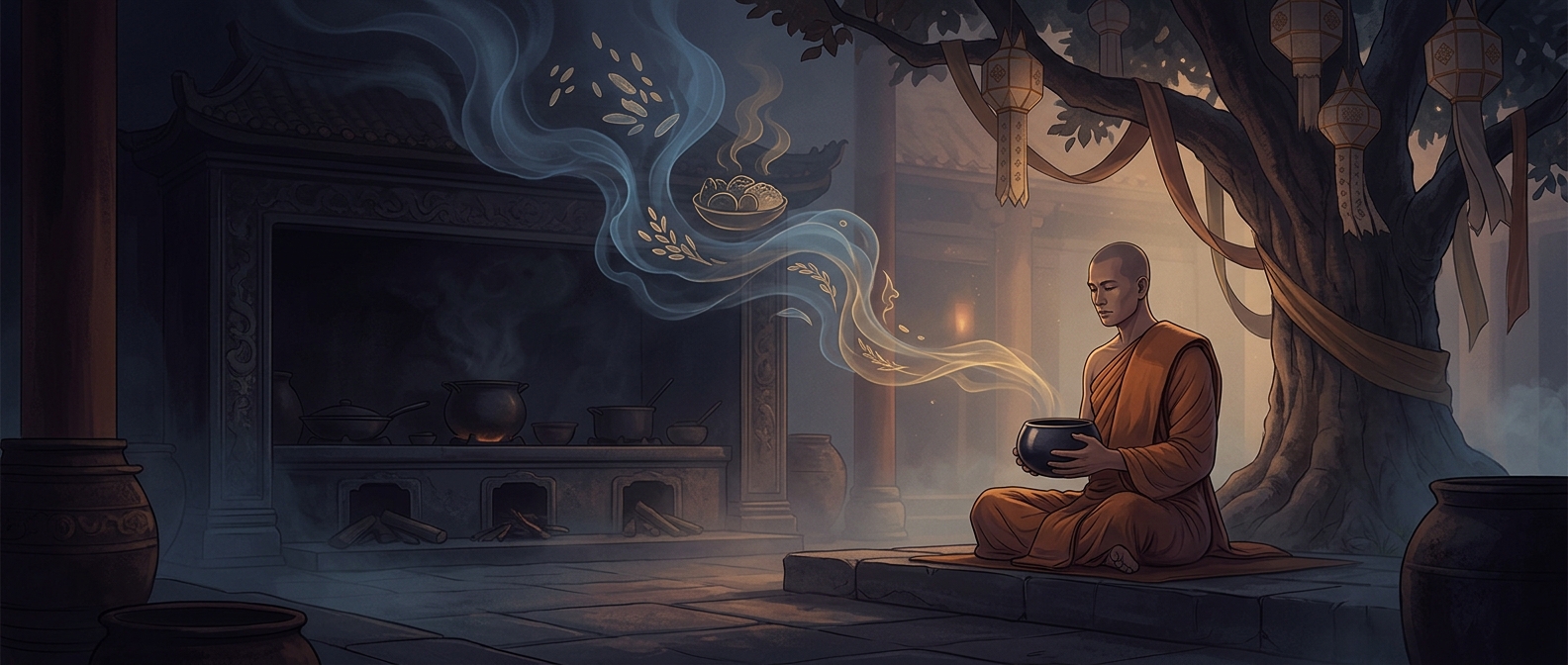
Tummo, often translated as “inner heat,” is a Tibetan Buddhist meditation practice, not simply a breathing trick. Practitioners use focused attention and visualization—commonly imagining a flame in the abdomen—as part of a demanding discipline. In the tradition, this inner fire is a central image and experience within meditation, rather than a claim that an ordinary person can summon heat at will.
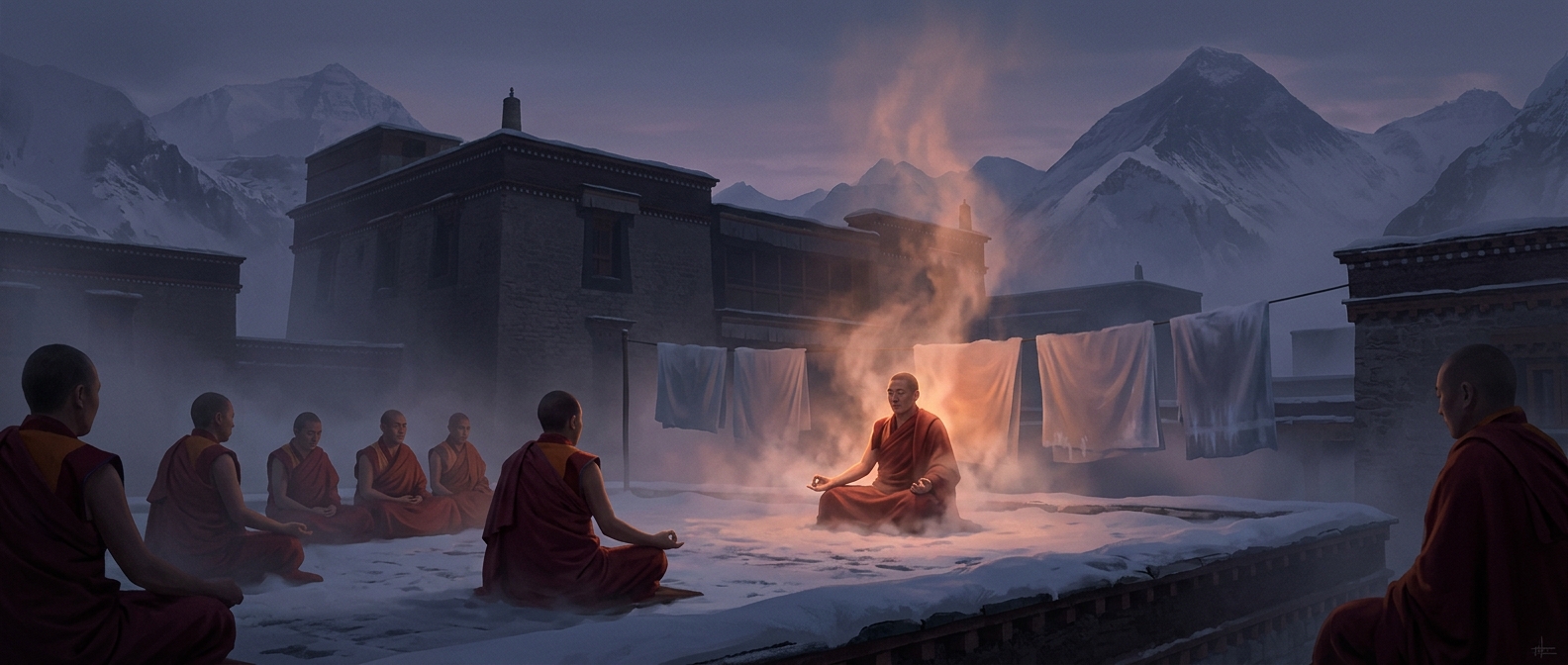
Accounts of monks drying cold, wet sheets describe a striking outward demonstration of that practice. The task has a physical logic: water on cloth must evaporate, and evaporation takes heat. If the sheet is wrapped around a warm body, heat can pass from skin to fabric and help turn its water into vapor. In freezing air, the contrast makes the feat especially dramatic, because the surroundings continually draw heat away.
Meditation meets the body
Concentrated breathing and visualization can change how a person experiences bodily sensations and may influence some aspects of bodily regulation. But the image of a flame should not be confused with literal fire, and the sheet-drying stories do not require a supernatural explanation. They point instead to an unusual meeting of trained attention, bodily warmth, damp cloth, and cold air.
That combination is what makes the demonstration memorable: a private mental image becomes visible in the slow transformation of a soaked sheet, as water leaves the fabric into the freezing air.