The koan was a practice, not a puzzle with a hidden answer
Hakuin Ekaku, an influential Japanese Rinzai Zen teacher of the 18th century, made the question “What is the sound of one hand?” a central exercise for students. A koan is a question, story, or exchange used in Zen training to unsettle habitual ways of thinking. Here, the point was not to devise a clever explanation for how one hand could clap. Treating the question as an ordinary riddle keeps the student inside the very problem the exercise is meant to press on.
What “Great Doubt” asks of a student
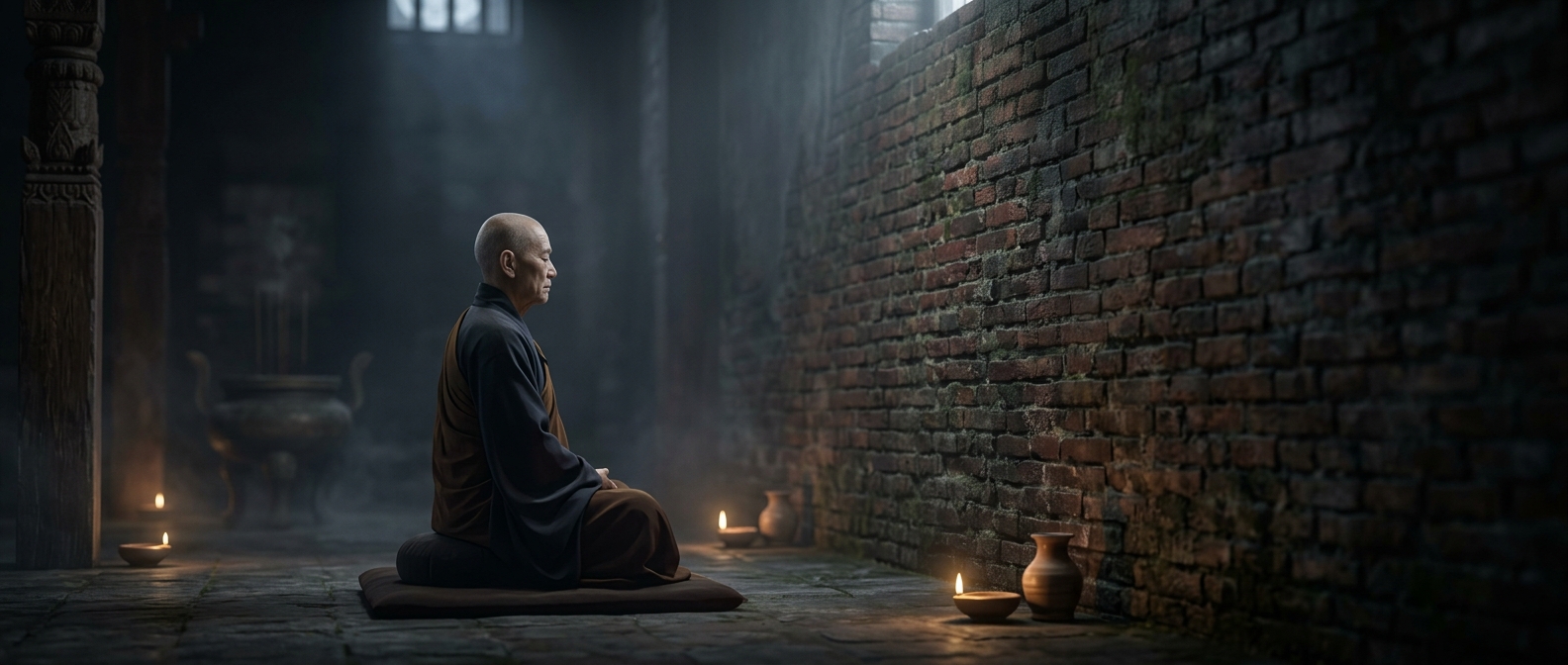
In Hakuin’s approach, students were expected to concentrate intensely on the koan rather than merely discuss it. The question could expose how quickly the mind reaches for familiar distinctions—sound and silence, self and world, answer and no answer. Zen accounts describe the resulting state of sustained questioning as Great Doubt: not simply confusion, but a focused inability to settle for an easy, intellectual solution.
That effort took place within a relationship with a teacher. Students brought their understanding to the teacher, who assessed their practice and directed what came next. The koan was therefore not a solitary trick designed to make someone lose control; it belonged to a demanding course of monastic training.
Not a mechanical route to enlightenment
Rinzai Zen presents insight as a shift in how experience is seen, not as a conclusion reached by winning an argument. A koan can help interrupt the habit of standing outside experience and analyzing it as though a neat verbal answer would resolve it. But frustration alone does not guarantee awakening, and the tradition does not reduce enlightenment to a predictable psychological collapse.
The one-hand question endures because it blocks the most tempting response: turning it into a problem to solve. Its force lies in making the student notice that impulse—and keep investigating what remains when a tidy answer will not do.