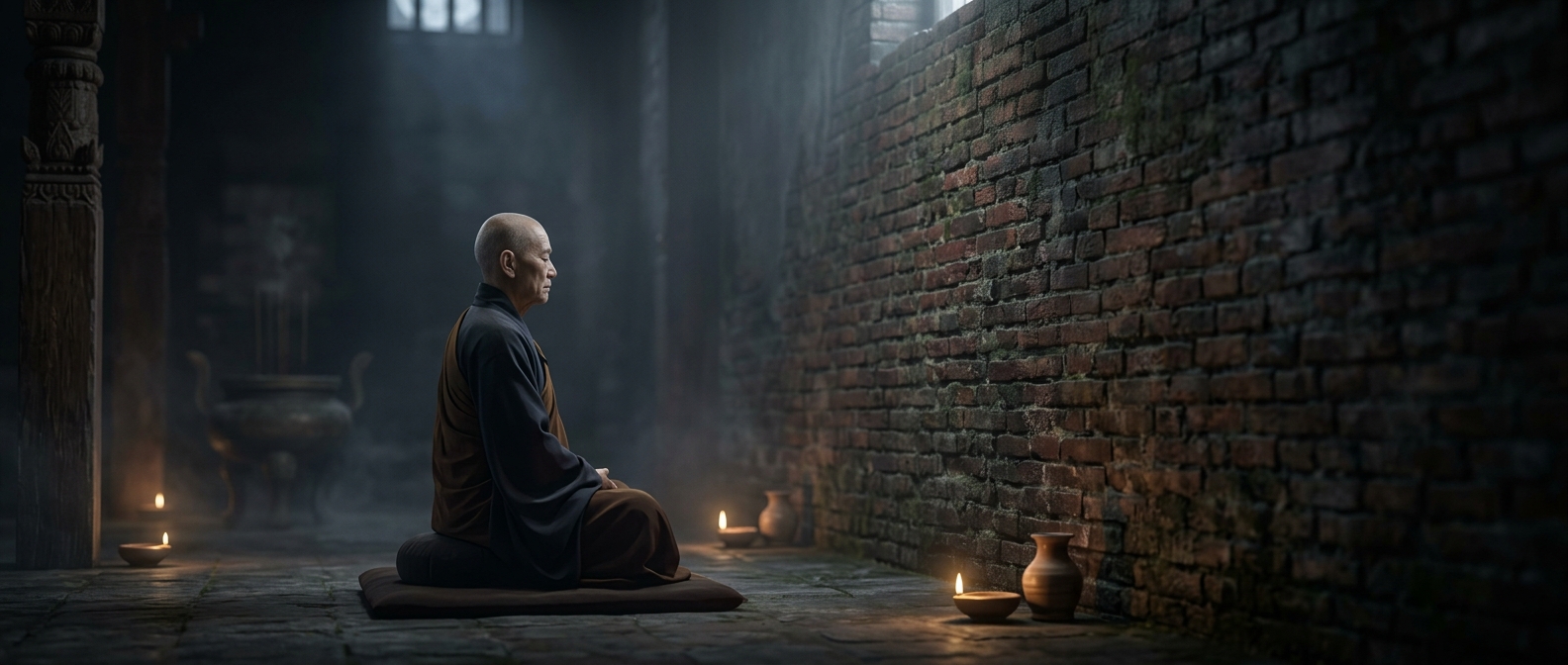
Why Bodhidharma’s Wall Matters
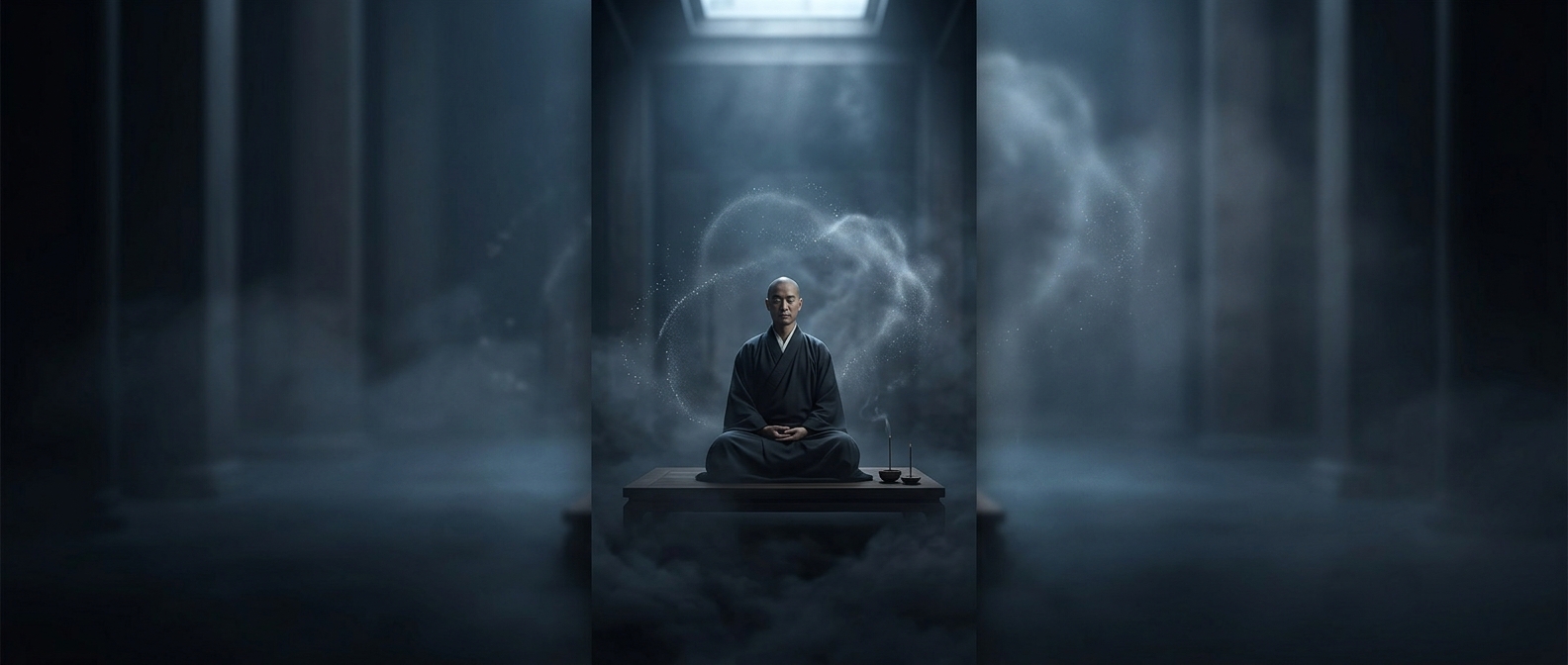
In the Chan Buddhist tradition—the Chinese school that later became known in Japan as Zen—Bodhidharma is remembered as an early teacher who emphasized direct practice. The tale of his nine years facing a cave wall makes that emphasis visible: instead of seeking insight through movement, novelty, or elaborate explanation, the practitioner stays with the act of attending.
The wall is not a puzzle to solve or an object the story says holds a secret. It gives the gaze somewhere plain to rest, while removing much of what might invite the mind to chase after it. In that setting, the work is noticing distraction and returning to attention, again and again. “Wall-gazing” is therefore often understood as a picture of disciplined meditation, not simply an unusually long stare.
A Story About Practice, Not a Timed Test
The nine years belong to a traditional story, not a reliable measure that meditators are expected to copy. Its force comes from the contrast it creates: enlightenment is portrayed not as a sudden change of scenery but as the result of staying with practice. The story turns patience into something concrete—a person, a wall, and a commitment not to keep looking elsewhere.
That image also helps explain why Bodhidharma became such a powerful figure in Zen memory. The legend presents teaching as more than giving people ideas; it is a demand to practice for themselves. Its lasting implication is modest but striking: in this tradition, the plain wall is not the point. The attention brought to it is.