What the Daoist “Uncarved Block” Leaves Open
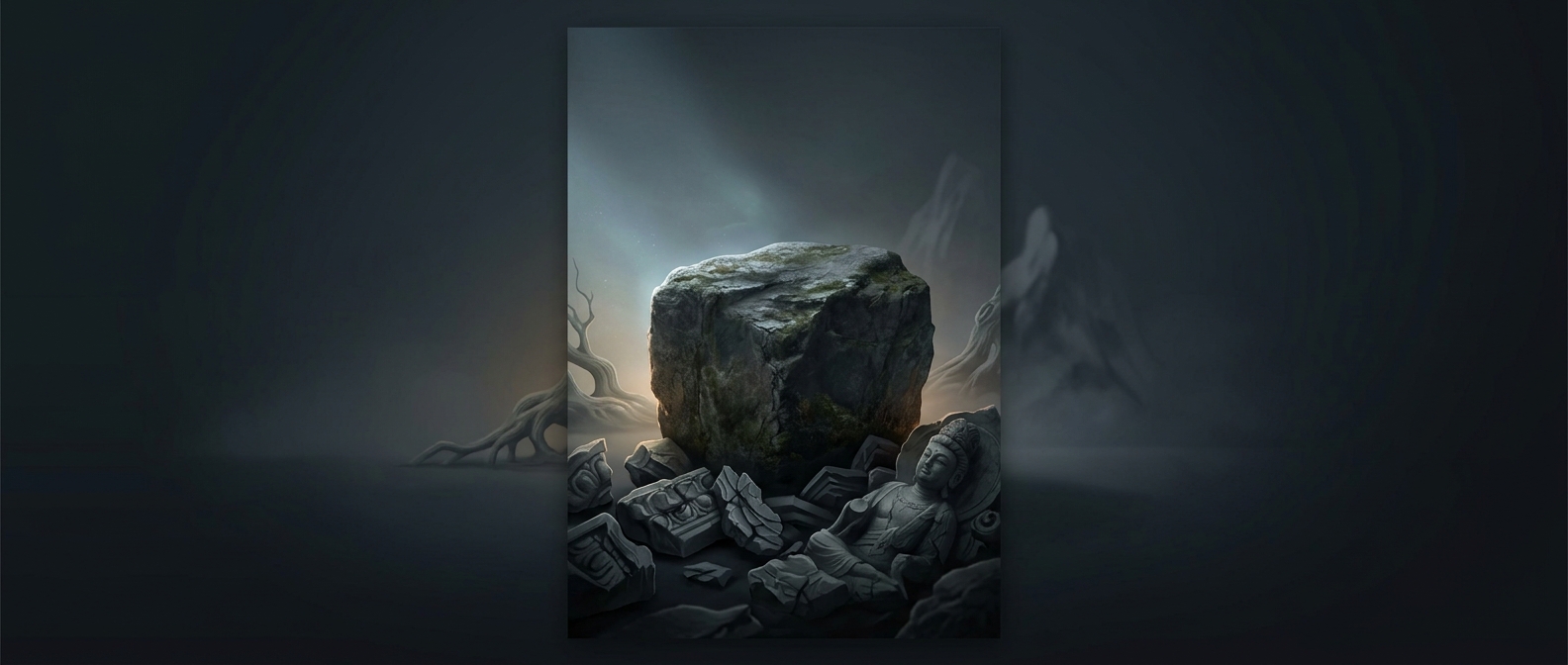
The uncarved block is a translation of pu, a Daoist image of wood before it has been shaped into a particular object. A carved piece has a defined use: it is a bowl, a tool, or an ornament. The untouched block, by contrast, still holds many possible forms. Its value lies not in being empty, but in not having been narrowed to one purpose.
In the Dao De Jing, the image helps express a wider idea: people and societies can become tangled in distinctions, ambitions, and rules that multiply wants and steer behavior. “Carving” stands for imposing unnecessary shape—not every kind of learning or craft, but the pressure to make life more elaborate than it needs to be.
Simplicity as a Way to Act
The ideal is not simply to admire plainness. It points toward ziran, often translated as “naturalness”: allowing things to develop without forcing them into an elaborate scheme. In practice, that can mean pausing before adding another rule, status marker, or complication, and asking whether it serves a real need or merely creates more striving.
This is not a claim that people can literally return to an untouched state, or that all social influence is harmful. The block is a metaphor for keeping room to respond rather than becoming fixed by roles and desires. Its quiet challenge is that once every part of life is assigned a label and purpose, possibilities can disappear before anyone notices they were there.