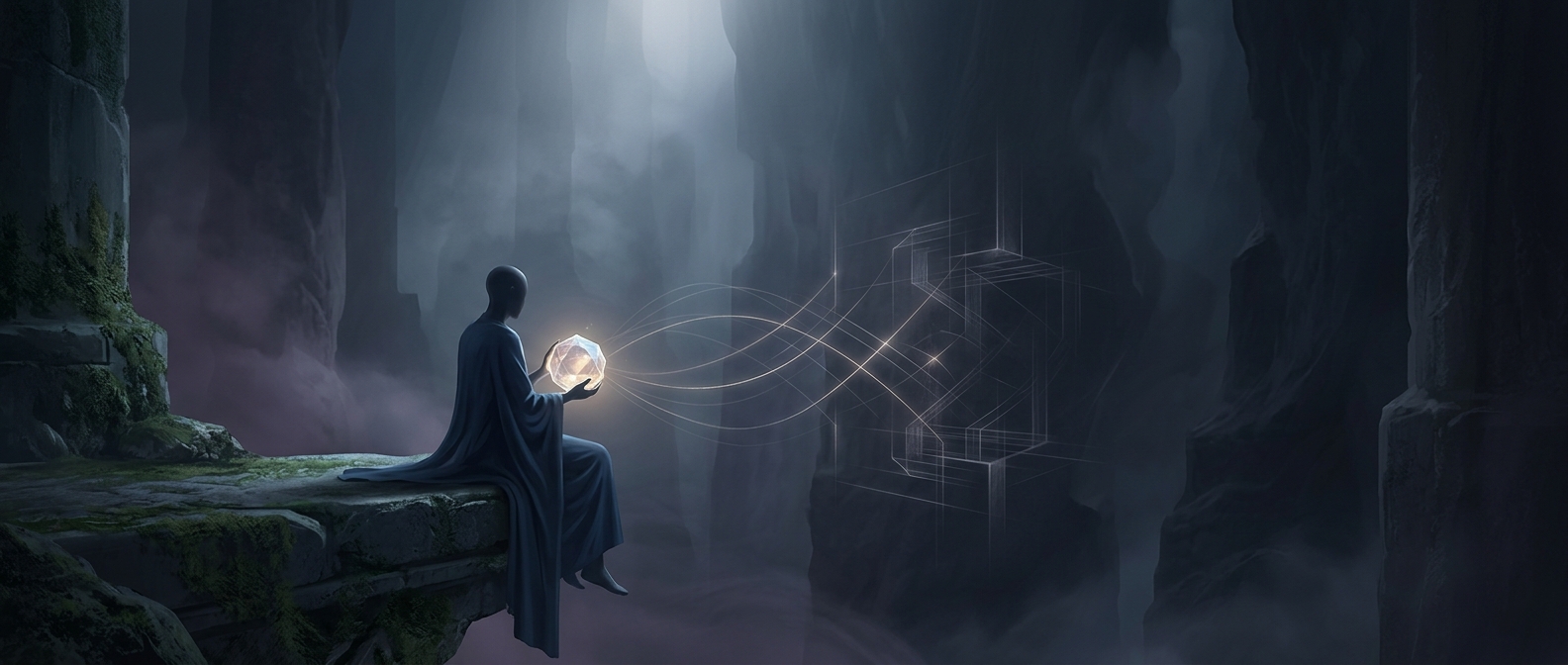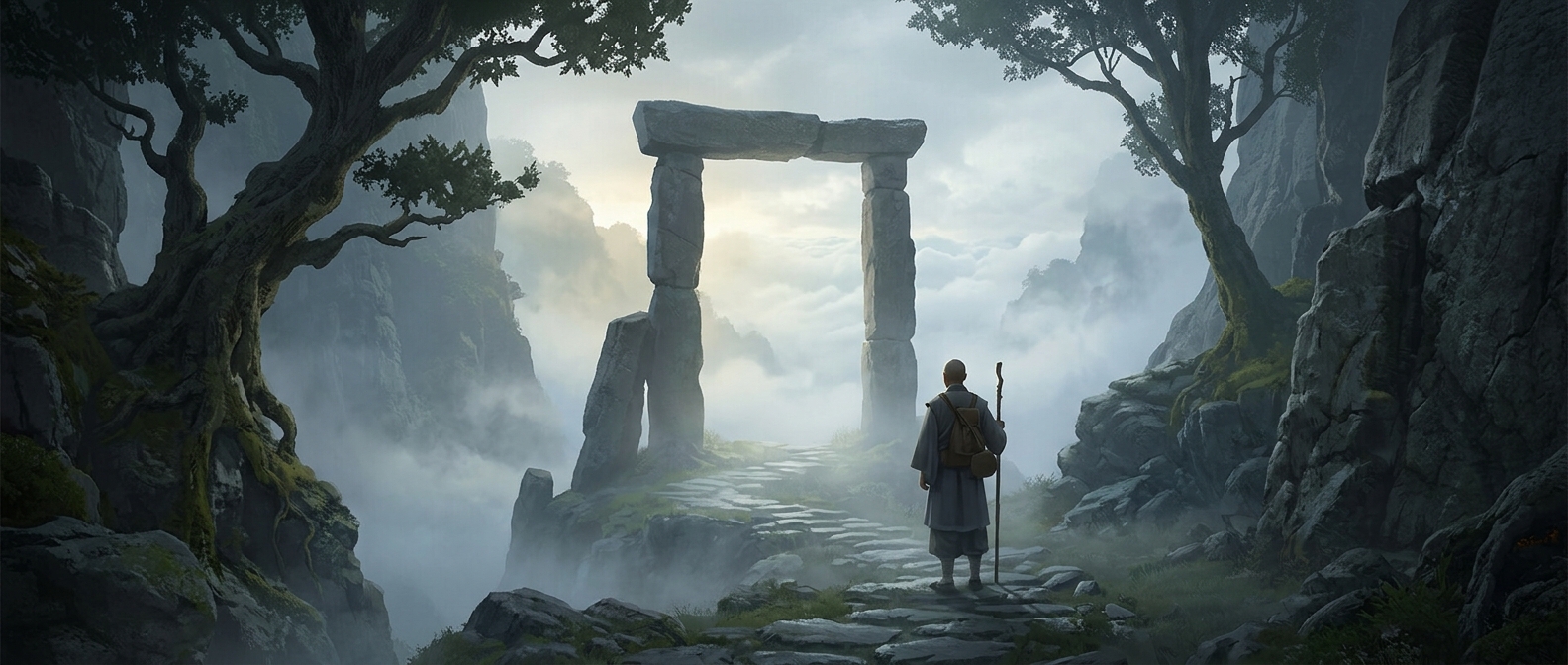
Why a “gateless gate” is a paradox
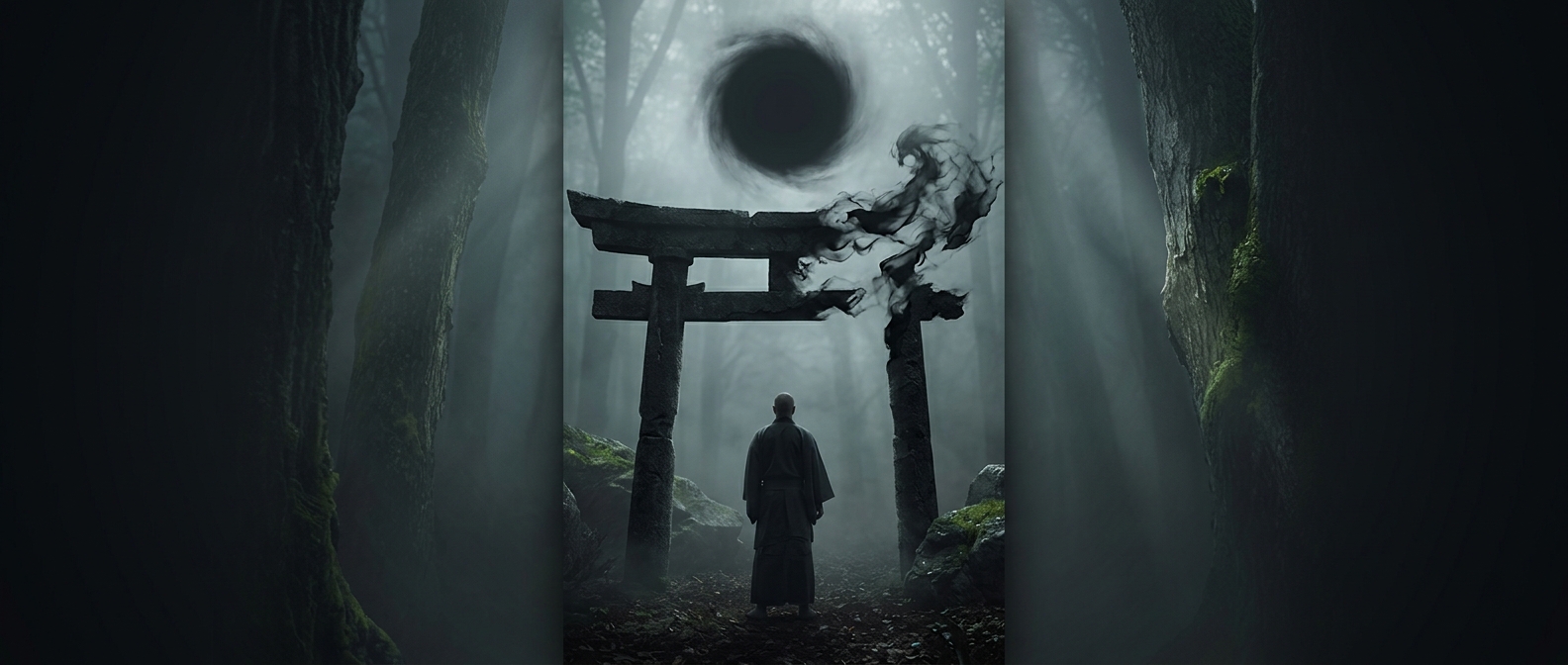
A gate normally marks a boundary: one side is outside, the other inside, and a person must pass through an opening. The “gateless gate” reverses that picture. In this Zen image, the obstacle to awakening is not a literal barrier standing between someone and enlightenment. It is the assumption that enlightenment is a distant place or special state that must be reached by crossing such a barrier.
That does not mean the struggle feels imaginary. Habitual ways of seeing—sorting experience into “me” and “everything else,” or treating a thought as the whole truth—can make separation seem solid. The gate names that felt division, even as the teaching questions whether it exists in the way we assume.
What the image asks of the seeker
The paradox is meant to interrupt the urge to solve awakening like a puzzle with a hidden prize. A Zen teacher might use a koan, a compact question or story that resists ordinary, purely logical answers, to make a student notice the assumptions built into the question itself. The point is not to argue that practice or difficulty is pointless; it is to shift attention from searching for a new destination to seeing how the search is framed.
The image’s quiet challenge is that there may be no final threshold to cross—only a moment when the supposed boundary is no longer taken for granted.