A ritual interruption, not a punishment
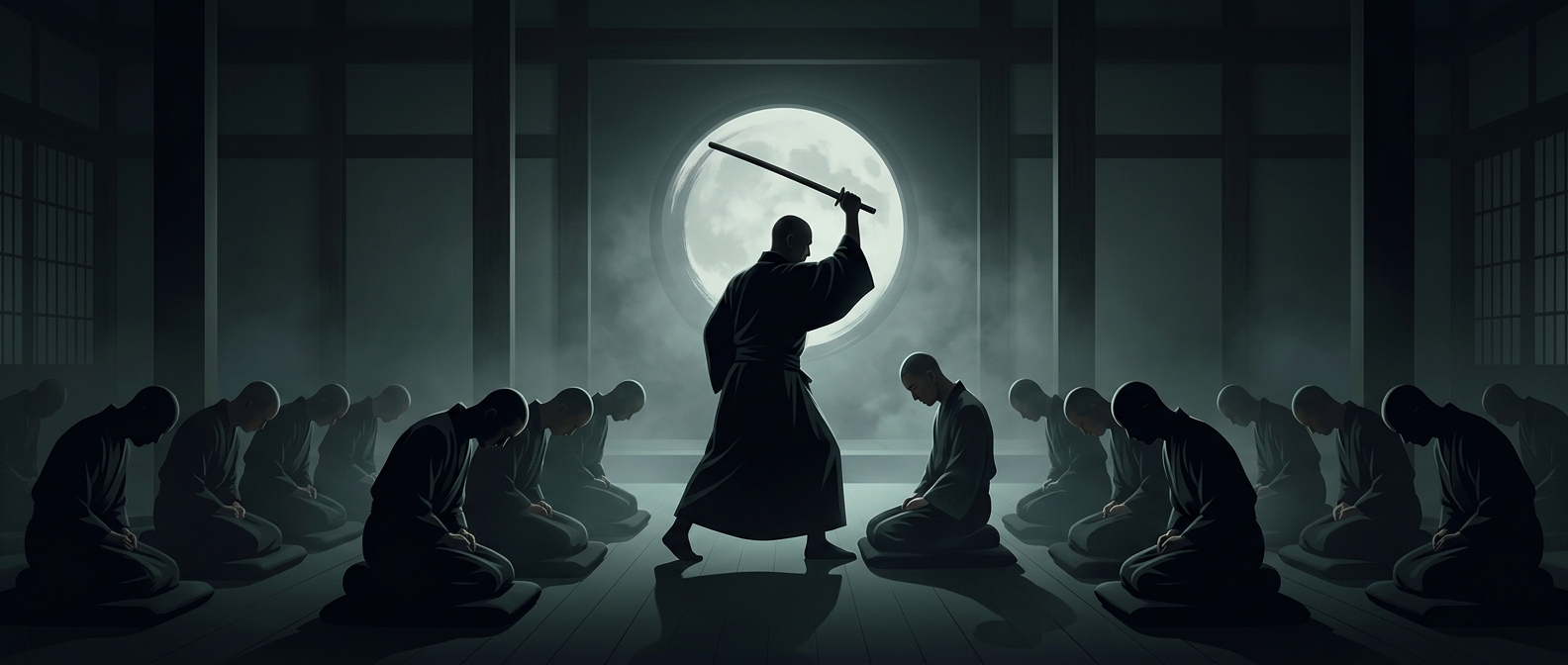
In some Zen meditation halls, the kyosaku—also called a keisaku—is part of the room’s shared discipline. A monitor walks quietly among people sitting in meditation and may offer a brief strike across the shoulder area. It is not meant as a reprimand for having thoughts: wandering attention is a normal part of meditation. The gesture provides a definite physical interruption when someone is tense, drowsy, or struggling to settle.
Practices differ among temples and communities. In settings where the strike is offered by request, a sitter signals readiness, and the monitor responds according to the hall’s custom. That exchange matters: the stick’s meaning depends on a ritual relationship and shared expectations, not simply on someone striking another person at random.
Why use a physical cue?
Meditation asks sitters to remain still while noticing what the mind is doing. That combination can make discomfort and distraction feel increasingly absorbing. A brief, predictable sensation can bring attention back to the body and the present moment; the formal gesture also reminds the sitter that practice is happening within a community, not only in private thought.
The kyosaku does not make the mind stop wandering, and its use is not universal. Its role is more modest: to mark a moment of renewed attention. In a quiet hall, even the sound of the wooden stick can become part of that cue—an interruption that sends the sitter back to the stillness they were practicing.