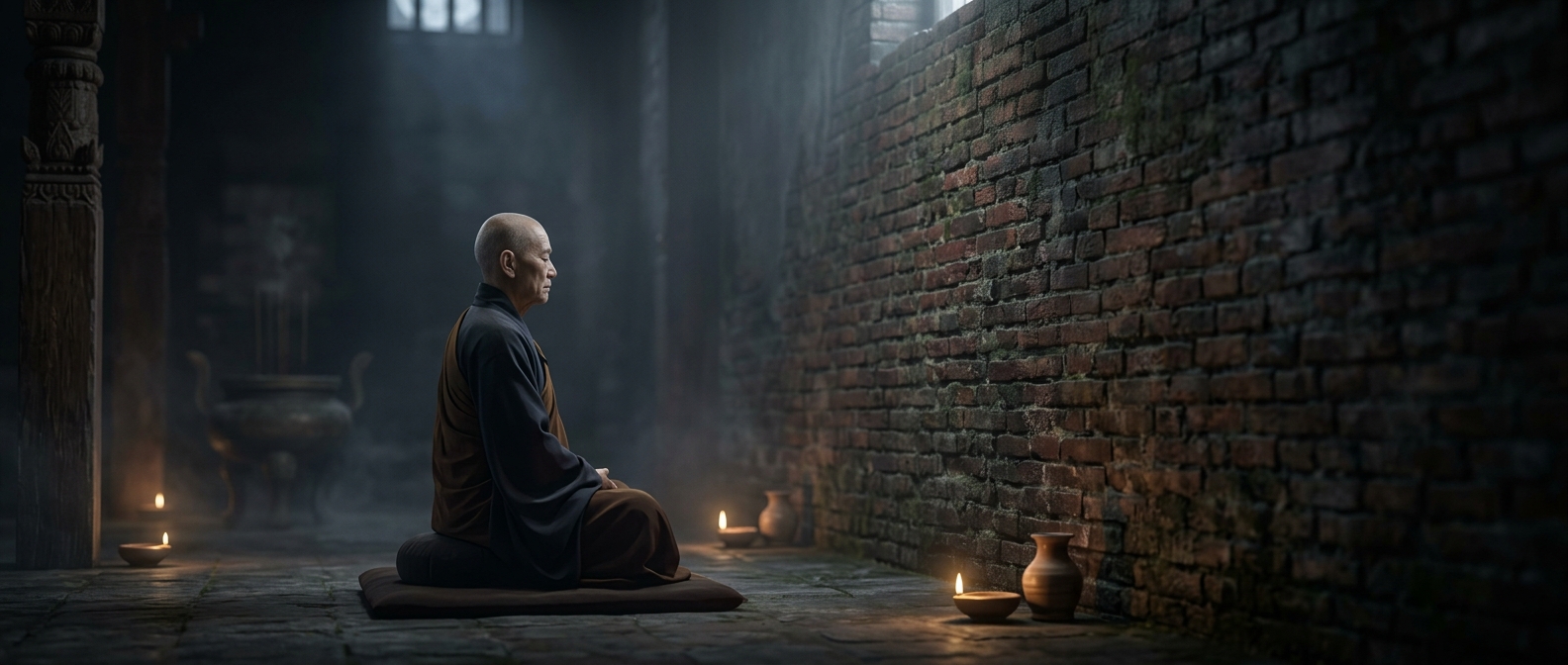
Inquiry that turns back on the inquirer
In many Vedantic traditions, jnana means knowledge—not simply collecting facts, but recognizing what is ultimately real. The inquiry therefore does not stop at questions about the world. It also asks who is doing the perceiving and thinking: What about “me” remains when a passing thought, feeling, or role changes?
A familiar method is neti, neti, Sanskrit for “not this, not this.” A practitioner examines something ordinarily taken to be the self—such as a mood or a bodily sensation—and notices that it can be observed and can change. The question then presses on: if this experience comes and goes, is it the deepest identity? The method tests assumptions through careful reflection rather than accepting each thought as truth.
From reasoning to recognition
The aim is not to win an argument or build a more impressive theory of the self. In this tradition, reasoning helps loosen identification with what is temporary; the hoped-for result is direct recognition of the underlying self, often understood as inseparable from ultimate reality. Different schools explain that relationship differently, so jnana yoga is not one uniform philosophical formula.
That distinction makes the practice more demanding than abstract debate. An insight has to change how a person understands experience, not merely sound convincing in conversation. The inquiry’s practical consequence is a shift in what seems worth clinging to: thoughts and circumstances may still arise, but they are no longer automatically treated as the whole of who one is.