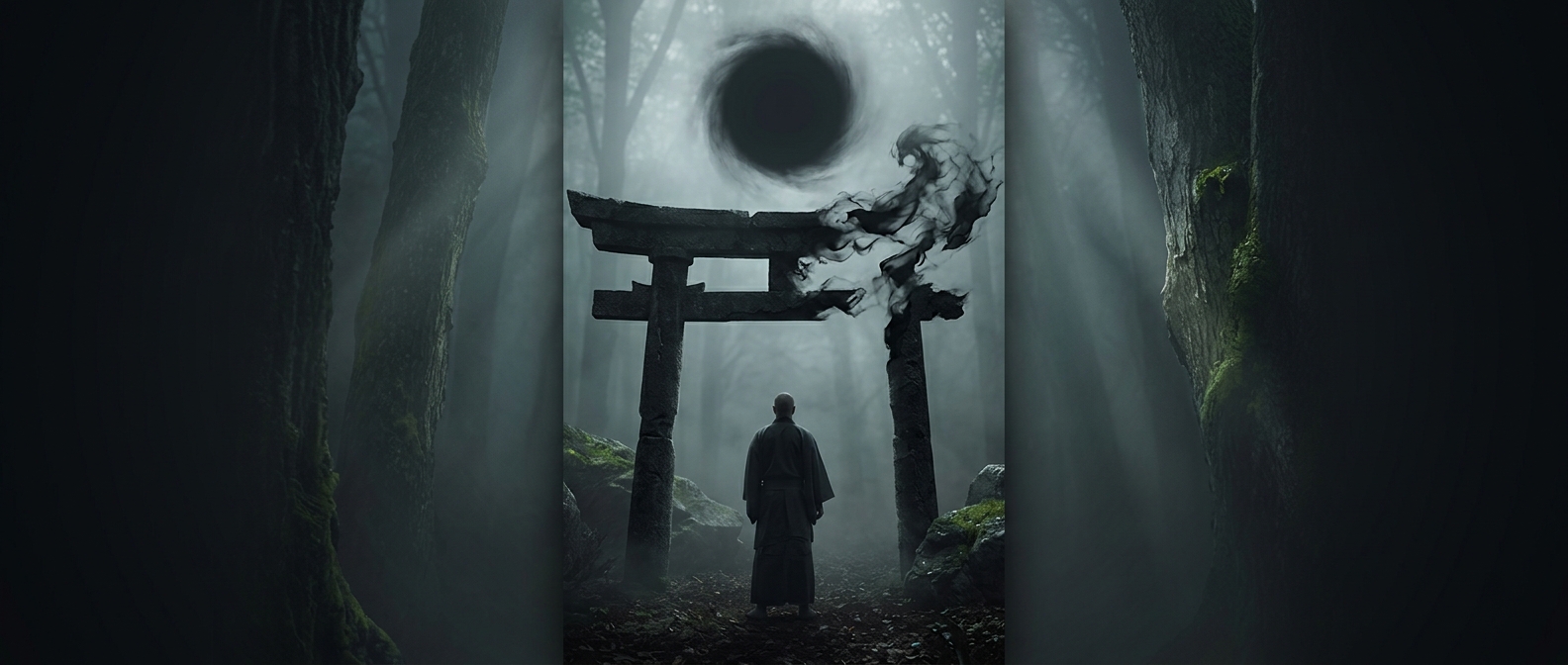
What “Mu” Does to a Question
In Zen, Mu is not simply a third answer between “yes” and “no.” The word can mean “not,” “nothing,” or “without,” but in practice its force depends on the question it meets. It can expose a question whose assumptions make either offered answer misleading.
A well-known Zen teaching presents a student asking whether a dog has Buddha-nature—the capacity for awakening. The teacher’s reply is “Mu.” The point is not to settle a zoological question with a mysterious code word. The student is being pushed to examine the habits of thought built into the question: the urge to sort reality into fixed categories and demand a neat conclusion.
A Prompt for Practice, Not a Puzzle to Solve
In some Zen traditions, a short teaching like this is used as a koan: a question or exchange that a student works with under a teacher’s guidance. The student may repeat “Mu” in meditation, returning attention to it rather than spinning out explanations. The practice is meant to interrupt ordinary, discursive thinking—the mind’s tendency to analyze, classify, and reach for a clever answer.
That does not mean every difficult question should be dismissed as meaningless. Mu matters in a specific setting: it redirects attention from choosing between two answers to noticing what the question assumes and what the act of answering leaves out.
Its practical sting is simple. When a question forces a false choice, answering more confidently may only deepen the mistake. Mu asks the student to pause before choosing—and look again at the frame itself.