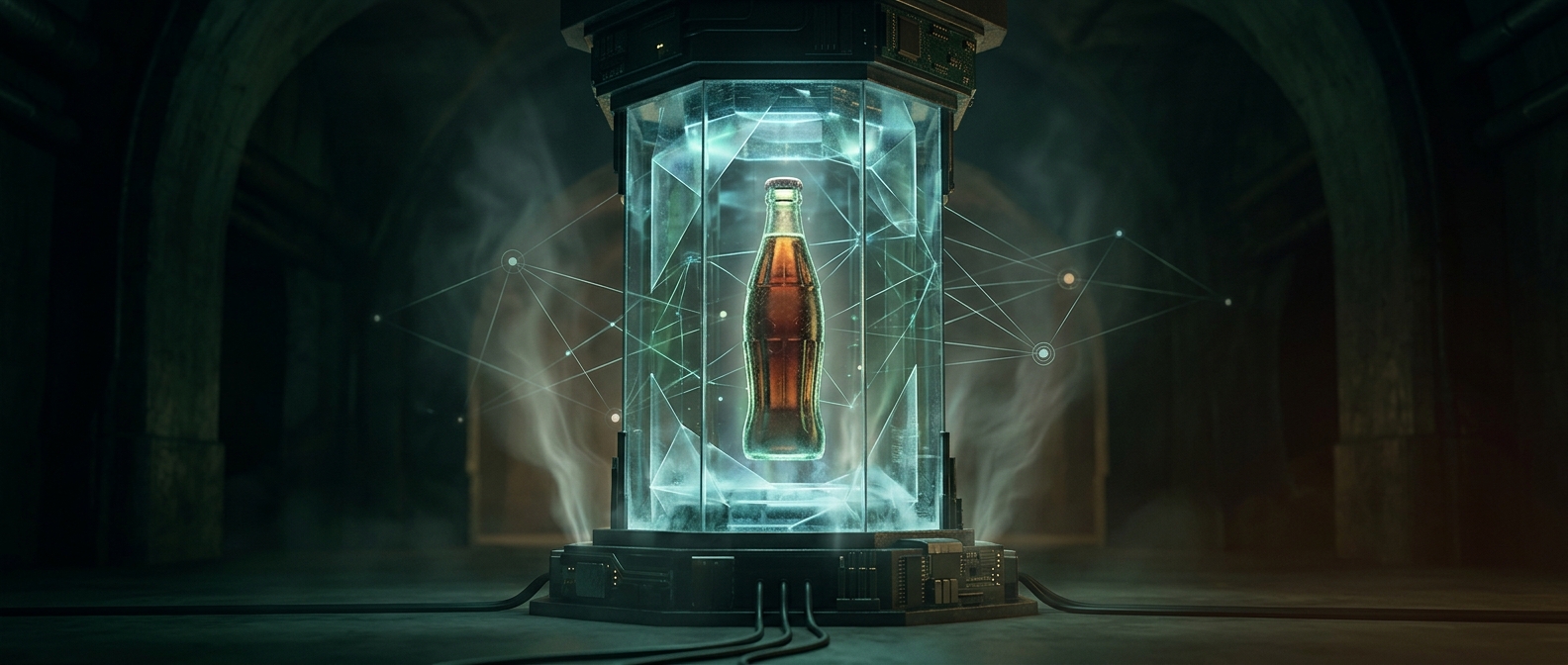
A network query reached into the machine
A vending machine is usually a one-way interface: you press a button, and it either delivers a drink or reveals that the slot is empty. Connecting its stock and temperature status to a computer network changed that relationship. A student could ask about the machine before walking over, turning an ordinary appliance into something that reported on its own physical condition.
The key was translating physical states into signals a computer could read. A microswitch—a small switch activated by movement—could indicate whether a bottle was present. Temperature information added another useful clue: a drink might be in stock but not yet cold. The machine’s status could then be checked remotely rather than discovered through a wasted trip.
Why this small connection mattered
The useful idea was not simply putting a computer near a vending machine. It was linking a real-world object, a network, and a practical question. The network carried information outward from the machine, while the student’s query made that information useful. This is the basic pattern behind the internet of things: devices sense or report conditions in the physical world so people or other systems can respond without being there.
The vending machine was a modest test case, but its limits made the principle easy to see. A network could save someone a walk, yet only if the machine’s signals represented conditions people cared about—and if those readings were current enough to trust. The same logic later became valuable in settings where checking equipment, supplies, or environmental conditions in person is slower or harder.
What began as a way to avoid a disappointing trip to the machine demonstrated a larger shift: everyday objects could become sources of information, not just things people operated directly.