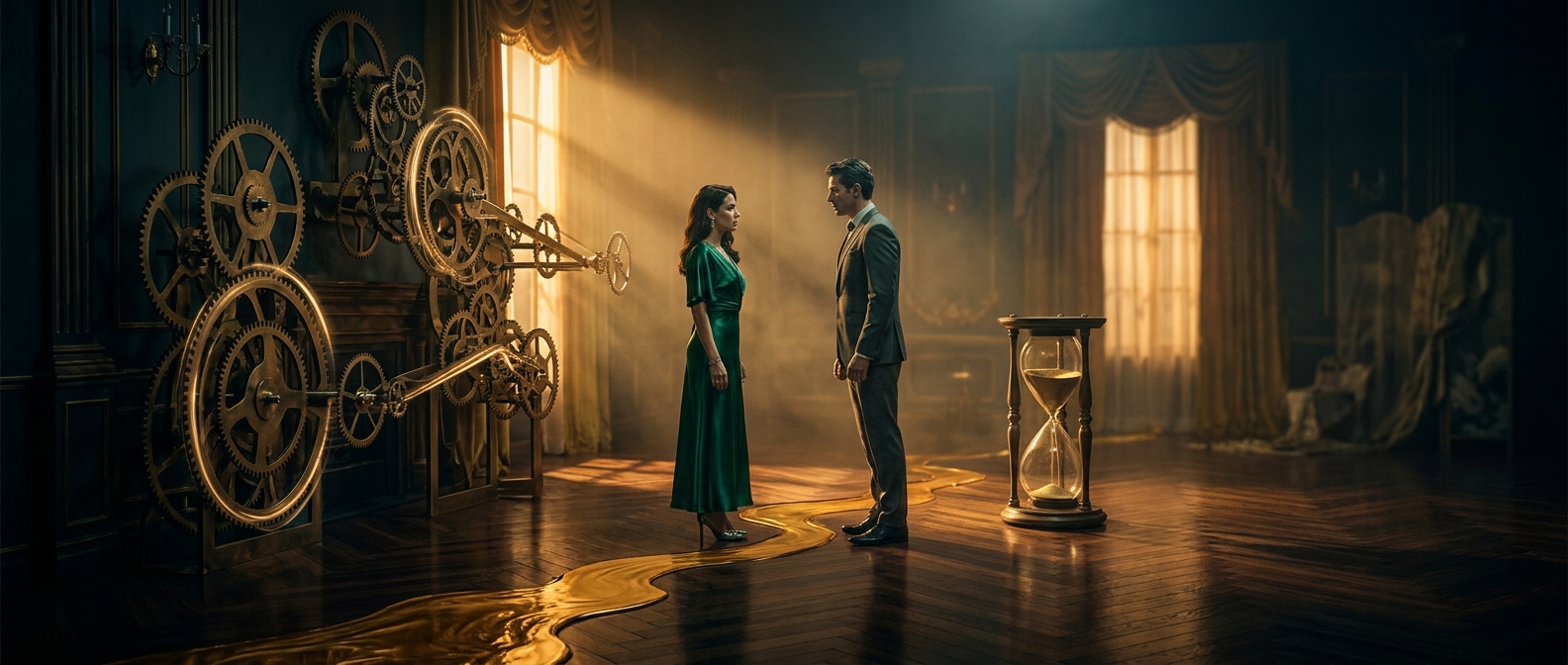
A pause can fill more than the screen
A lingering stare is one of television’s simplest ways to add time without adding another event. The plot stops moving, but the audience is still given something to watch: a character absorbing bad news, avoiding another person’s eyes, or looking toward a future they cannot control. Music supplies emotional direction while the actor’s face carries the moment.
That makes the pause useful in the edit. A scene can be lengthened by holding on a reaction rather than introducing new dialogue, locations, or story information. The choice is especially noticeable when the stare seems to repeat what the scene has already made clear. Then the silence may feel less like suspense and more like padding.
The tradeoff between feeling and pace
A held look can give a revelation room to land. Viewers have time to register a character’s response before the story moves on, and the music can make uncertainty or grief feel larger. But the same tools can overstate an emotion: if the audience already understands the moment, another extended reaction delays the next beat without changing its meaning.
The difference is whether the pause develops the scene. A glance that reveals hesitation or shifts a relationship earns its seconds; a stare that merely keeps the episode running risks making the audience notice the clock instead.