How a damaged wall became part of the show
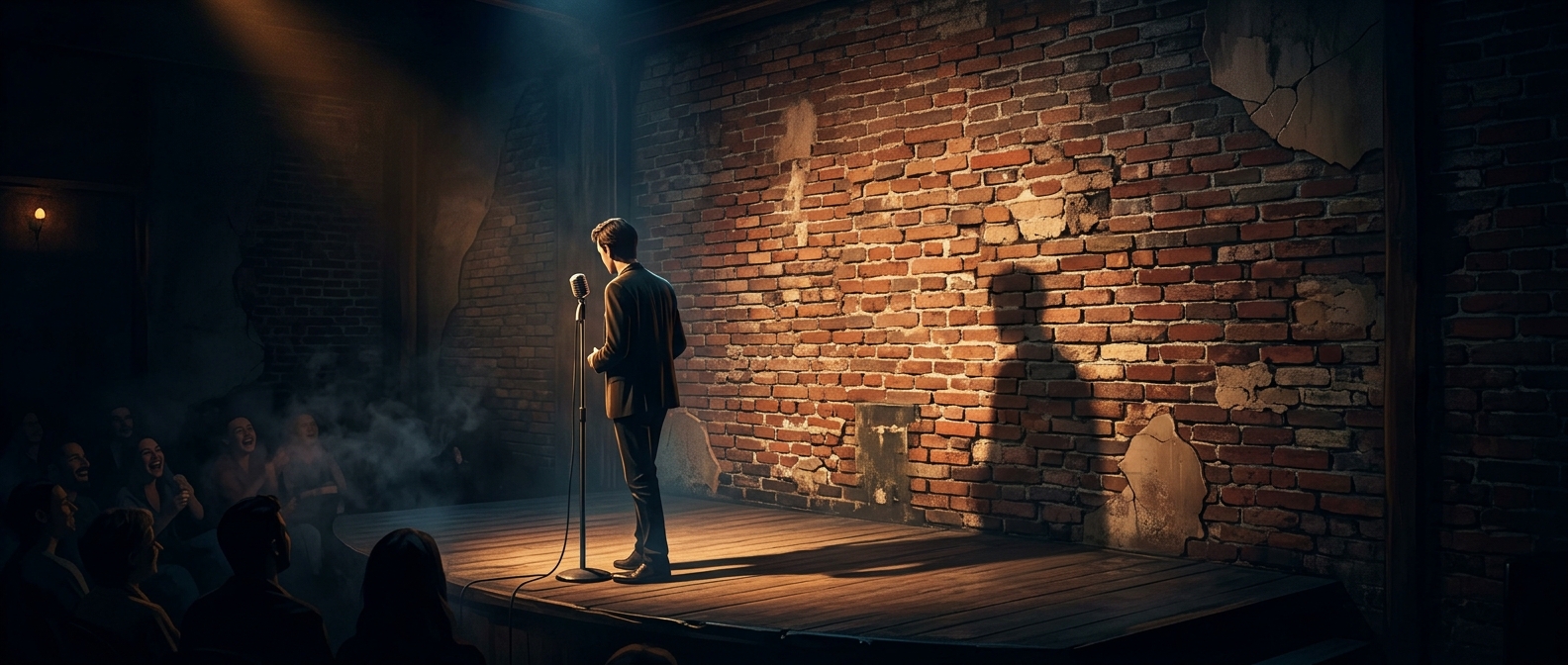
At The Improv, the first exposed brick was not a design statement. The owner could not afford to plaster a damaged wall, so the brick remained visible. What began as a budget limitation later became a look associated with comedy clubs.
That transformation makes sense in a room built around a performer and an audience sharing the same space. Bare brick can make a club feel less polished and more intimate than a formal theater. The room appears lived-in rather than grand, helping set an informal tone before the comedian even speaks.
When a practical choice becomes a visual cue
Once audiences recognize a look, other venues can use it to suggest the kind of experience they offer. Exposed brick signals a casual, close-up setting—one where the atmosphere is part of the appeal, not just a backdrop. The material itself does not make a room funny; it helps establish the mood in which comedy is presented.
The detail is a reminder that familiar styles do not always begin as deliberate branding. Sometimes a constraint leaves a visible mark, and later venues turn that mark into a convention. A wall that once went unplastered because money was short could eventually help a room look unmistakably like a comedy club.