A long snout changes a face-on drawing
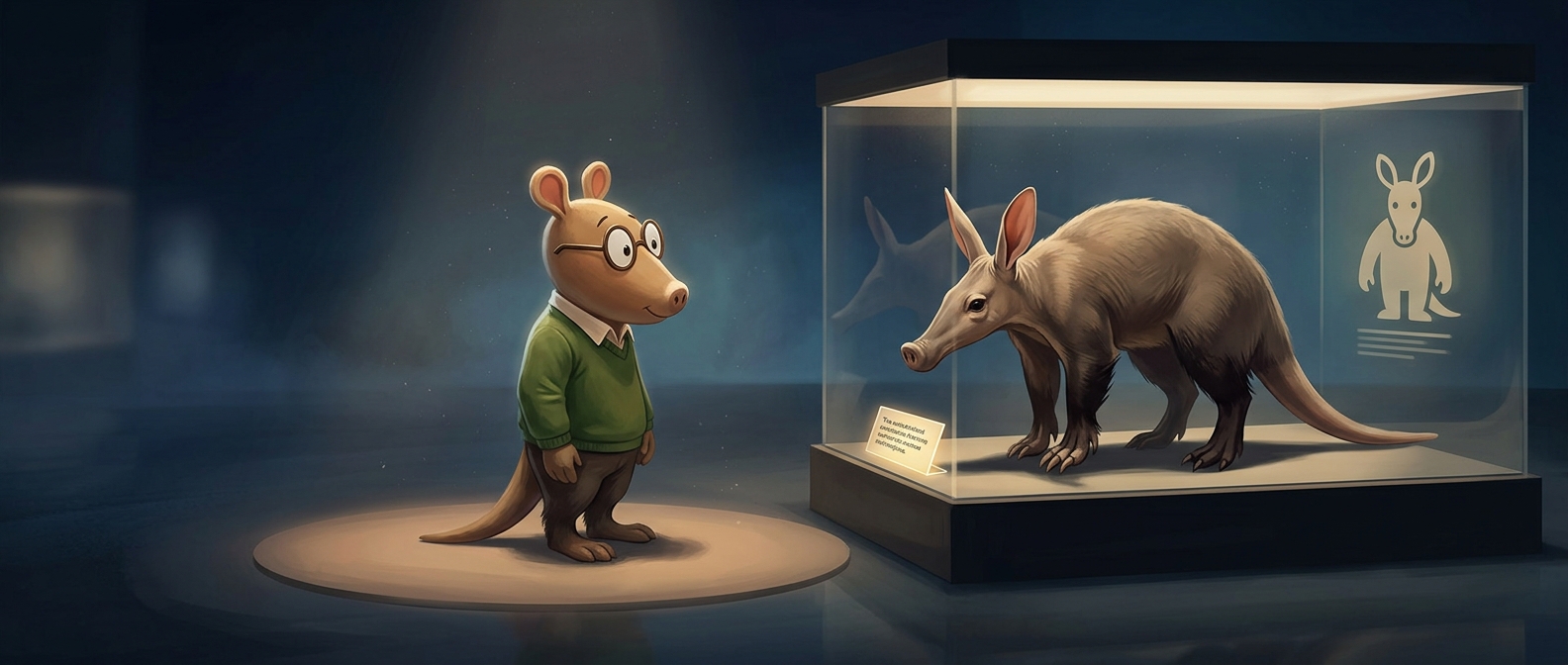
A real aardvark’s snout projects far forward from its head. From the side, that shape reads clearly as a long muzzle. From straight on, however, it points toward the viewer: perspective compresses its length, while the nose can dominate the center of the face. In a simple cartoon drawing, that can make the expression feel strange or hard to read.
Flattening keeps the face legible
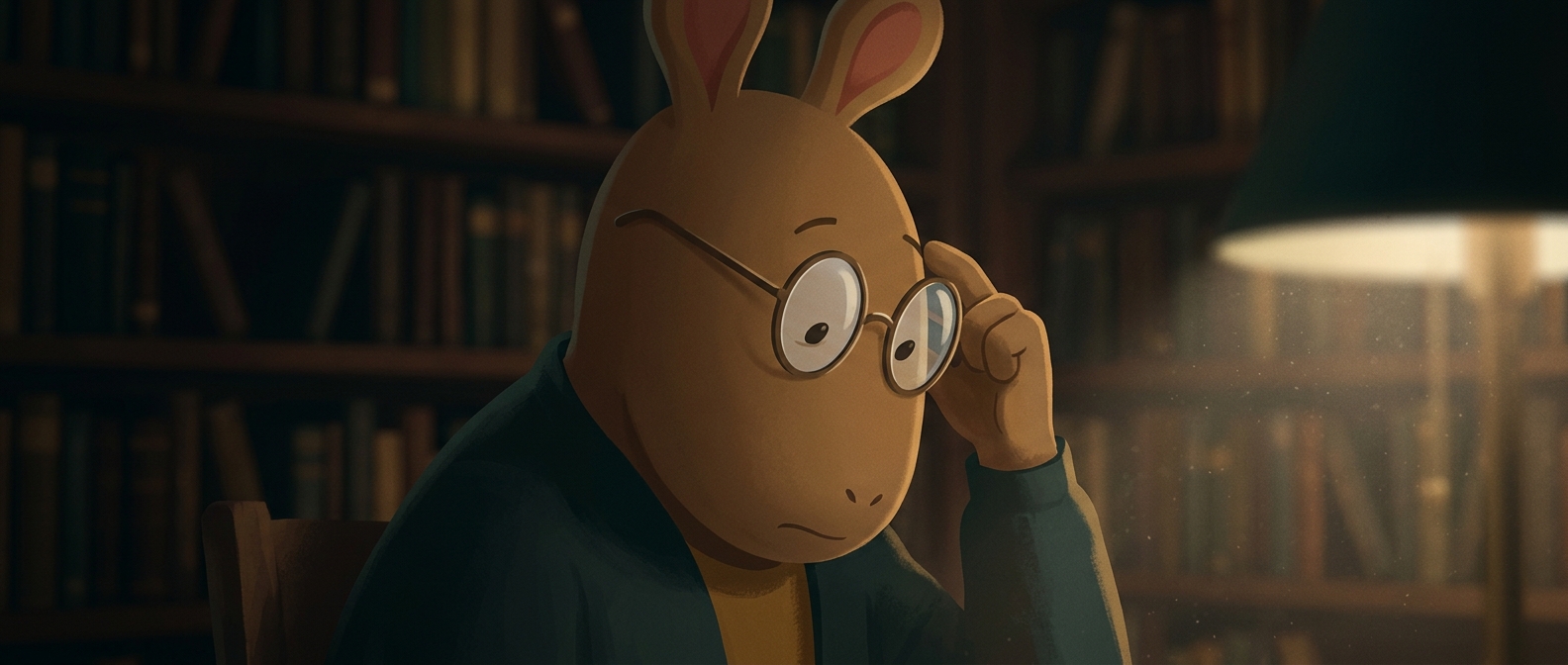
Arthur’s animators softened that problem by flattening his face rather than drawing an aardvark’s muzzle realistically. With less snout projecting forward, his features can read more like a familiar, front-facing cartoon face. The choice preserves the character’s basic identity without making anatomical accuracy the only priority.
That tradeoff matters because animation often returns to the same character from many angles. A design that works in profile but looks unsettling head-on would make expressions harder to follow whenever Arthur faces the audience. In this case, a less realistic muzzle helps the character remain readable in the view where viewers look for his reaction.