A restaurant built around place changed places
KOKS’s move to Greenland was more than a dramatic change of scenery. The restaurant’s cooking depends on ingredients gathered close to where they are served, so relocating brought its kitchen nearer to a different Arctic landscape—and to the foods that landscape can provide.
That approach is often called terroir: the idea that a meal reflects the particular environment it comes from. In Greenland, the shift changes what “local” means. Arctic thyme, wild ptarmigan and narwhal are not interchangeable with the ingredients of the Faroe Islands; they belong to a distinct ecology and food culture. The setting becomes part of the menu’s logic, not just its backdrop.
Distance becomes part of the kitchen
A settlement reachable only by boat imposes a practical constraint: people and supplies cannot simply arrive by road. That makes careful planning essential and gives locally gathered ingredients greater importance. It also means the restaurant’s remote location is not incidental. The same isolation that makes dining there unusual shapes how the kitchen can operate.
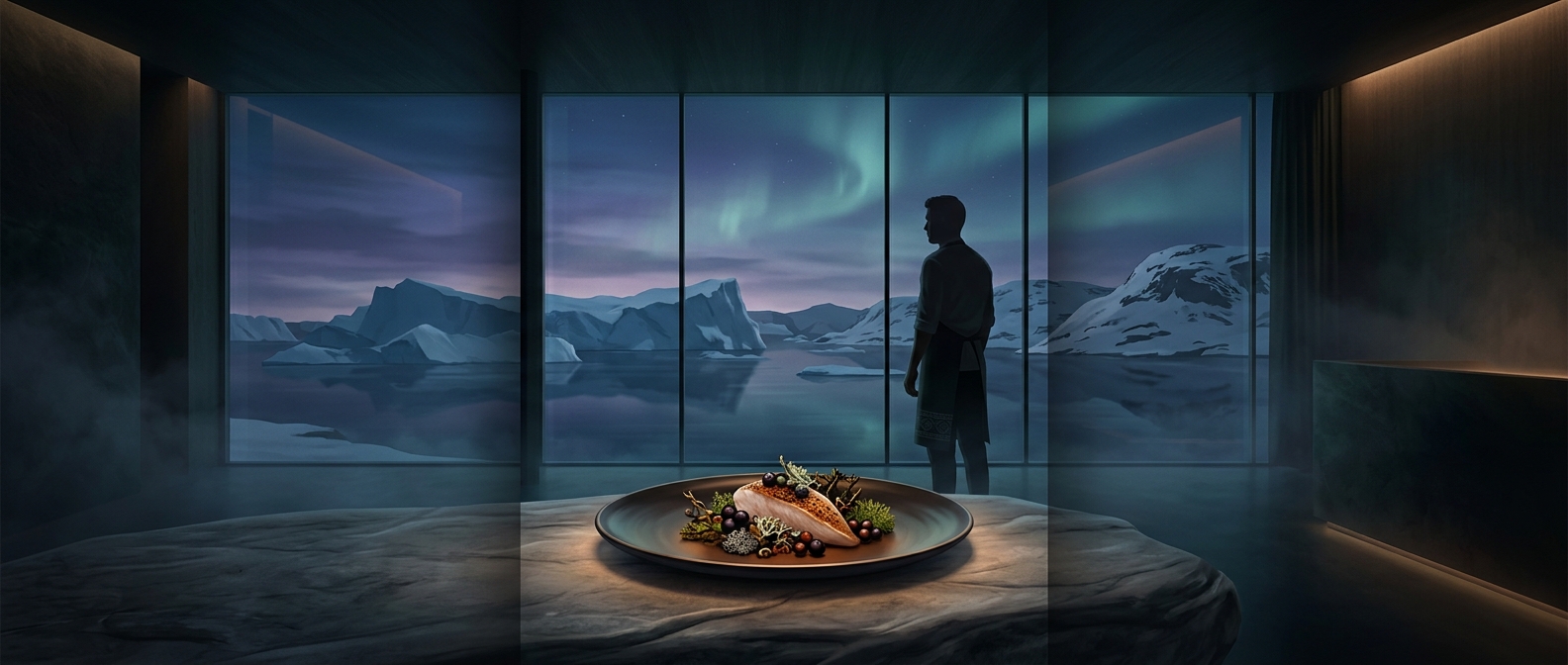
The wooden cabin beside drifting icebergs makes that connection immediate. Diners encounter the landscape not as a view outside the window but as the source—and limit—of what can be put on the plate. Moving a celebrated restaurant to such a small, hard-to-reach place turns its central culinary idea into a physical experience: to taste the region, you have to go where the region is.