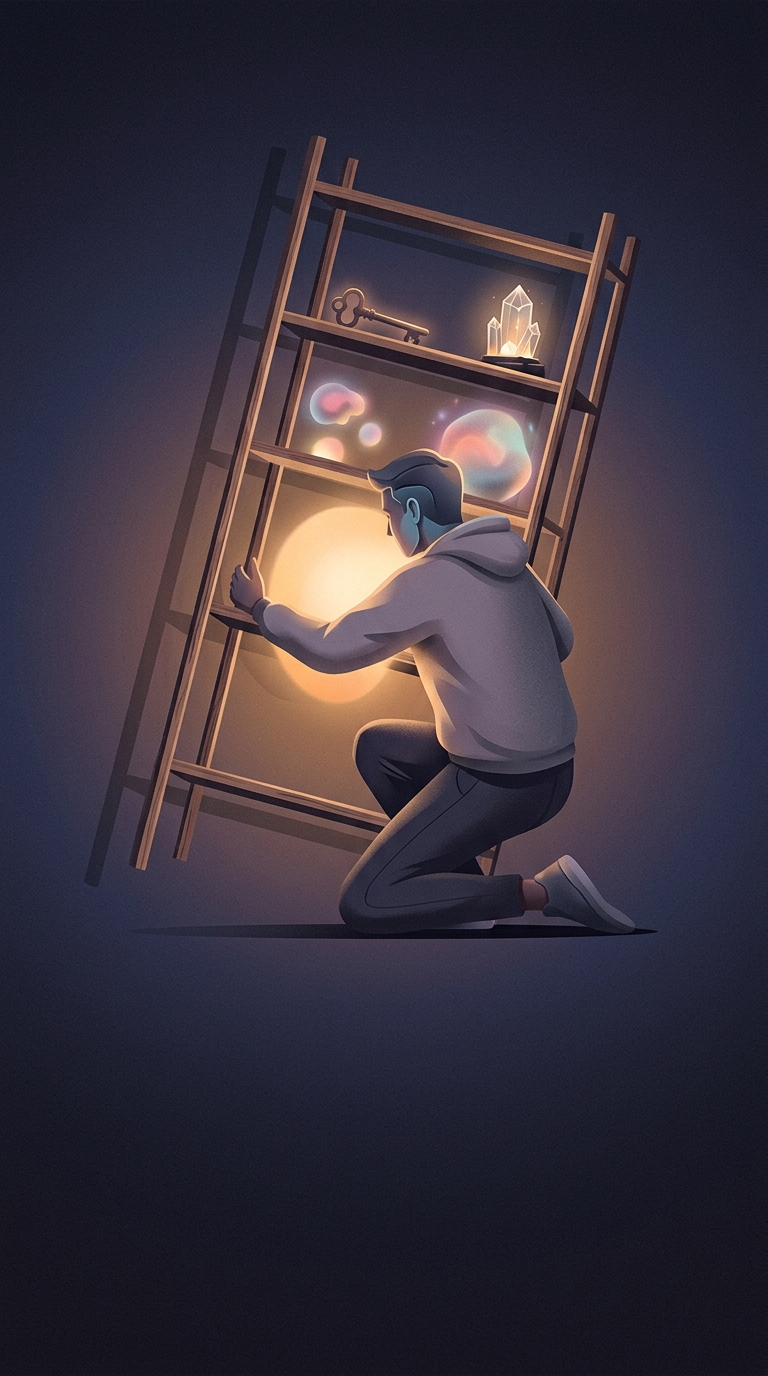
A Cheap Bookshelf Can Become Part of Your Story
The shelf may be ordinary, but your relationship with it is not. It has occupied a corner through moves, late nights, and changing phases of life. Each time you see it, it can cue memories of the room and the person you were then. Psychologists call this autobiographical memory: memories tied to your own life and identity. An everyday object can become a handy prompt for those memories, even if it has little monetary value.
Ownership Changes How an Object Feels
Once something is yours, you may value it more than an identical item you do not own. This tendency is known as the endowment effect. The shelf’s flaws can even make it feel more distinctly yours: you know which board tilts and how much weight it can bear. If you assembled it, repaired it, or made it work in an awkward space, that effort may add another layer of attachment. Effort alone does not explain every bond, but it can make an object feel less interchangeable.
That does not mean you secretly think the shelf is well-made. Practical judgment and emotional value are different measures. You can know it wobbles and still hesitate to replace it, because a new shelf would offer more than sturdier storage: it would also erase a familiar presence and some of the history attached to it. The old one may be cheap, but the life it has witnessed is not.