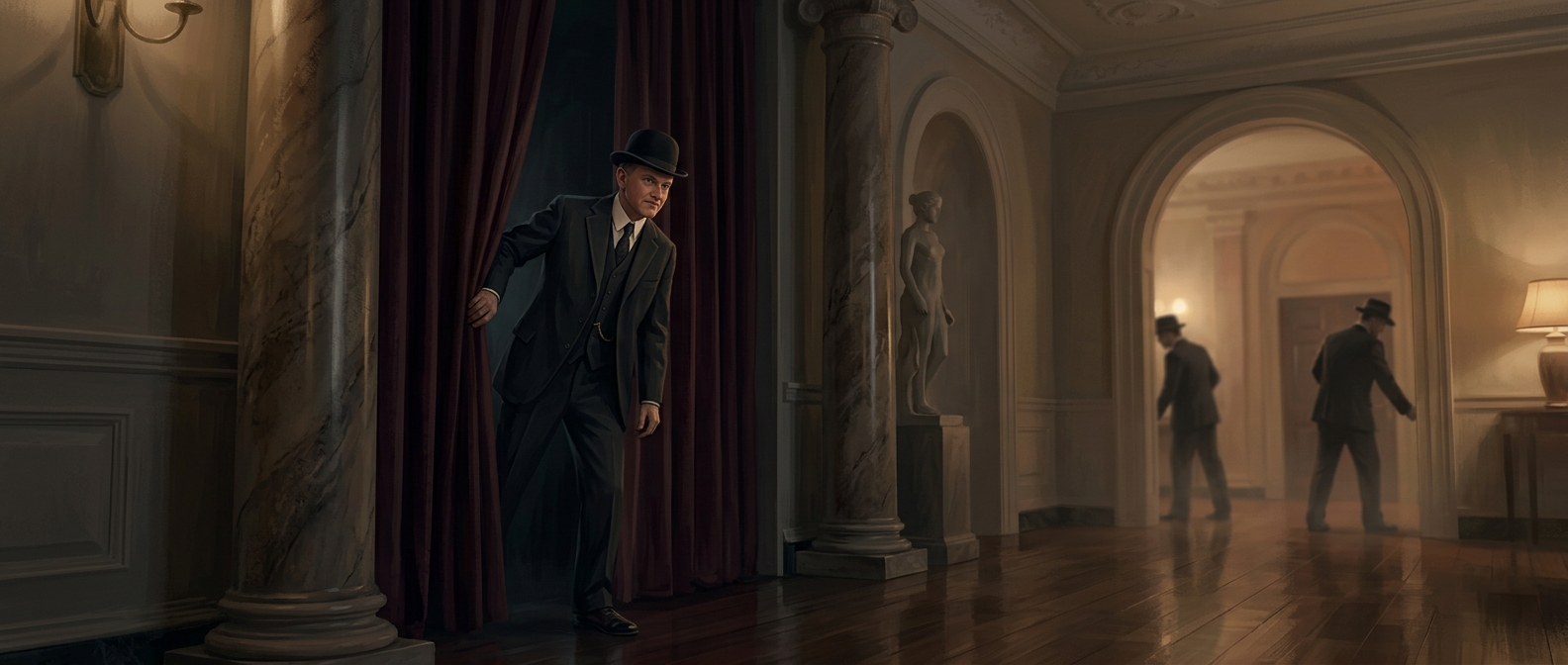
A presidential summons with no emergency
The joke worked because the White House had a system for calling staff: a president could signal for someone to come to his room. When Calvin Coolidge triggered the signals and then ducked under his desk, the people who hurried in had to treat the summons as real. Their job was to respond, not to guess whether the president was playing a trick.
These were calls for assistance, not evidence of a crisis. The humor came from making a routine tool of presidential authority produce a needless scramble—and from Coolidge’s hiding in plain sight while staff searched for the person who had called them.
A quiet man’s practical joke
Coolidge was known for his reserved public manner, so the prank offered a contrast: he could let the staff’s urgency unfold without announcing the joke or giving it away. The setup needed no elaborate trickery. A signal button brought people to him; his hiding turned their dutiful response into the punch line.
The small incident also shows how the White House’s chain of service could become part of presidential humor. Staff had to answer the call because it came from the president. Coolidge could then make that very obligation the entertainment.