The birth chart behind Roosevelt’s public image
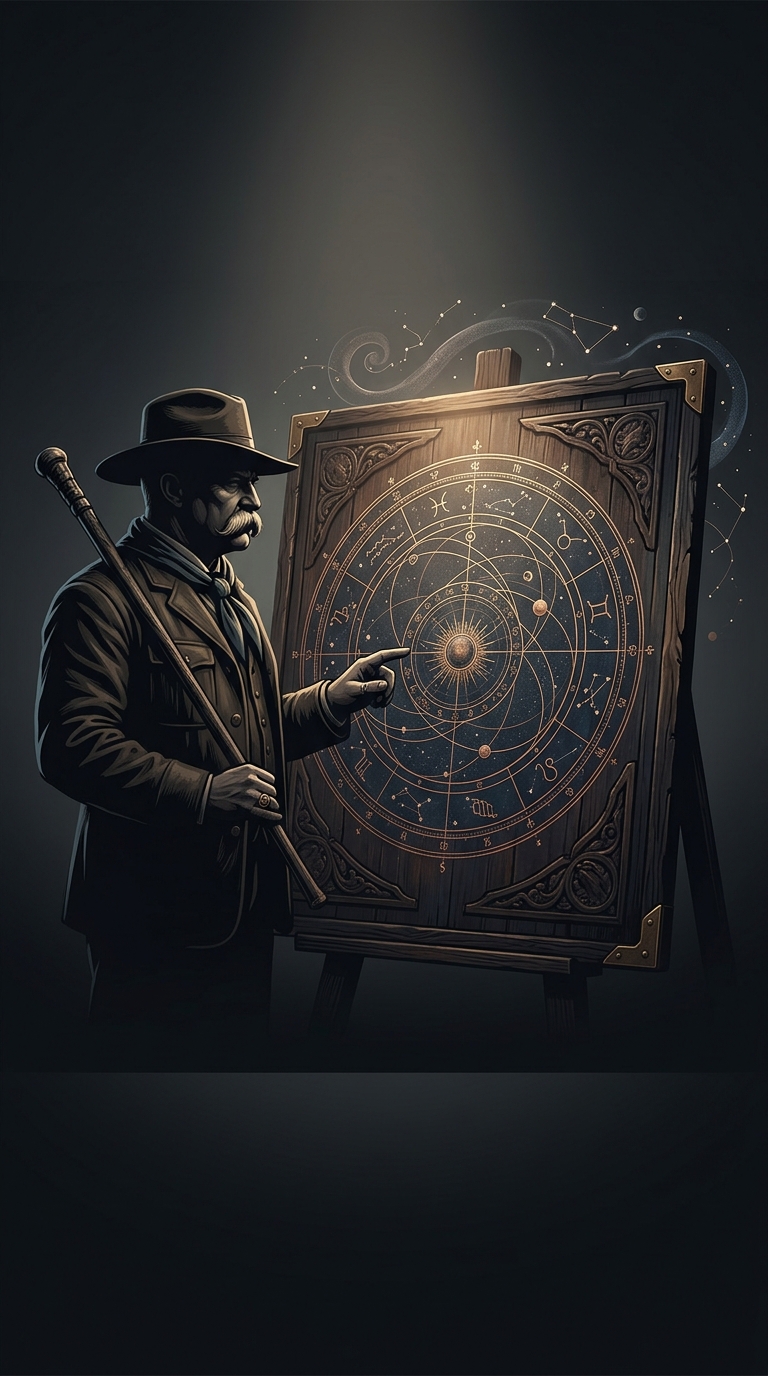
Theodore Roosevelt’s Oval Office birth chart presents a striking contrast: the president celebrated for strenuous action reportedly kept an astrological chart close at hand. It was mounted on a wooden board, turning an abstract set of planetary positions into a visible object in the room where he worked.
A birth chart, also called a natal chart, maps where the Sun, Moon, and planets were believed to be at a person’s birth. Astrology interprets those positions as clues to character or the timing of events. The chart did not offer Roosevelt a practical forecast in the way a map or briefing could; its role depended on the meaning he—or the person advising him—assigned to the symbols.
A different kind of counsel
The story is memorable because it complicates the familiar image of Roosevelt as a man who trusted action, courage, and physical toughness. A chart would not replace those qualities. Instead, it suggests that even a forceful leader might keep an additional, private framework for thinking about uncertainty—one that sat outside the usual channels of political advice.
The account says Roosevelt reportedly consulted the planets before major decisions, but it does not establish how often he did so or how much weight he gave their readings. That distinction matters: keeping a chart in the office shows that astrology had a place in his surroundings, not that it determined presidential policy.
Still, the wooden board makes the detail vivid. In a room built for decisions with public consequences, a tool of private interpretation had a place on the wall—an unexpected reminder that a leader’s public persona never tells the whole story of how he approached the unknown.