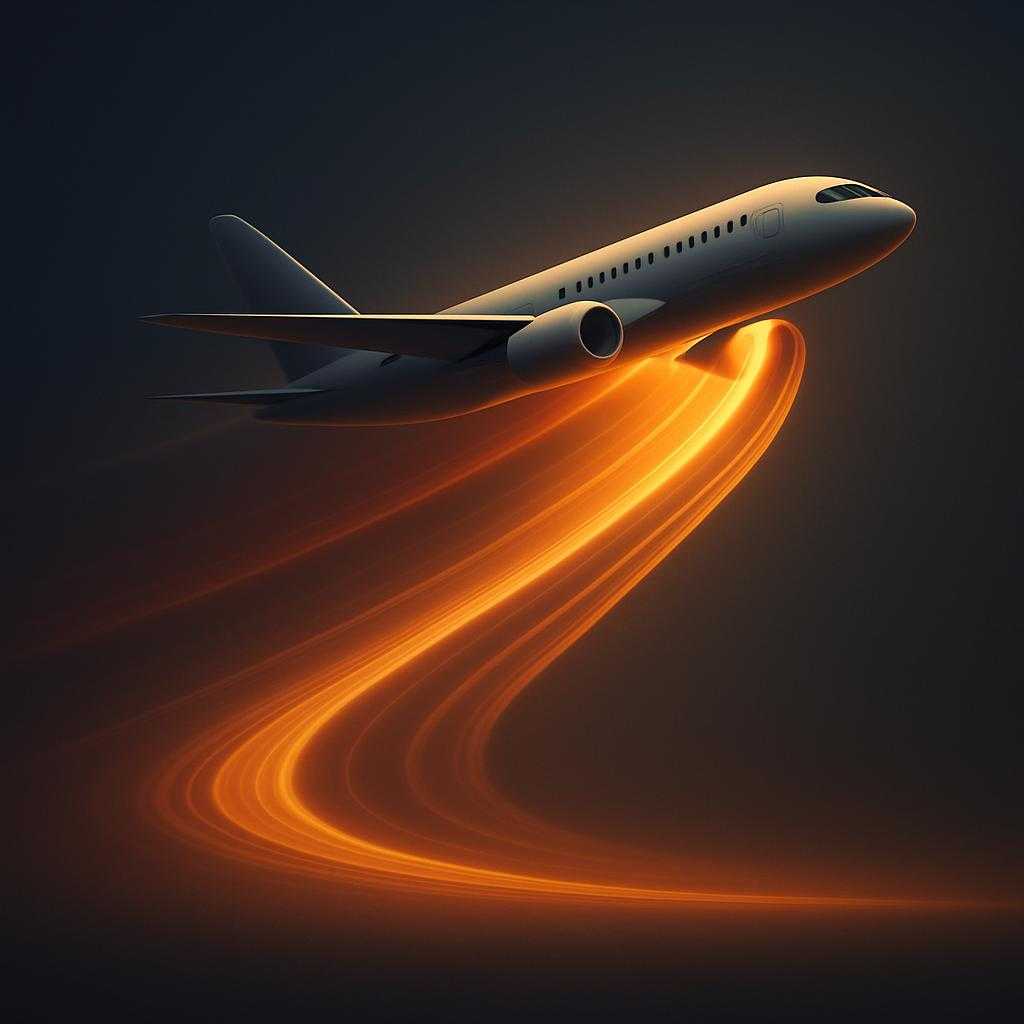
Why passenger jets dominate long-distance travel
For trips between distant cities, the fastest commonly available option is a scheduled commercial jet. Once it reaches cruising altitude, a typical airliner travels roughly 500 to 600 miles per hour relative to the air around it. That lets it cover in hours distances that would take days by road or rail.
The advantage comes from flying high, where thinner air creates less drag, and from powerful engines that keep the aircraft moving quickly over long stretches. A jet can also take a relatively direct route across land or ocean, rather than following roads, coastlines, or fixed rail corridors.
The clock does not start at takeoff
The airplane’s speed in the air is not the same as the passenger’s door-to-door speed. Travelers must reach the airport, check in, pass security, board, taxi, and then travel onward from the destination airport. For shorter journeys, those steps can erase much of the time saved in flight.
Winds also change how long a flight takes. A tailwind pushes an aircraft along; a headwind slows its progress over the ground. Air-traffic routing, weather, and congestion can add further delays, so two flights over the same distance may have different travel times.
For a genuinely long trip—especially one crossing an ocean—the distance covered at cruising speed usually outweighs those overheads. That is why the fastest practical journey is typically not a faster train or car, but a jet flight whose airport time is only a small part of the total trip.